
Short Answer
Understanding how to read a Maya calendar date is fundamental to interpreting the history, astronomy, and cosmology of the ancient Maya civilization. Unlike the single linear calendar used in the modern Gregorian system, the Maya employed a complex stack of interlocking calendars that served different purposes simultaneously. To decipher a date found on a stela, monument, or codex, one must navigate the relationship between sacred time, solar cycles, and absolute chronological counting. This process involves recognizing specific glyphs, understanding vigesimal (base-20) mathematics, and contextualizing the date within the broader framework of Mesoamerican timekeeping.
Main Explanation
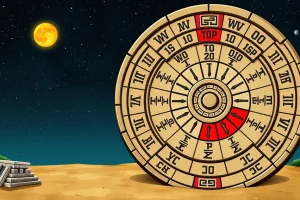
The genius of the Maya calendar system lies in its multiplicity. When archaeologists encounter a date inscribed on a stone monument, they are not looking at a single expression of time but rather a combination of four distinct systems: the Tzolk’in, the Haab, the Calendar Round, and the Long Count. Each component solves a different problem regarding how time was perceived and recorded. The Tzolk’in is a 260-day sacred calendar used for divination, identity, and ritual purposes. It cycles through 13 numbers and 20 day names. The Haab is a 365-day solar calendar approximating the agricultural year, consisting of 18 months of 20 days plus a short month of 5 days. When these two calendars interlock, they create the Calendar Round, a 52-year cycle that was crucial for civic life and historical recording in the Classic Period.
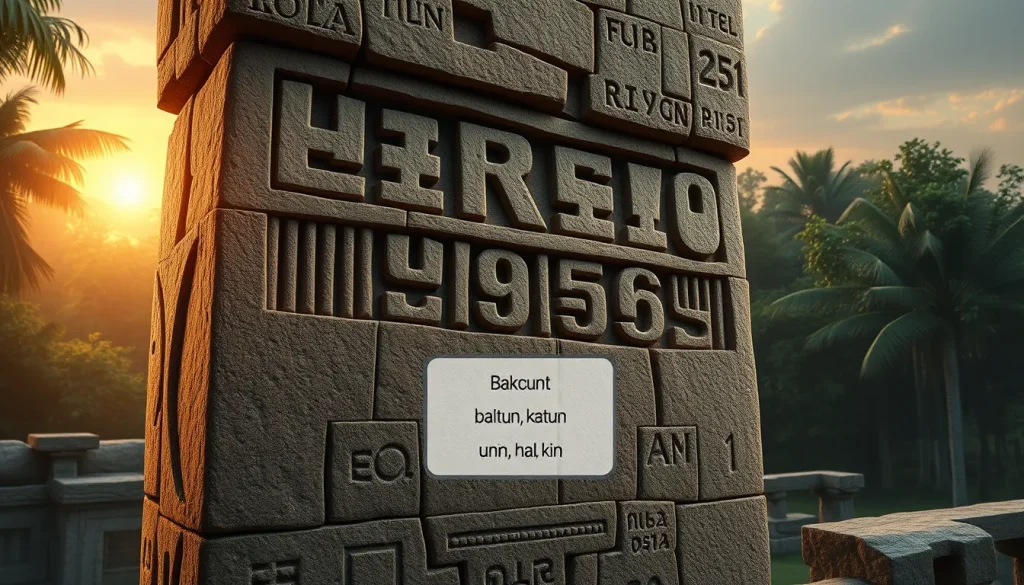
For absolute dating over longer periods, the Maya utilized the Long Count. This system counts the number of days elapsed since a fixed creation point in the mythological past. Reading a Long Count date requires understanding the vigesimal mathematical base, where units are grouped by 20s, with a notable exception in the third position. The primary units include the k’in (day), uinal (20 days), tun (360 days), katun (7,200 days), and baktun (144,000 days). By combining these units, Maya scribes could record dates spanning thousands of years, allowing them to chart the reigns of rulers, conquests, and astronomical events with remarkable precision. Modern tools, such as the Smithsonian’s Maya Calendar Converter, now allow researchers and the public to translate these ancient counts into corresponding Gregorian dates, bridging the gap between ancient inscriptions and modern chronology.
Evidence & Sources
The primary evidence for how to read Maya calendar dates comes from the inscriptions themselves, found on stelae, altars, and architectural lintels across the Maya region. Archaeologists and epigraphers analyze these glyphs to reconstruct the timeline of Maya history. The structure of these inscriptions follows a consistent pattern, typically beginning with an Initial Series introducing the Long Count date, followed by the Calendar Round date (Tzolk’in and Haab), and often supplemented by lunar series or planetary data. Textual evidence from codices, such as the Dresden Codex, further supports the astronomical accuracy of these systems, demonstrating how calendar dates were linked to the movements of Venus, the Moon, and the Sun.
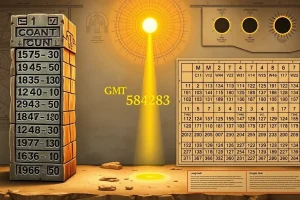
Contemporary digital heritage projects have validated these readings through computational verification. Institutions like the National Museum of the American Indian provide interactive converters that rely on established correlation constants, such as the Goodman-Martinez-Thompson (GMT) correlation, to map Maya dates to the Gregorian calendar. These tools confirm that the Maya achieved remarkable astronomical precision through repetitive naked-eye observation recorded over centuries. Furthermore, ethnohistorical records and modern Maya traditions, particularly among the K’iche’ Maya day keepers, provide living evidence of the Tzolk’in’s continuity. While the Long Count was largely discontinued after the Classic period collapse, the sacred 260-day count remains in use today, offering a direct cultural link to the ancient methods of reading time.
Deep Dive Analysis
To fully grasp how a Maya date is read, one must examine the mechanics of the Long Count system through the lens of calendar mathematics and historical application. This analysis breaks down the units, calculations, and relationships that define a standard Maya inscription.
Units of Time
The Long Count is built upon a vigesimal (base-20) system, though it modifies the third position to align with the solar year. The fundamental units are defined as follows: the k’in represents one day; the uinal consists of 20 k’in; the tun consists of 18 uinal (360 days), representing the approximate solar year; the katun consists of 20 tun (7,200 days); and the baktun consists of 20 katun (144,000 days). This structure allows for a hierarchical representation of time, where larger periods encompass smaller ones, similar to how centuries encompass years in the Gregorian system.
Calculation and Diagram Description
In a typical inscription, these units are written vertically or horizontally with associated glyphs and bar-and-dot numerals. A diagram of a Long Count date would show five positions. The rightmost position represents the k’in, moving leftward to uinal, tun, katun, and finally baktun. To calculate the total days, one multiplies the number in each position by its value and sums the results. For example, a date written as 9.15.0.0.0 indicates 9 baktuns, 15 katuns, 0 tuns, 0 uinals, and 0 k’ins. This mathematical rigidity ensures that every day has a unique identifier within the Long Count cycle.
Example Date
Consider the famous date associated with the end of the 13th Baktun, often misinterpreted in popular culture. A standard Classic Period date might read 9.10.0.0.0. To read this, an epigrapher identifies the glyphs for each unit and counts the bars (value 5) and dots (value 1) associated with them. This specific count would then be cross-referenced with the accompanying Tzolk’in and Haab dates to ensure consistency. Using modern conversion tools, this Long Count date can be translated into a specific month, day, and year in the Gregorian calendar, allowing historians to pinpoint exactly when a ruler ascended to the throne or when a temple was dedicated.
Relationship to Other Calendars
The Long Count does not operate in isolation. It is anchored by the Calendar Round, which provides the ritual and solar context for the absolute count. While the Long Count tells you how many days have passed since creation, the Calendar Round tells you what kind of day it is. For instance, a Long Count date will always be accompanied by a Tzolk’in date (e.g., 4 Ahau) and a Haab date (e.g., 8 Cumku). This relationship ensures that the date is not just a number but a specific moment in the sacred and agricultural cycles. The 52-year Calendar Round cycle means that without the Long Count, a specific combination of Tzolk’in and Haab dates would repeat every 52 years, creating ambiguity over longer historical spans.
Historical Use and Current Traditions
Historically, the Long Count was used primarily during the Classic Period (c. 250–900 CE) to legitimize political power and record dynastic history. Kings used these dates to connect their reigns to the mythological creation of the world. In contrast, the Tzolk’in and Haab continued in use after the Spanish Conquest, although the Long Count fell into disuse in most regions. Today, the Tzolk’in is still used by Maya day keepers in Guatemala and parts of Mexico for divination and community rituals. This continuity highlights the distinction between the administrative utility of the Long Count and the enduring spiritual significance of the 260-day cycle.
Misconceptions
A common misconception involves the end of the Long Count cycle, particularly the date corresponding to December 21, 2012. Popular culture suggested this marked an apocalypse, but archaeological evidence confirms it simply marked the end of a 13-baktun cycle, akin to an odometer rolling over. Another misconception is that the Maya had only one calendar. In reality, they used a stack of interlocking calendars solving different problems. Finally, some believe the calendar was purely mystical; however, evidence shows it was also a practical tool for agriculture, astronomy, and taxation, demonstrating a sophisticated understanding of mathematics and time.
FAQ
Did the Maya calendar end in 2012?
No. The date December 21, 2012, marked the end of a 13-baktun cycle in the Long Count, similar to an odometer rolling over, not the end of time or the world.
Is the Maya calendar still used today?
Yes, the 260-day Tzolk'in calendar is still used by Maya day keepers in Guatemala and Mexico for rituals and divination, though the Long Count is largely discontinued.
How accurate was the Maya solar year?
The Maya achieved remarkable astronomical precision through repetitive naked-eye observation, creating calendars that were highly accurate for their time without modern telescopes.
What is the difference between Haab and Tzolk'in?
The Haab is a 365-day solar calendar used for agriculture and civic life, while the Tzolk'in is a 260-day sacred calendar used for divination and identity.

Leave a Reply