
Short Answer
The study of Ancient Maya burial practices and tomb archaeology provides a critical window into the spiritual and social structures of one of Mesoamerica’s most complex civilizations. When a Maya individual died, their passage from the world of the living to the realm of the ancestors was marked by elaborate ceremonies, specific spatial arrangements, and the deposition of grave goods. These material remains, ranging from simple ceramic vessels to ornate jade mosaics, serve as primary data for archaeologists seeking to reconstruct status, trade networks, and religious ideologies. Unlike modern cemeteries, Maya burials were often integrated into the domestic landscape, located beneath house floors or within monumental architecture, physically anchoring the lineage to the land.
Main Explanation
Maya mortuary practices evolved significantly over time, reflecting changes in political organization and cosmological belief. During the Early and Middle Preclassic periods, burials were generally simpler, often involving flexed positions within residential contexts. Skeletal studies from this era indicate that mobility and diet were key factors in community identity, with burial treatments reflecting local traditions rather than standardized state rituals. As society stratified during the Classic Period (AD 250-900), a distinct divergence emerged between royal and commoner interments. Royal tombs became monumental statements of power, designed to legitimize dynastic succession and facilitate the ruler’s transformation into an ancestral deity.
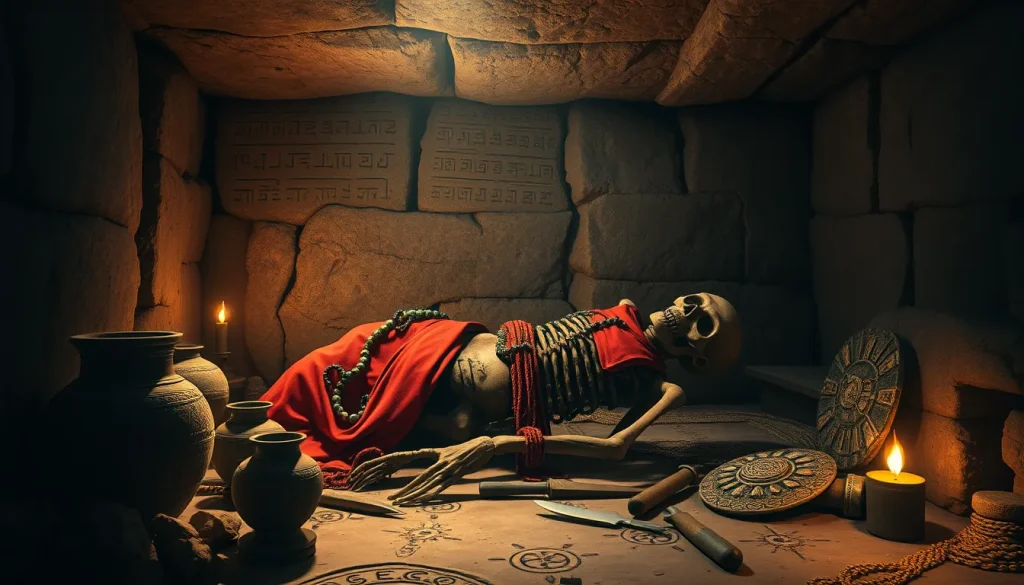
The placement of the body was highly ritualized. Royals were often laid out in an extended position, wrapped in textiles embellished with pigments, worked shell, and carved bone. The use of red pigments, particularly cinnabar (mercury sulfide), was common in elite burials, symbolizing blood, life force, and resurrection. In contrast, commoner burials typically lacked such lavish provisions, though they still adhered to core cosmological principles regarding the direction of the soul. The architecture of the tomb itself was significant; royal tombs were frequently sealed within pyramids or palace structures, ensuring the deceased ruler remained the spiritual foundation of the polity. Regional perspectives, such as those observed in northwest Belize, show variations in these patterns, suggesting that while broad themes existed, local customs influenced specific depositional behaviors.
Evidence & Sources
Archaeological evidence for Maya burial practices is derived from excavation data, osteological analysis, and epigraphic records. James L. Fitzsimmons’ comprehensive work on Classic Maya kings highlights how textual decipherment complements archaeological findings. Inscriptions record funerary rites and the dates of death, allowing researchers to correlate physical tombs with historical individuals. For instance, the investigation of sites like Tikal, Guatemala, has revealed tombs containing ceramics, red pigments, earflares, stingray spines, jades, pearls, obsidian blades, and mosaics. These objects were not merely possessions but ritual tools intended to outfit the king for the afterlife.
Specific case studies provide vivid details. Burial 9, dating to the Early Classic period, offers abundant evidence of regal deathways. The tomb’s contents were organized by material, including shells, jades, and ceramics, with composite objects like pyrite mirrors or mosaic masks indicating high craftsmanship. Such troves deepen the analytical value of intact tombs, providing clues as to what makes a Maya king and what was thought to happen to him after death. Furthermore, regional dissertations focusing on northwest Belize have established broader patterns of burial distribution, helping archaeologists understand how peripheral communities adapted central Mexican or lowland Maya traditions.
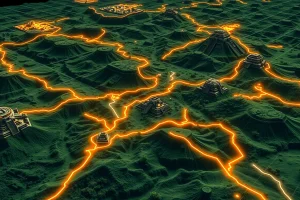
Modern archaeological science has enhanced this understanding through digital heritage and bioarchaeology. Recent reviews of Early and Middle Preclassic burials utilize skeletal studies to analyze mobility, diet, and health. Isotopic analysis of bone collagen reveals where individuals were born and what they ate, distinguishing locals from foreigners—a crucial detail for understanding marriage alliances and political shifts. Digital recording technologies, including 3D modeling of tomb interiors and grave good arrangements, allow for non-invasive preservation of spatial data. This intersection of traditional excavation and digital documentation ensures that the fragile context of burial assemblages is preserved for future analysis, even if the physical materials degrade.
Deep Dive Analysis
Definition of Maya Mortuary Archaeology
Maya mortuary archaeology is the systematic study of human remains and their associated material culture within the context of Maya civilization. It examines the treatment of the dead to infer social organization, religious belief, and biological history. This field distinguishes between simple interments, where the body is placed in the ground with minimal goods, and tombs, which are constructed chambers often containing high-status offerings.
How it Works
The process begins with the preparation of the body, which may include wrapping in textiles and application of pigments. The body is then placed in a designated location, such as beneath a floor or within a pyramid. Offerings are arranged around the body according to ritual protocols. Finally, the space is sealed, often with stone vaults or plaster floors. The sequence of deposition is critical; archaeologists analyze the layering of objects to reconstruct the ritual sequence.
Key Components
Grave goods typically fall into several categories: ornaments (jade beads, earflares), ritual implements (obsidian blades, stingray spines for bloodletting), sustenance (ceramic vessels containing food or drink), and symbolic items (mirrors, masks). Jade was particularly valued, symbolizing breath and vitality. Ceramics often depicted mythological scenes relevant to the underworld. Red pigments were used to cover bones or floors, signifying rebirth.
Example
Burial 9 serves as a prime example of an elite Early Classic tomb. The plan view shows objects as found on initial entry, revealing a trove of evidence that is abundant and varied. The inventory includes composite objects like mosaic masks, which were likely worn or placed over the face. This specific burial offers rare and vivid access to regal deathways during the middle years of the Early Classic period, showing how rulers were outfitted with special foods in serving vessels and sacrificial offerings to accentuate royal status.
Historical Evidence<n
Textual evidence from stelae and lintels often records the death dates of rulers using the Long Count calendar. These dates can sometimes be matched to archaeological layers. Additionally, skeletal analysis provides biological evidence. Studies of the earliest Maya skeletons review mortuary records to understand life and death among the Preclassic populations, highlighting limitations in the dataset due to preservation conditions.
Common Misconceptions
A common misconception is that all Maya burials contained jade or gold. In reality, gold was rare and mostly imported later, while jade was the primary prestige material. Another error is assuming uniformity; burial patterns varied significantly by region and time period. For example, northwest Belize shows distinct regional perspectives compared to the central Peten. Finally, not all buried individuals were sacrificed; while sacrificial offerings accentuated royal status, most burials represent natural death followed by ritual commemoration.
FAQ
What materials were most commonly found in Maya royal tombs?
Royal tombs often contained jade, ceramics, red pigments, earflares, stingray spines, pearls, obsidian blades, and mosaics.
Where were Maya people typically buried?
Burials were often integrated into the domestic landscape, located beneath house floors or within monumental architecture like pyramids.
How do archaeologists determine the status of a burial?
Status is determined by the location of the tomb, the complexity of the architecture, and the quantity and quality of grave goods such as jade and imported materials.
Leave a Reply