
Short Answer
The Mesoamerican Long Count calendar stands as one of the most sophisticated chronological systems developed in the pre-Columbian Americas. Primarily associated with the Maya civilization, this non-repeating calendar was designed to track vast spans of time by counting the number of days elapsed since a mythical creation date. Unlike the cyclical calendars used for agricultural or ritual purposes, the Long Count provided a linear framework that allowed scribes and astronomers to place historical events within a grand cosmic timeline. This article provides a comprehensive examination of the mechanics, mathematics, and archaeological evidence surrounding the Long Count, integrating modern digital heritage perspectives with established epigraphic data.
Introduction to the Mesoamerican Long Count
The Long Count calendar is a unique timekeeping system used by pre-Columbian Mesoamerican cultures, most notably the Maya. While many ancient societies relied on cyclical calendars that reset periodically, the Long Count was designed to measure time linearly. It functioned much like a modern odometer, counting up the number of days that had passed since a specific starting point in the distant past. This system allowed the Maya to record dates uniquely, avoiding the ambiguity that often arose from cyclical systems where the same date combination could recur every few decades.
Archaeological evidence suggests that the Long Count was widely used on monuments, stelae, and altars throughout the Classic Period (approximately 200–900 CE). The system is often referred to as the Maya Long Count calendar, though its origins may trace back to earlier cultures such as the Olmec. The primary utility of the Long Count was to tie current events to past history and folklore, establishing a continuous narrative of royal lineage and cosmic order. By anchoring their history to a fixed day in the distant past, the Maya created a chronological record that was unparalleled in the ancient world.
Understanding the Long Count requires an appreciation of both its mathematical structure and its cosmological significance. It was not merely a tool for administration but a reflection of the Maya worldview, where time was sacred and intertwined with the movements of celestial bodies. The calendar’s structure reflects a deep understanding of astronomy and mathematics, utilizing a modified vigesimal (base-20) system to calculate periods ranging from single days to thousands of years.
The Zero Point: Mythical Creation Date
At the heart of the Long Count calendar lies the mythical creation date. This date serves as the zero point from which all subsequent days are counted. According to the proleptic Gregorian calendar, this creation date corresponds to August 11, 3114 BCE. On this day, the Long Count read 13 baktuns, 0 katuns, 0 tuns, 0 winals, 0 kins, accompanied by the ritual date 4 Ahau 8 Cumku. This specific alignment marks the beginning of the current era in Maya cosmology.
The selection of this date was not arbitrary but was deeply rooted in Maya creation myths. It represents the moment when the cosmos was ordered, and the present world was established. Inscriptions on monuments often reference this date to legitimize the rule of kings, linking their reigns to the foundational moments of the universe. The correlation between the Maya calendar and the Gregorian calendar has been a subject of extensive study, with the Goodman-Martínez-Thompson (GMT) correlation being the most widely accepted standard among archaeologists.
The concept of a fixed starting point allowed the Maya to calculate dates far into the past and future. This linear perspective on time distinguished them from many contemporary cultures that viewed time primarily as cyclical. The creation date thus serves as the anchor for the entire Long Count system, providing a stable reference point for historical and astronomical records.
Maya Numerics and the Vigesimal System
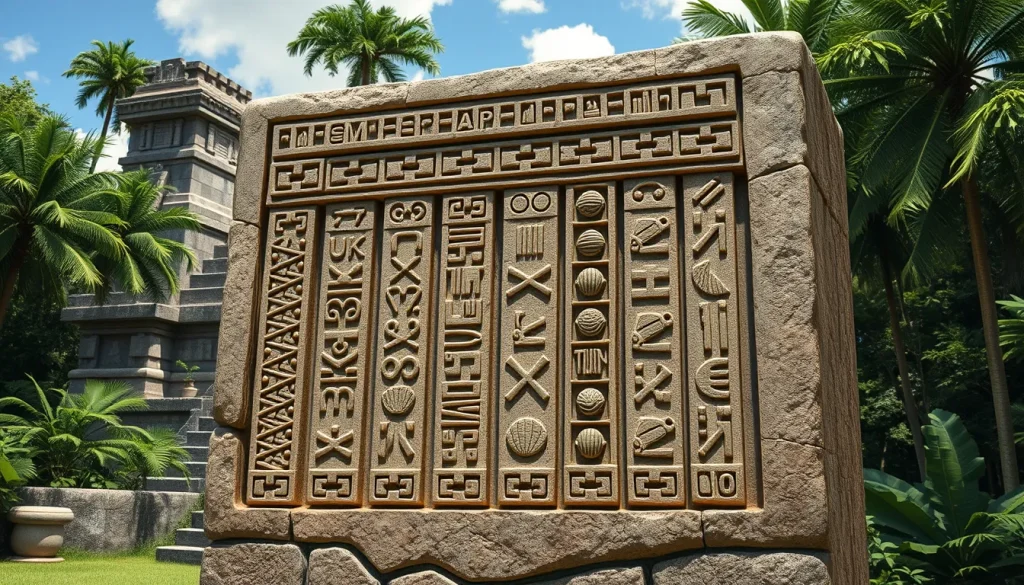
The mathematical foundation of the Long Count is the vigesimal (base-20) numeral system. The Maya developed a positional number system that utilized only three symbols: a dot for 1, a bar for 5, and a shell glyph for zero. This inclusion of zero as a placeholder was a significant mathematical achievement, allowing for complex calculations and the representation of large numbers. Numbers were written vertically, with the lowest position at the bottom and successive positions multiplying by 20.
However, the Long Count employed a modified vigesimal system. While most positions multiplied by 20, the second position (the uinal) multiplied by 18 instead. This modification was made to align the calendar more closely with the solar year. A standard base-20 system would have resulted in a year of 400 days, but by using 18 uinals of 20 days each, the Maya created a tun of 360 days, which approximated the 365-day solar year.
- Dot: Represents the value 1.
- Bar: Represents the value 5.
- Shell Glyph: Represents the value 0.
- Vertical Position: Numbers are stacked vertically, with place value increasing from bottom to top.
- Modified Base: The third position (tun) uses a factor of 18 instead of 20.
This numeric system is evident in the Dresden Codex, one of the most mathematically explicit sacred corpora of the Americas. The use of zero allowed the Maya to perform arithmetic operations necessary for tracking planetary cycles and eclipse predictions. The elegance of this system facilitated the recording of vast spans of time, enabling the inscription of dates that stretched thousands of years into the past and future.
Hierarchical Time Units of the Long Count
The Long Count is composed of five primary units, each representing a specific multiple of days. These units are arranged hierarchically, similar to how modern calendars use years, months, and days. Understanding these units is essential for deciphering Maya inscriptions. The basic unit of time was the kin, which represented a single day. From there, the units scaled up through the uinal, tun, katun, and baktun.
The following table outlines the five levels used to record significant dates in the Maya Classic Era, demonstrating the relationship between the units and their corresponding day counts:
| Unit Name | Composition | Days (Kins) | Approximate Solar Years |
|---|---|---|---|
| Kin | 1 Day | 1 | 0.003 |
| Uinal | 20 Kins | 20 | 0.055 |
| Tun | 18 Uinals | 360 | 0.986 |
| Katun | 20 Tuns | 7,200 | 19.7 |
| Baktun | 20 Katuns | 144,000 | 394.3 |
The tun is the critical unit where the modification from base-20 to base-18 occurs. This adjustment ensured that the calendar remained synchronized with the agricultural and seasonal cycles, even though it was primarily a linear count. The katun, representing approximately 20 years, was often used to mark significant historical periods, such as the reign of a king or the completion of a major construction project. The baktun, spanning nearly 400 years, was used for broader historical epochs.
Inscriptions typically list these units in descending order, from baktun to kin. For example, a date might be recorded as 9 baktuns, 10 katuns, 5 tuns, 0 uinals, and 0 kins. This format provided a precise timestamp for events, allowing modern archaeologists to correlate Maya history with the Western calendar.
Distinguishing the Long Count from the Calendar Round
It is crucial to distinguish the Long Count from the Calendar Round, another prominent system used by the Maya. The Calendar Round is a cyclical system that combines two smaller cycles: the 260-day Tzolkin (ritual calendar) and the 365-day Haab (solar calendar). Together, these cycles create a period of 18,980 days, or approximately 52 solar years, after which the combination of dates repeats.
While the Calendar Round was sufficient for daily life and ritual scheduling, it was inadequate for recording history over long periods because dates repeated every 52 years. The Long Count solved this ambiguity by providing a unique identifier for every day over a span of thousands of years. A full date inscription often included both the Long Count and the Calendar Round date, ensuring both precision and ritual significance.
The Maya are often credited as the first people to establish a chronological record of dates beginning with a fixed day in the distant past from which to number each day uniquely. This innovation allowed them to document their history with a level of precision that was rare in the ancient world. The integration of these systems reflects the dual nature of Maya timekeeping, which balanced linear historical recording with cyclical ritual observance.
Archaeological Record and Monumental Inscriptions
The primary source of information regarding the Long Count comes from monumental inscriptions found on stelae, altars, and temple lintels. These stone monuments were erected by Maya rulers to commemorate significant events, such as accessions to the throne, military victories, and ritual ceremonies. The East side of Stela C at Quirigua, for example, features the mythical creation date of 13 baktuns, 0 katuns, 0 tuns, 0 winals, 0 kins.
Archaeologists have dated the use of the Long Count primarily to the Classic Era (200–900 CE). During this period, the practice of erecting dated monuments was widespread across the southern Maya lowlands. The collapse of the Classic Maya civilization around 900 CE saw much of the southern region abandoned, and the tradition of erecting Long Count stelae diminished. However, the calendar knowledge persisted in the northern Yucatán Peninsula and among later Postclassic groups.
Recent archaeological surveys, including those utilizing LiDAR technology, have revealed thousands of previously unknown structures and inscriptions in the Maya region. These digital heritage tools allow researchers to map sites without invasive excavation, preserving the context of the monuments while identifying new potential sources of Long Count dates. The preservation of these inscriptions is critical for understanding the political and social history of the Maya civilization.
Astronomical Correlations and Accuracy
The Maya were accomplished astronomers, and their calendar system was closely tied to celestial observations. The Long Count was not just a historical record but also a tool for predicting astronomical events. The Dresden Codex contains astronomical tables that demonstrate the Maya’s ability to track the movements of Venus, the Moon, and eclipses with remarkable accuracy.
The correlation between the Long Count and the solar year was maintained through the modified vigesimal system. By adjusting the uinal to 18 units, the Maya ensured that the tun approximated the solar year. This alignment was essential for agricultural planning and ritual timing. The precision of their observations is evident in their calculation of the solar year, which was more accurate than the Julian calendar used in Europe at the time.
Astronomical correlations also played a role in the legitimacy of rulers. Kings often timed their accession or major ceremonies to coincide with significant celestial events, such as solstices or planetary alignments. The Long Count provided the framework to calculate these events far in advance, demonstrating the ruler’s connection to the cosmic order.
Digital Heritage and Modern Decipherment
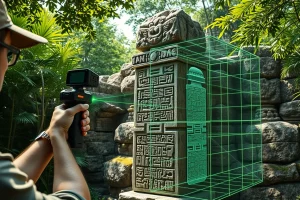
In the 21st century, digital heritage technologies have revolutionized the study of the Maya Long Count. High-resolution 3D modeling and photogrammetry allow researchers to create detailed digital replicas of stelae and codices. These models enable epigraphers to examine inscriptions that are weathered or damaged in the physical world, revealing details that were previously invisible.
Databases of Maya inscriptions now integrate Long Count dates with geographic information systems (GIS), allowing scholars to analyze spatial and temporal patterns in Maya history. This digital approach facilitates collaboration among international teams and ensures that data is preserved against natural degradation and looting. Furthermore, machine learning algorithms are being tested to assist in the decipherment of damaged glyphs, potentially unlocking new historical records.
The integration of digital tools also enhances public engagement. Virtual reality experiences allow users to explore Maya sites and interact with calendar inscriptions in their original context. This democratization of knowledge ensures that the legacy of the Maya calendar is accessible to a global audience, fostering a deeper appreciation for Mesoamerican scientific achievements.
Cosmological Context and Cyclical Time
While the Long Count is linear, it exists within a broader Maya cosmological framework that views time as both linear and cyclical. The completion of a major cycle, such as the 13th baktun, was seen as a moment of cosmic renewal rather than an end. This perspective counters popular misconceptions that the Maya predicted the end of the world in 2012. Instead, the transition marked the beginning of a new era.
“I conceive the endless progress of time as the supreme mystery of Maya religion, a subject which pervaded Maya thought to an extent without parallel in the history of mankind.” — Eric Thompson, 1950
This quote by Eric Thompson highlights the centrality of time in Maya religion. The endless progress of time was not feared but revered as a fundamental mystery of existence. The Long Count was a mechanism to navigate this endless progress, anchoring human activity within the divine structure of the universe. The Maya lived in the Yucatán Peninsula in Central America since 2000 BCE or even earlier, and their conception of time evolved over millennia to encompass these vast spans.
Today, several million Mayan people live in the region, maintaining connections to their ancient forebears. While the Long Count is no longer used for daily timekeeping, its legacy persists in cultural identity and archaeological heritage. The study of the Long Count continues to reveal the depth of Maya intellectual achievement, showcasing a civilization that mastered mathematics, astronomy, and history long before similar developments occurred elsewhere.
FAQ
What is the starting date of the Maya Long Count calendar?
The Long Count calendar begins on August 11, 3114 BCE in the proleptic Gregorian calendar, which corresponds to the mythical creation date in Maya cosmology.
How does the Maya number system differ from ours?
The Maya used a vigesimal (base-20) system with three symbols: a dot for 1, a bar for 5, and a shell for 0. Numbers were written vertically.
Did the Maya Long Count predict the end of the world in 2012?
No. The completion of the 13th baktun in 2012 marked the end of a cycle and the beginning of a new era, not the end of the world.
Why is the Tun 360 days instead of 400?
The Maya modified their base-20 system for the third order (Tun) to use 18 uinals instead of 20, creating a 360-day period to better approximate the solar year.

Leave a Reply