
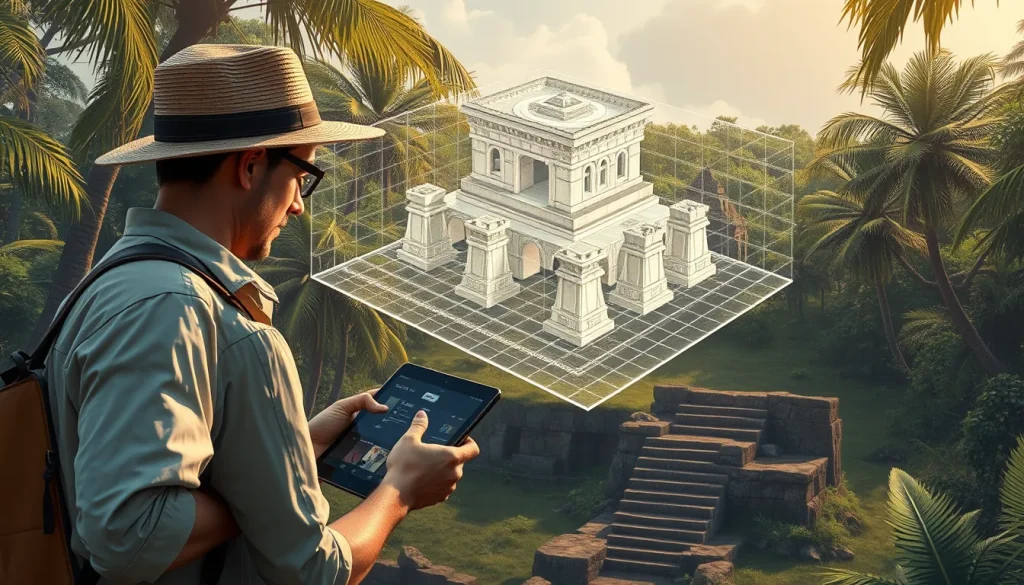
Short Answer
Digital archaeology represents a transformative shift in how researchers investigate, preserve, and interpret the human past. Defined broadly as the application of information technology and digital media to archaeology, this field integrates tools such as databases, 3D models, digital photography, virtual reality, augmented reality, and geographic information systems (GIS) into standard archaeological practice [1]. It is not merely about the use of computers as tools but involves a fundamental reconfiguration of the discipline itself, influencing theoretical debates regarding craft, embodiment, materiality, and ethics [4]. As a vibrant subdiscipline, digital archaeology plays a key role in data collection, analysis, and public outreach, enhancing the study and preservation of archaeological sites and artifacts while minimizing physical intrusion [1].
For specialists in Mesoamerican archaeology, where sites are often dense with vegetation or fragile due to environmental exposure, digital methods offer non-invasive ways to document complex architecture and iconography. However, the definition remains fluid across academic communities. While some perceive it as a distinct discipline, others view it as a branch of archaeological science or digital humanities [3]. This article explores the definition, evidence, and operational workflows of digital archaeology, highlighting its capacity to aid the reconstruction of historical monuments and artifacts such as pottery, human fossils, and mummified remains without invasion or destruction [1].
Main Explanation
At its core, digital archaeology is both a pervasive practice and a unique subdiscipline within archaeology. The diverse digital methods and tools employed by archaeologists have led to a proliferation of innovative practices that fundamentally reconfigure the discipline [4]. It is crucial to understand that digital archaeology is not about ‘mere’ tool use. There is a recognized tension in the field regarding the balance between technical facility and theoretical context. Teaching technical skills without context, or theory without data, does not yield effective learning or research outcomes [2]. Therefore, the field requires curated datasets and careful pruning for pedagogical and research value, ensuring that the computer itself becomes part of the analytical process rather than just a storage device [2].
The scope of digital archaeology includes several interconnected subfields. Computational archaeology, which covers computer-based analytical methods, is considered a subfield of digital archaeology, as is virtual archaeology [1]. Virtual archaeology specifically focuses on creating and using virtual models to represent archaeological data [1]. Despite its growth, there is still uncertainty regarding what exactly digital archaeology is, and it is perceived and practiced differently in European and American academic communities [3]. It is often defined alongside or confused with other terms such as CyberArchaeology and Archaeological Computing [3]. The aim of current scholarship is to analyze this phenomenon, define the role of digital archaeology with respect to digital humanities and archaeological science, and establish best practices [3].
Furthermore, a future digital archaeology must move beyond skeuomorphic submission and the replication of previous structural inequalities to foment new archaeological imaginaries [4]. This means that digital tools should not simply replicate old biases or structures in a new digital format but should enable new ways of thinking about the past. The field situates itself within broader theoretical debates regarding ethics, politics, and accessibility, ensuring that digital heritage is not only preserved but made accessible in equitable ways [4].
Evidence & Sources
The academic foundation for digital archaeology is built upon a growing body of literature that analyzes its emergence and impact. Recent reviews, such as those published in the Annual Review of Anthropology, highlight that digital archaeology is a vibrant subdiscipline operating as a pervasive practice [4]. Scholars note that the digital approach to the study of archaeology currently appears to be the most important research trend in the field, yet definitions remain varied [3]. Influential scholars contribute to defining the role of digital archaeology, often comparing standpoints to clarify its position within the broader academic landscape [3].
Case studies provide concrete evidence of best practices. For instance, the experience of the University of South Florida’s Institute for Digital Exploration (IDEx) offers a model for implementing digital archaeology effectively [3]. These institutional frameworks help resolve the paradox of tool versus theory by providing not just the tools and data, but also the computational environment necessary for rigorous analysis [2]. Additionally, applications of this technology have aided the reconstruction of historical monuments and artifacts, providing empirical evidence of its utility in preservation [1]. The use of digital technology allows data to be collected without the invasion or destruction of archaeological sites, aiding the preservation of archaeological data and cultural heritage [1].
Historical evidence of early archaeological sites discovered in-depth further supports the value of these technologies [1]. By leveraging digital methods, archaeologists can access data that was previously obscured or too fragile to handle physically. This evidentiary base supports the claim that digital archaeology enhances the study and preservation of archaeological sites and artifacts [1]. The funding and support from bodies such as the Arts and Humanities Research Council indicate institutional recognition of the field’s importance in conservation techniques and studies [4].
Deep Dive Analysis
To understand the operational reality of digital archaeology, one must examine the technology, workflow, and cultural considerations involved. The following analysis breaks down the components of digital archaeology as a methodological framework.
Technology Description
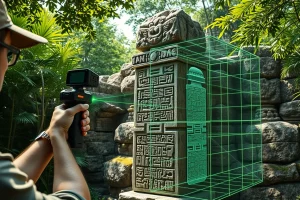
Digital archaeology encompasses the application of information technology and digital media to archaeological questions [1]. This includes a wide array of tools such as databases, 3D models, digital photography, virtual reality (VR), augmented reality (AR), and geographic information systems (GIS) [1]. It is not limited to a single software or hardware but represents an ecosystem of digital interventions used to record, analyze, and visualize archaeological data.
How It Works
The process involves using digital technology to conduct archaeological research, allowing data to be collected without the invasion or destruction of archaeological sites [1]. By digitizing physical objects and sites, researchers create persistent records that can be analyzed computationally. This process supports the preservation of archaeological data by reducing the need for physical handling or excavation that might damage fragile contexts [1].
Field Workflow
Effective workflow requires more than just data collection; datasets have to be curated and carefully pruned for their pedagogical and research value [2]. Researchers cannot simply turn students or analysts loose on a dataset and expect learning or insight to happen automatically [2]. The workflow involves providing the tools, the data, and the computer environment itself to resolve the paradox between technical facility and theoretical context [2]. This structured approach ensures that the digital methods address specific archaeological research questions rather than serving as mere demonstrations of technical capability [3].
Output/Data
The primary outputs include virtual models, databases, and digital reconstructions. Virtual archaeology, a subfield, creates and uses virtual models to represent sites and artifacts [1]. Applications of this technology have aided the reconstruction of historical monuments and artifacts such as pottery, human fossils, and mummified remains [1]. These outputs serve both analytical purposes for researchers and outreach purposes for the public, enhancing the study and preservation of archaeological sites [1].
Example
A prominent example of best practices in digital archaeology is found in the experience of the University of South Florida’s Institute for Digital Exploration (IDEx) [3]. Additionally, the technology has been used to discover early archaeological sites in-depth, allowing for detailed study without physical destruction [1]. In Mesoamerican contexts, similar methods are applied to map dense jungle sites or reconstruct eroded stelae, though the fundamental methodology remains consistent with the global definitions provided by current literature [1][3].
Strengths
The strengths of digital archaeology lie in its ability to aid preservation and enhance outreach. The use of digital technology allows data to be collected without the invasion or destruction of archaeological sites and the cultural heritage they hold [1]. It plays a key role in data collection, analysis, and public outreach [1]. Furthermore, it allows for the proliferation of innovative practice that has fundamentally reconfigured the discipline [4].
Limitations
Despite its benefits, there are limitations and confusions. It is still unclear what exactly digital archaeology is, and it is perceived and practiced differently in different academic communities [3]. There is a risk of ‘skeuomorphic submission,’ where digital tools simply replicate previous structural inequalities rather than creating new imaginaries [4]. Additionally, there is a tension in teaching and practice where tools-first or theory-first approaches alone do not work effectively [2].
Accuracy
Accuracy depends on the curation of datasets. Datasets must be carefully pruned for their pedagogical value to ensure reliable results [2]. The field relies on computer-based analytical methods which, when properly applied as part of computational archaeology, provide rigorous subfield standards [1]. However, the accuracy is also tied to the ethical and political considerations of how data is represented and accessed [4].
Cultural Heritage Considerations
Ethics, politics, and accessibility are central to modern digital archaeology [4]. A future digital archaeology must move beyond the replication of previous structural inequalities [4]. The field must consider how digital representations affect the perception of cultural heritage and ensure that outreach does not commodify or misrepresent the past. This includes navigating the confusion between terms like Virtual Archaeology and CyberArchaeology to maintain clear communication with stakeholders [3].
FAQ
Is digital archaeology just about using computers?
No, it is not about ‘mere’ tool use. It involves theoretical context, curated datasets, and addressing ethics and politics within the discipline [2][4].
What is the difference between digital and virtual archaeology?
Digital archaeology is the broader field applying IT to archaeology, while virtual archaeology is a subfield specifically focused on creating and using virtual models [1].
Does digital archaeology help preserve sites?
Yes, it allows data to be collected without the invasion or destruction of archaeological sites, aiding in the preservation of cultural heritage [1].
Are there ethical concerns in digital archaeology?
Yes, the field must address ethics, politics, and accessibility, moving beyond the replication of structural inequalities [4].
Leave a Reply