
Short Answer
The documentation of ancient Maya writing systems presents significant challenges due to erosion, weathering, and the subtle nature of incised markings. Many glyphs and graffiti, particularly those etched into soft stucco walls within residences and temples, are difficult to perceive under standard lighting conditions. Reflectance Transformation Imaging (RTI) has emerged as a critical digital heritage tool to address these issues. By capturing the interaction of light with surface textures, RTI enables researchers to enhance visibility of faint inscriptions without physical contact, preserving the integrity of fragile archaeological materials.
Main Explanation
Reflectance Transformation Imaging is a computational photographic method that captures the shape and color of a subject and enables the interactive re-lighting of the subject from any direction. The process involves taking a series of digital photographs of a static subject from a fixed camera position while moving a light source to different positions around the object. Each photograph records how light reflects off the surface from a specific angle. These images are then processed using specialized software to create a polynomial texture map (PTM) or a Hemispherical Harmonics (HSH) file.
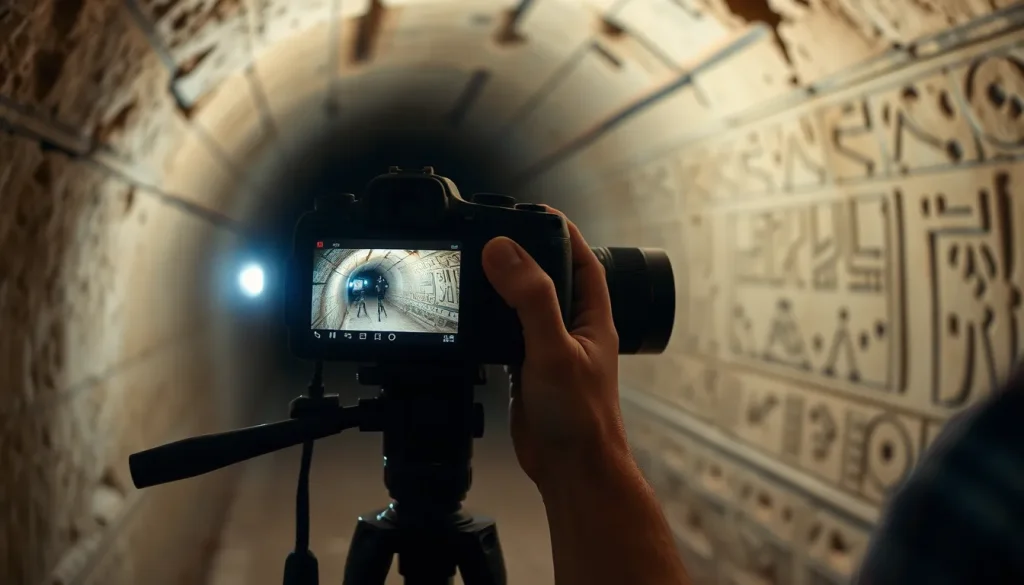
The resulting RTI file allows users to manipulate the direction and color of the light digitally. This capability is crucial for Maya epigraphy because many inscriptions are not deeply carved but rather incised or scratched into surfaces. In the Maya Lowlands, precolumbian graffiti occurs as etched palimpsests on parts of substructures such as stucco walls of residences, palaces, and temples. These surfaces are frequently only accessible through dark and narrow tunnels, making traditional documentation methods difficult. RTI overcomes low-light environments by synthesizing optimal lighting conditions post-capture, revealing details that remain invisible to the naked eye during fieldwork.
Furthermore, RTI preserves the spatial relationship of the glyphs. Unlike standard photography, which flattens depth, RTI retains surface normal information. This means archaeologists can examine the depth of incisions, the tool marks used by ancient scribes, and the stratigraphy of overlapping graffiti. This level of detail is essential for deciphering complex multilayered texts where one glyph may be carved over another. The technology bridges the gap between field archaeology and laboratory analysis, allowing high-resolution study to continue long after the excavation season has concluded.
Evidence & Sources
Recent archaeological applications demonstrate the efficacy of RTI in Mesoamerican contexts. A pivotal case study involves the Maya site of Holtun, Guatemala. Research published in 2024 by Rachel Gill Taylor and colleagues detailed the use of RTI for recording incised graffiti at this location. The study highlighted that Precolumbian Maya graffiti is challenging to document because it is complex, multilayered, and difficult to see with the naked eye. The team successfully applied RTI to stucco walls, documenting inscriptions that were previously obscured by darkness and erosion.
Another significant application occurred at the Tonina Archaeological Zone in Chiapas, Mexico. According to reports from the National Institute of Anthropology and History (INAH), RTI was applied for the first time in Mexico on Maya sculptures at this site. Archaeologist Carlos Pallan Gayol noted that the method was applied to 10 monuments. The goal was to document the ancient monuments and obtain more details of inscriptions. Tonina is recognized as the Maya site with more inscriptions known to present, with more than 300 glyphs carved in monuments and some portable objects. The use of RTI allowed researchers to manipulate light on a photographic sequence in an interactive way, obtaining great quality images that aided in the decipherment process.
Academic groundwork for these field applications was established earlier. A 2018 thesis by Rachel Gill from the University of Central Florida explored documenting graffiti in the Maya Lowlands using RTI. This work identified that by the mid-20th century, explorers had already identified graffiti etched in stucco walls, but modern technology now allows for unprecedented recording fidelity. These sources collectively validate RTI as a standard practice for recording incised cultural heritage materials, particularly where traditional rubbing or tracing might cause damage.
Deep Dive Analysis
Module F: Digital Archaeology
Technology Description
Reflectance Transformation Imaging falls under the umbrella of computational photography and digital archaeology. It is a non-invasive imaging technique that captures the reflectance properties of a surface. Unlike 3D laser scanning which captures geometry, RTI captures surface normals and color information, making it superior for reading shallow inscriptions where depth is minimal but light interaction is critical.
How It Works
The technical workflow begins with setting up a camera on a tripod perpendicular to the subject surface. A light source, often a flash on a boom arm or a fixed dome with multiple lights, is moved to known positions around the subject. A reflective sphere (often a chrome ball) is placed in the frame to calculate the exact light vector for each image. Software then correlates the pixel values across the image set to build a mathematical model of the surface reflectance.
Field Workflow
In the context of Maya archaeology, the workflow must adapt to challenging environments. As noted in studies from Holtun, graffiti is often found in dark and narrow tunnels. Portable RTI setups are required. The archaeologist must stabilize the camera completely to prevent motion blur between shots. Cleaning the surface is generally avoided to prevent damage, meaning the RTI must penetrate dust and grime through lighting manipulation rather than physical cleaning.
Output and Data
The final output is an interactive file viewable in specialized RTI viewers. Users can slide a virtual light source around the image, change lighting modes (such as diffuse gain or specular enhancement), and zoom into high-resolution details. This data can be archived digitally, ensuring that even if the physical stucco degrades further, the record of the inscription remains preserved in its current state.
Example Application
The 2024 study by Gill Taylor et al. serves as a primary example. The team used RTI to document etched palimpsests on stucco walls. The technology revealed layers of graffiti that were otherwise indistinguishable. Similarly, at Tonina, the technique was used on stone monuments to clarify glyphs carved into hard stone, demonstrating the versatility of RTI across different building materials.
Strengths
The primary strength of RTI is its non-contact nature. It does not require touching the artifact, reducing the risk of abrasion. It is also cost-effective compared to high-end laser scanners. The ability to enhance surface texture allows for the identification of tool marks, which can inform researchers about the instruments used by Maya scribes.
Limitations
RTI does not capture true 3D geometry with metric accuracy like LiDAR or photogrammetry. It is a 2.5D representation. Additionally, the setup time can be lengthy, requiring multiple exposures per subject. In humid jungle environments, equipment maintenance is critical. The technique also relies on surface texture; if an inscription is faded due to color loss rather than physical erosion, RTI may be less effective unless combined with multispectral imaging.
Accuracy
When executed correctly, RTI provides sub-millimeter detail regarding surface topology. The accuracy of the light vector calculation depends on the precision of the reference sphere detection in the software. For epigraphic purposes, this level of accuracy is sufficient to distinguish between intentional incisions and natural weathering cracks.
Cultural Heritage Considerations
The use of digital tools like RTI aligns with modern conservation ethics. It reduces the need for physical casts or rubbings, which can degrade fragile stucco. Furthermore, digital files can be shared with indigenous communities and researchers globally, facilitating collaborative study without requiring travel to the site, which minimizes foot traffic and potential damage to the archaeological zone.
FAQ
What is Reflectance Transformation Imaging (RTI)?
RTI is a computational photographic method that captures how light interacts with a surface, allowing users to digitally manipulate lighting direction to reveal surface details like faded inscriptions.
Why is RTI used for Maya graffiti?
Maya graffiti is often incised into soft stucco and located in dark tunnels, making it difficult to see. RTI enhances visibility without physical contact.
Has RTI been used in Mexico?
Yes, RTI was applied for the first time in Mexico on Maya sculptures at the Tonina Archaeological Zone to document monuments and inscriptions.

Leave a Reply