
Short Answer
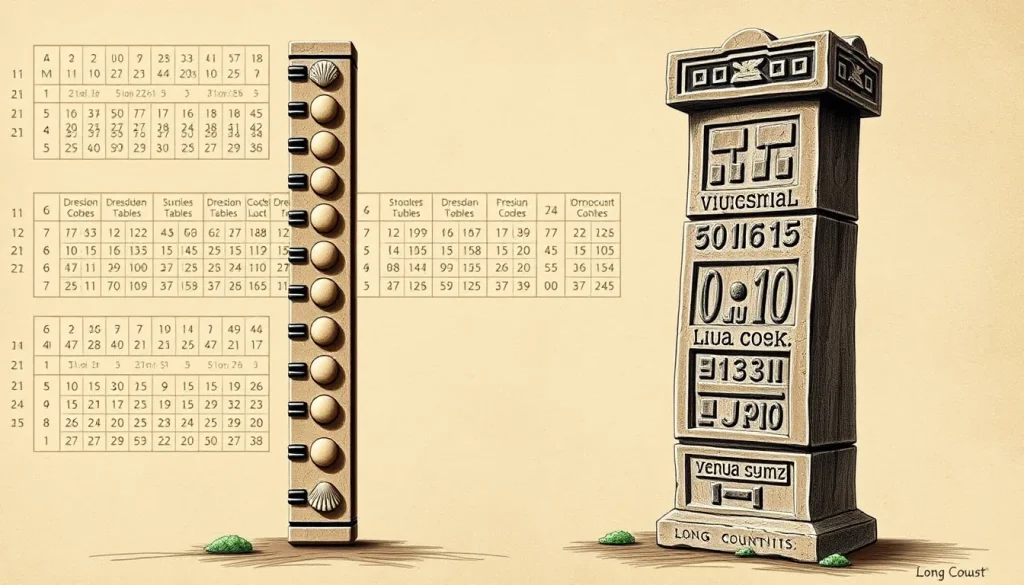
The independent invention of zero stands as one of the most significant intellectual achievements in human history, and the Maya civilization of Mesoamerica was among the few cultures to develop this concept without external influence. Within the context of Maya mathematics and astronomical calculations, zero was not merely a philosophical abstraction but a functional tool essential for managing large numbers and tracking celestial cycles. The integration of zero into their vigesimal (base-20) numerical system allowed Maya scribes and astronomers to record deep time through the Long Count calendar and predict celestial events such as eclipses and the movements of Venus with remarkable precision. This article examines the structural role of zero in Maya numeration, the archaeological evidence supporting its use, and its specific application in calendrical astronomy as documented in surviving codices and stone monuments.
Main Explanation
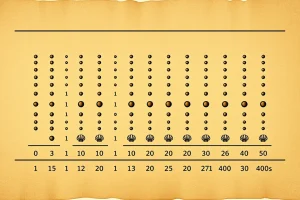
The Maya numerical system was fundamentally vigesimal, meaning it was based on units of twenty rather than the decimal base-10 system common in modern Western mathematics. In this system, numbers were represented using a combination of dots (representing one) and bars (representing five). However, the critical innovation that distinguished Maya mathematics from many contemporary systems was the use of a specific glyph to denote zero. This zero functioned primarily as a placeholder within a positional notation system, allowing for the representation of large numbers necessary for calendrical reckoning. Without a zero, distinguishing between numbers like 20 and 400 in a positional system would be ambiguous. The Maya zero enabled the clear differentiation of place values, such as units, twenties, and four-hundreds, which was vital for the accuracy of their Long Count calendar.
In astronomical calculations, the concept of zero was indispensable. The Maya tracked cycles that spanned thousands of days, such as the synodic period of Venus or the eclipse year. To manage these calculations, scribes utilized a modified vigesimal system where the third position represented 18 times 20 (360) rather than 20 times 20 (400), aligning the mathematical structure with their 360-day tune year. Zero allowed them to reset counts and maintain positional integrity during complex additions and subtractions required for predicting future celestial positions. According to research by Floyd G. Lounsbury, the mastery of these numerical operations was directly linked to the priesthood’s ability to legitimize rule through accurate prophecy and ritual timing. The zero was not just a number; it was a mechanism of cosmic order, ensuring that the calendar remained synchronized with the observed sky over centuries.
Evidence & Sources
Archaeological and textual evidence for the Maya concept of zero is robust, spanning from the Preclassic to the Postclassic periods. One of the earliest known uses of zero in Mesoamerica appears on Stela C at Tres Zapotes, dated to 32 BCE, which utilizes the Long Count system. However, the most detailed evidence comes from the Classic Period stelae found across the Maya lowlands in regions such as Guatemala, Belize, and Honduras. These stone monuments often display Initial Series dates that rely on zero to mark the completion of calendar cycles. The glyph for zero typically resembles a shell or a flower, though variations exist across different city-states and time periods. This iconographic consistency suggests a standardized understanding of the concept among the scribal class.
Textual evidence is preserved primarily in the Maya codices, with the Dresden Codex being the most significant source for astronomical data. This manuscript contains tables for eclipses and Venus cycles that rely heavily on positional mathematics involving zero. Recent academic analysis, such as the 2021 study published in Heliyon by Rojo-Garibaldi, Rangoni, Gonzalez, and Cartwright, explores non-power positional number representation systems and bijective numeration in the context of the Mesoamerican discovery of zero. Their work highlights the sophistication of the system, noting that the Maya usage predates or parallels other independent discoveries globally. Furthermore, educational resources like those from Mexicolore confirm the use of zero as a placeholder in both calendrical and non-calendrical contexts. The convergence of epigraphic data from stelae and mathematical tables in codices provides a comprehensive picture of how zero was operationalized in ancient Maya society.
Deep Dive Analysis
Module A: Definition and Mechanics of Maya Zero
Definition: In Maya mathematics, zero is defined as a numerical value representing the absence of a quantity within a specific place value of a positional system. It is symbolized glyphically, most commonly by a shell-like shape, and functions to hold a place in the vigesimal structure to ensure accurate magnitude representation.
How it works: The Maya system is positional, meaning the value of a symbol depends on its vertical position. A dot in the bottom row equals one, but a dot in the second row equals twenty. If a specific position has no value, the zero glyph is inserted to prevent the upper values from shifting down incorrectly. For example, in the number 401, the middle position (twenties) must be marked as zero to distinguish it from 21. This mechanism is crucial for the Long Count, where positions represent days, uinals (20 days), tunes (360 days), katuns (7,200 days), and baktuns (144,000 days).
Key components: The system relies on three primary symbols: the dot (1), the bar (5), and the shell (0). These are combined vertically. The shell glyph is the distinct marker for zero. In some contexts, such as the Dresden Codex, zero may also be represented by a variant glyph resembling a clenched hand or a flower, indicating contextual flexibility in scribal practice. The consistency of the shell glyph across monuments suggests it was the standard formal representation.
Example: A classic example is the Long Count date 13.0.0.0.0, which marks the beginning of the current creation cycle in Maya cosmology. The zeros here indicate that no additional days, uinals, tunes, or katuns have elapsed beyond the 13 baktuns. Another example is found in Venus tables, where zero is used to reset counters after a cycle completes, allowing for the calculation of future conjunctions.
Historical evidence: Evidence dates back to at least the 1st century BCE with the Tres Zapotes stela. During the Classic Period (250–900 CE), zero appears frequently on stelae at sites like Tikal and Copan. The Dresden Codex, dating to the Postclassic period, demonstrates the application of zero in complex astronomical algorithms. The 2021 Heliyon article by Cartwright et al. further analyzes the theoretical underpinnings of this discovery, placing it within the broader history of numerical systems.
Common misconceptions: A common misconception is that the Maya zero was purely philosophical or religious. While it had cosmological significance, archaeological evidence shows it was primarily a practical mathematical tool. Another misconception is that the Maya were the only culture to invent zero; while they were independent inventors, similar concepts arose in India and Babylon. Additionally, some modern interpretations suggest the zero represented a void or spiritual nothingness, but epigraphic evidence supports its function as a placeholder and operator within a rigorous computational framework.
FAQ
Did the Maya invent zero before other civilizations?
The Maya developed zero independently in Mesoamerica. While Babylonians and Indians also developed concepts of zero, the Maya discovery was isolated and occurred by at least the 1st century BCE.
What does the Maya zero glyph look like?
The most common glyph for zero resembles a shell, though variations including a flower or clenched hand appear in specific codices like the Dresden Codex.
Why was zero necessary for the Maya calendar?
Zero acted as a placeholder in their positional vigesimal system, allowing them to accurately record large numbers required for the Long Count and astronomical cycles.




Leave a Reply