
Short Answer
The ancient Maya possessed a sophisticated understanding of celestial mechanics, particularly regarding the planet Venus. For centuries, scholars recognized that the Maya tracked Venus using a 584-day synodic cycle approximation within the Dresden Codex. However, the true synodic period of Venus is approximately 583.92 days. This slight discrepancy creates a cumulative error over time that would eventually desynchronize the calendar from actual sky observations. Recent groundbreaking research by Gerardo Aldana, published in 2016, offers a revolutionary reinterpretation of how Maya scribes corrected this error. By re-reading Page 24 of the Dresden Codex, known as the “Preface,” Aldana demonstrates that the Maya employed a complex mathematical correction system rooted in historical observation rather than abstract myth. This discovery suggests the Venus Table was an indigenous astronomical innovation developed at Chichén Itzá during the 10th century, possibly under the patronage of the prominent ruler K’ak’ U Pakal K’awiil.
Main Explanation
The core of the mathematical challenge lies in the difference between the integer value used by the Maya and the actual astronomical reality. The Maya Venus Table is built on a cycle of five Venus years, equaling 2,920 days (5 x 584). This period also corresponds closely to eight Earth years (8 x 365 days). While elegant, the 584-day figure is slightly longer than the true synodic period of Venus. Over decades, this error accumulates, causing the predicted heliacal risings of Venus to drift away from the actual events. For a civilization that tied ritual activity and warfare to these celestial omens, such drift was unacceptable.
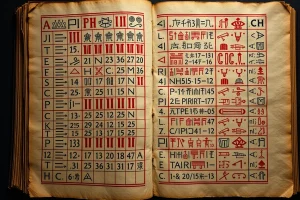
Traditional interpretations of the Dresden Codex assumed that the corrections were either mythical or based on a different, less precise methodology. However, Aldana’s analysis proposes that the glyphic text on Page 24 contains specific Long Count dates that anchor the table to historical reality. The text provides a justification for the graphical layout that is more straightforward than traditional interpretations. The correction mechanism involves shifting the base dates of the table to realign the mathematical count with observed phenomena. This “elegant math,” as described by Aldana, implies that Maya scribes were not merely copying inherited knowledge but were actively engaged in astronomical discovery and calibration. The correction was not a one-time event but a structured part of the table’s design, allowing the calendar to remain accurate over long periods.
The implications of this finding shift the timeline and location of this astronomical knowledge. Rather than being a late Postclassic abstraction, the Venus Table’s correction logic points to the Terminal Classic period. The coherence of the reading demonstrates that the Maya integrated Long Count tallies, which function similarly to Julian Day Numbers, with the Calendar Round to maintain precision. This synthesis of vigesimal counting and observational data highlights the advanced nature of Maya mathematical astronomy.

Evidence & Sources
The primary evidence for these mathematical corrections comes from the Dresden Codex, a Postclassic manuscript that survived the Spanish conquest and eventually repose in the Dresden Library in Germany. For centuries, this document received scant attention regarding its specific correction mechanisms until recent philological work. Aldana’s 2016 study, “Discovering Discovery: Chich’en Itza, the Dresden Codex Venus Table and 10th Century Mayan Astronomical Innovation,” provides the authoritative grounding for this new understanding. The study combines a new reading of the hieroglyphic text with mathematical intervals and calendric data.
Specifically, the research identifies Mayan Long Count dates within the Venus Table’s historical correction section. These dates are not arbitrary; they correspond to periods of significant activity at Chichén Itzá. The resulting Long Count placement suggests the manuscript’s Venus Table was an indigenous astronomical discovery made at that city. Epigraphic evidence from Chichén Itzá supports this, linking the astronomical work to the “epigraphic florescence” of the city. K’ak’ U Pakal K’awiil is identified as a key historical figure in the inscriptions of the city during this period, suggesting possible patronage of the astronomical work.
Furthermore, National Geographic coverage in 2016 highlighted how this fresh look at the ancient text changes the understanding of how the Maya used the night sky to plan ceremonial calendars. The imagery in the Dresden Codex includes seated gods representing different aspects of Venus, reinforcing the cultural weight of these calculations. Venus was not merely a scientific object but an omen of war that guided ritual activity and prompted great battles. The archaeological evidence thus bridges the gap between abstract mathematics and socio-political action. The coherence of the Page 24 reading confirms that the logic underlying the construction of the page was designed to handle the 584-day error systematically.
Deep Dive Analysis
Celestial Object: The focus of these corrections is Venus, known to the Maya as Noh Ek’ (Great Star). To the modern stargazer, Venus is a point of light, but for the ancient Maya, its brilliant light was shorthand for “total destruction” and war. The planet’s movements were meticulously recorded because its appearances were believed to influence earthly outcomes.
Observational Cycle: The synodic period of Venus is the time it takes to return to the same position relative to the Sun as seen from Earth. The true value is approximately 583.92 days. The Maya used 584 days for ease of calculation within their base-20 system. This difference of 0.08 days per cycle results in a drift of about 24 days over 300 years if uncorrected. The Maya mathematical corrections were designed to mitigate this drift.
How Maya Observed It: Maya astronomers relied on naked-eye observations recorded by scribes. They tracked the heliacal rising of Venus as the Morning Star. These observations were compared against the calculated dates in the Venus Table. When discrepancies arose, the correction mechanisms embedded in the codex were applied. The process required sustained observation over generations to recognize the cumulative error.
Archaeological/Textual Evidence: The Dresden Codex Page 24 serves as the primary textual evidence. Aldana’s reading reveals that the “Preface” contains specific dates that justify the table’s structure. This contrasts with earlier views that saw the text as purely ritualistic. The identification of Long Count dates within the correction section provides a historical anchor, linking the manuscript to the 10th century.
Calendar Connection: The Venus Table is integrated with the Maya Calendar System, which combines the 260-day Count (Tzolk’in) and the 365-day Count (Haab’). The Calendar Round repeats every 52 years. The Venus Table’s 584-day cycle intersects with these counts. The corrections ensure that the Venus cycles remain synchronized with the Calendar Round dates, maintaining the ritual efficacy of the calendar.
Architecture Connection: The astronomical innovation is linked to Chichén Itzá. Structures such as El Caracol are believed to have served as observatories aligned with Venus extremes. The patronage of K’ak’ U Pakal K’awiil suggests that the city’s architectural and epigraphic florescence was supported by this astronomical knowledge. The physical cityscape reflected the celestial order maintained by these mathematical corrections.
Cultural Meaning: Venus was an omen of war. The accuracy of the Venus Table was crucial for timing battles and rituals. A drift in the calendar could mean performing a war ritual under the wrong astrological sign, potentially jeopardizing the outcome. The corrections were therefore not just scientific but vital for state security and religious legitimacy.
Uncertainty/Debate: While Aldana’s 2016 work provides a coherent reading, archaeological interpretation is always subject to revision. The traditional interpretation allowed for less precision regarding the graphical layout of Page 24. The new reading introduces a justification that is more straightforward but requires acceptance of the specific Long Count placements identified. Ongoing research continues to examine how widespread this correction method was across the Maya region.
FAQ
Why did the Maya use 584 days instead of the accurate 583.92 days?
The Maya used 584 days because it was an integer that fit neatly into their vigesimal (base-20) mathematical system and aligned with the 365-day solar year over an 8-year period, simplifying calculations despite the slight drift.
What is the significance of Page 24 in the Dresden Codex?
Page 24 serves as the “Preface” to the Venus Table. Recent analysis shows it contains specific Long Count dates and mathematical justifications for correcting the cumulative error in the Venus cycle.
How does this research change our view of Chichén Itzá?
The research suggests that Chichén Itzá was a center of astronomical innovation in the 10th century, where the Venus Table corrections were likely developed under the patronage of ruler K’ak’ U Pakal K’awiil.


Leave a Reply