
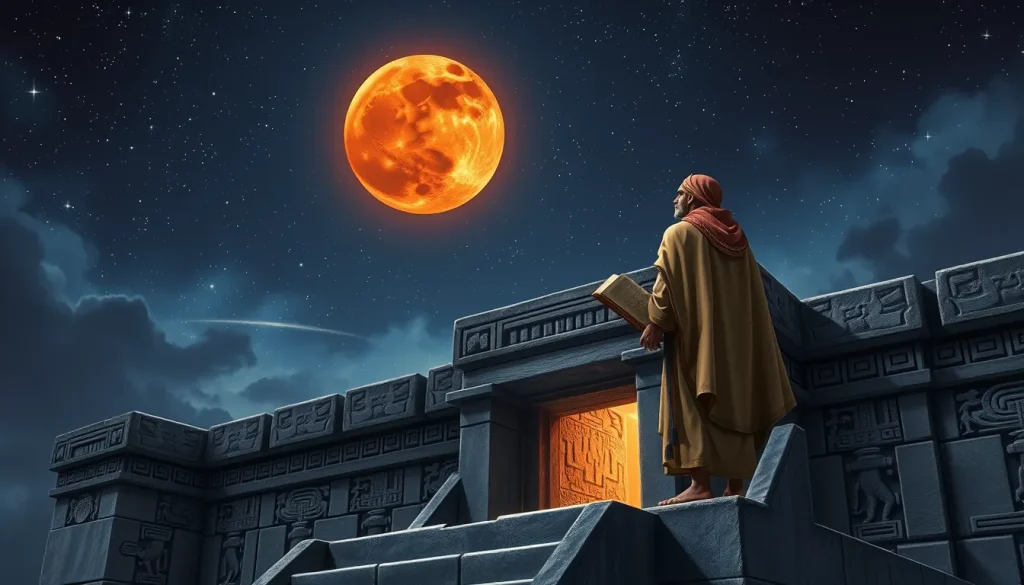
Short Answer
The question of whether the Ancient Maya tracked the movements of Mars and Jupiter lies at the heart of Mesoamerican archaeoastronomy. For decades, scholars have analyzed surviving codices and stone inscriptions to reconstruct the celestial knowledge of this civilization. The evidence overwhelmingly confirms that the Maya monitored Mars with high precision, utilizing complex tables to predict its synodic cycles. The case for Jupiter is more nuanced, relying on interpretations of planetary stations and broader cosmological patterns rather than explicit tables comparable to those for Venus or Mars. Understanding these tracking methods requires examining the intersection of mathematics, observation, and ritual timing preserved in documents like the Dresden Codex and monuments such as Tortuguero Monument 6.
Main Explanation
The Ancient Maya developed a sophisticated understanding of celestial mechanics that rivalled contemporary civilizations elsewhere in the world. Their astronomy was not merely observational but deeply integrated into their calendar systems and ritual life. When investigating planetary tracking, distinct levels of evidence emerge for different celestial bodies. Venus holds the most prominent position in the surviving record, followed closely by Mars. The tracking of Mars is explicitly documented in the Dresden Codex, a pre-Columbian Maya book of ritual and astronomical tables. Pages 43b–45b of this codex are specifically concerned with the synodic cycle of Mars, revealing a concern for commensurate relationships among celestial cycles and their relationship to other nonastronomical cycles of cultural interest.
In contrast, evidence for Jupiter is less direct in the surviving corpus. While the Maya certainly observed the night sky comprehensively, specific tables for Jupiter akin to the Mars or Venus tables have not been definitively identified in the same manner. However, research into observable planetary stations suggests the Maya recorded significant celestial events that likely included Jupiter. The methodology used by Maya astronomers involved recognizing repeating patterns over long periods, allowing them to predict future positions based on past observations. This system relied on the synodic period—the time it takes for a planet to return to the same position relative to the Sun as seen from Earth. For Mars, this period is approximately 780 days. The Maya adjusted their calculations to account for the irregularities in planetary motion, demonstrating a high level of mathematical sophistication.
The cultural significance of these planets varied. Mars, often associated with war and conflict due to its red coloration, was integrated into ritual timing. Jupiter, the largest visible planet, likely held cosmological importance, though its specific glyphic identification in inscriptions remains a subject of ongoing analysis. The distinction between explicit tracking (recorded tables) and implicit tracking (observational awareness) is crucial when evaluating the archaeological record. While Mars tracking is explicit, Jupiter tracking is inferred through broader archaeoastronomical contexts and the general competency of Maya skywatchers.
Evidence & Sources
The primary evidence for Maya planetary tracking comes from two sources: codices and stone inscriptions. The Dresden Codex remains the most critical document for understanding Mars astronomy. New work reported on complex tables on pages 69–74 of the Codex reveals a concern on the part of the Maya scribes with aligning celestial cycles. These documents were not merely scientific logs but ritual guides, used to determine auspicious times for ceremonies, warfare, and agricultural activities. The accuracy of these tables allowed priests to anticipate celestial events years or even decades in advance.
Stone inscriptions provide complementary evidence. Monument 6 from Tortuguero, for example, contains hieroglyphic inscriptions that scholars have analyzed for astronomical themes. Research presented on Astronomy in the Tortuguero Inscriptions suggests an awareness of solar alignments with the dark rift in the Milky Way, indicating a broader cosmological framework that included planetary and lunar alignments. While Tortuguero is often cited in discussions of the 2012 phenomenon, the archaeological evidence points to a genuine interest in long-count period endings and their alignment with celestial phenomena. The inscriptions record dates that correlate with significant astronomical configurations, supporting the hypothesis that major monuments were dedicated in conjunction with celestial events.
Further evidence comes from the analysis of planetary stations. Studies titled Seeking the Sidereal: Observable Planetary Stations and the Ancient Maya Record highlight how the Maya recorded stationary points of planets. These stations occur when a planet appears to stop moving against the background stars before reversing direction. Recording these moments required sustained observation and record-keeping over generations. The consistency of these records across different sites suggests a shared astronomical knowledge base among the Maya elite. This data supports the conclusion that while Mars documentation is explicit, the tracking of other planets like Jupiter was part of the same observational tradition, even if specific tables have not survived or remain undeciphered.
Deep Dive Analysis
Module C: Astronomy – The Case of Mars
Celestial Object: Mars (Chak Ek’ or similar designations in Maya glyphic script).
Observational Cycle: The synodic cycle of Mars averages 779.94 days. The Maya approximated this in their calculations, often using multiples of this cycle to create long-term tables. The irregularity of Mars’ orbit requires corrections over time, which the Dresden Codex tables address through correction intervals.
How Maya Observed It: Observations were likely made from dedicated structures or elevated platforms where the horizon was visible. Priests or astronomers would track the planet’s rise and set positions relative to horizon markers. The red color of Mars was significant, often linking it to concepts of war, heat, and dryness in Maya cosmology.
Archaeological/Textual Evidence: The most definitive evidence is found in the Dresden Codex, specifically pages 43b–45b. These pages contain a table designed to track the movements of Mars. Additionally, pages 69–74 contain a complex table revealing concerns with commensurate relationships among celestial cycles. Inscriptions at sites like Tortuguero also hint at astronomical alignments, though these are often solar or galactic in focus, contextualizing the planetary data within a larger skyview.
Calendar Connection: The Mars cycles were integrated into the Sacred Round (Tzolk’in) and the Haab’. By finding commensurabilities between the 780-day Mars cycle and the 260-day ritual cycle, the Maya could predict when Mars would appear in specific ritual contexts. This allowed for the scheduling of events deemed auspicious based on planetary positions.
Architecture Connection: While specific Mars-oriented buildings are less famous than Venus-oriented ones like El Caracol at Chichén Itzá, the orientation of certain temples may align with Mars’ extreme declinations. The architecture served as a fixed reference point for observing the moving celestial bodies.
Cultural Meaning: Mars was not merely a scientific object but a deity or manifestation of divine force. Its movements were believed to influence events on earth, particularly conflict. Tracking Mars was therefore a political and religious necessity, allowing rulers to time warfare or defensive actions according to celestial omens.
Uncertainty/Debate: While Mars tracking is well-supported, the extent of Jupiter tracking remains debated. Some scholars argue that certain glyphic sequences refer to Jupiter, while others contend the evidence is insufficient. The lack of a surviving Jupiter table comparable to the Mars table leaves some uncertainty regarding the precision of Jupiter predictions compared to Mars or Venus.
FAQ
Did the Maya track Jupiter like they did Mars?
Evidence for Mars is explicit in the Dresden Codex. Jupiter tracking is inferred from general planetary station records but lacks a specific surviving table like Mars.
What is the Dresden Codex?
It is one of the few surviving pre-Columbian Maya books, containing detailed astronomical tables including the synodic cycle of Mars.
Why did the Maya track Mars?
Mars was associated with war and conflict. Tracking its cycles allowed priests to schedule rituals and warfare during auspicious times.
Is the 2012 alignment theory supported by evidence?
Inscriptions like Tortuguero Monument 6 show awareness of celestial alignments, but modern prophetic claims are distinct from archaeological findings.





Leave a Reply