
Short Answer
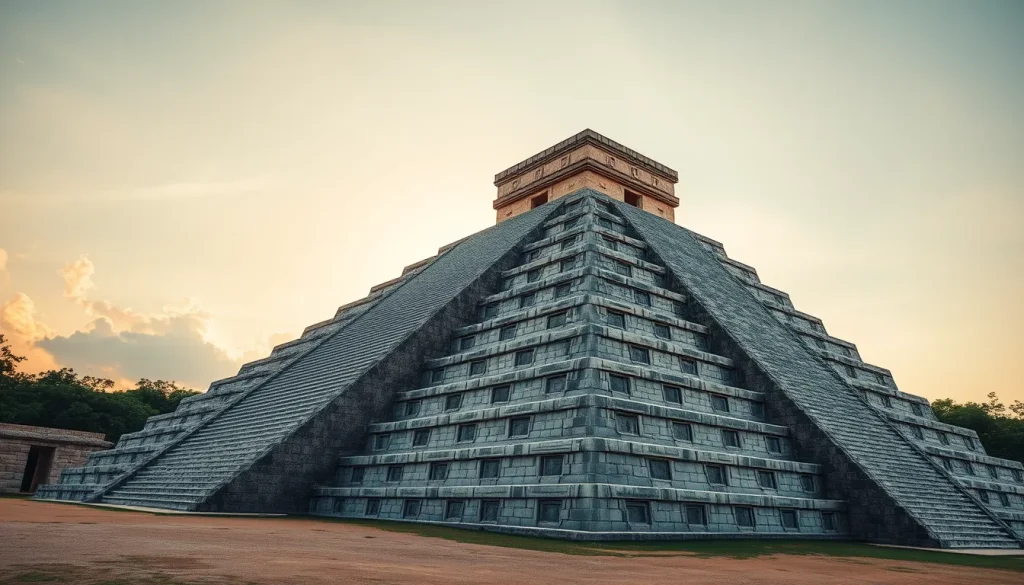
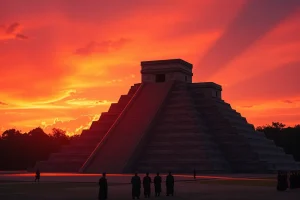
El Castillo, known formally to archaeologists as Structure 5B18, stands as the dominant feature of the Chichén Itzá archaeological site in the Yucatán, Mexico. While often popularly referred to simply as a pyramid, scholarly consensus identifies the structure as a sophisticated monumental calendar formed in stone. The question of whether El Castillo is “really” a Maya calendar is answered affirmatively by architectural analysis, which reveals that the building’s dimensions, stairways, and orientations correspond precisely to key units of Maya timekeeping and astronomy. This integration of architecture and chronology reflects the Maya cosmological view where time, space, and deity were interconnected.
Main Explanation
The assertion that El Castillo functions as a calendar is based on specific numerical correspondences embedded in its physical design. The pyramid consists of nine stepped levels, which are divided by four stairways ascending each side. Each of the four stairways contains 91 steps. When these are summed (91 steps × 4 sides = 364) and the top platform is added as a final step, the total equals 365, representing the number of days in the solar year or Haab’. This numerical encoding is not accidental but demonstrates a deliberate intention to monumentalize the passage of time.
Furthermore, the nine terraced levels are divided by the staircases, creating 18 separate sections on each side. These 18 terraces commemorate the 18 months of the Maya Vague Year, each consisting of 20 days. On each facade of the pyramid, there are 52 flat panels. These panels serve as reminders of the 52 years in the Maya Calendar Round, a cycle resulting from the synchronization of the 260-day sacred calendar (Tzolk’in) and the 365-day solar calendar. Beyond the solar year, the structure aligns with astronomical events. During the spring and autumn equinoxes, the play of light and shadow creates the appearance of a serpent undulating down the northern stairway, symbolizing the descent of the deity Kukulcán. This phenomenon indicates that the building also served as an observational device for marking seasonal transitions critical to agriculture and ritual.
Evidence & Sources
Archaeological designation and historical dating support the calendar hypothesis. The temple building is formally designated by archaeologists as Chichen Itza Structure 5B18. Construction is dated between the 8th and 12th centuries CE, with some sources suggesting the first temple was pre-Toltec, built around AD 800, while the present 25-meter-high structure was built over the old one. This layering suggests a continuity of sacred space where later builders maintained or enhanced the astronomical functions of the earlier structure. A substructure likely was constructed several centuries earlier for the same purpose, indicating that the site’s role as an astronomical marker predates the visible exterior.
Historical records and modern analysis confirm the intentionality of the design. The structure embodies Mayan myth along with natural astronomical cycles. The phenomenon that El Castillo is famous for occurs twice each year, at the spring and fall equinoxes. In fact, the effect is viewable for a week before and after each equinox. As the equinox sun sets, a play of light and shadow creates the appearance of a snake that gradually undulates down the stairway of the pyramid. This diamond-backed snake is composed of seven or so triangular shadows, cast by the stepped terraces of the pyramid. While it is not possible to read the minds of the Maya who built the structure in roughly AD 1000, various signs suggest the effect was intentional rather than a happy accident. The presence of sculptures of plumed serpents running down the sides of the northern balustrade reinforces the connection between the architectural shadow and the deity Kukulcán.
Deep Dive Analysis
Module B: Building/Site Analysis
Location and Context
El Castillo dominates the center of the Chichen Itza archaeological site in the Mexican state of Yucatán. It is located within the Tinum Municipality and is part of a UNESCO World Heritage Site. Its central placement underscores its importance as a focal point for civic and religious life, aligning with the cardinal directions which were significant in Maya cosmology.
Construction and History
Built by the pre-Columbian Maya civilization sometime between the 8th and 12th centuries AD, the building served as a temple to the deity Kukulcán, the Yucatec Maya Feathered Serpent deity closely related to Quetzalcoatl. The current structure covers an earlier pyramid, a common practice in Mesoamerican architecture to legitimize new rule while maintaining sacred geography. The first temple here was pre-Toltec, built around AD 800, but the present 25m-high structure, built over the old one, has the plumed serpent sculpted along the stairways and Toltec warriors represented in the doorway carvings at the top of the temple.
Architecture and Calendar Encoding
The structure is actually a massive Maya calendar formed in stone. Each of El Castillo’s nine levels is divided in two by a staircase, making 18 separate terraces that commemorate the 18 20-day months of the Maya Vague Year. The four stairways have 91 steps each; add the top platform and the total is 365, the number of days in the year. On each facade of the pyramid are 52 flat panels, which are reminders of the 52 years in the Maya calendar round. This architectural math ensures that the building itself is a mnemonic device for the priesthood to track long-term cycles.
Astronomical Interpretation
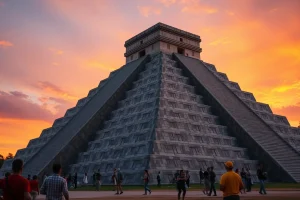
The alignment of El Castillo is precise. To top it off, during the spring and autumn equinoxes, light and shadow form a series of triangles on the side of the north staircase that mimic the creep of a serpent. The sinking sun seems to give life to the sinuous shadows, which make a decidedly snaky pattern on their way down the stairs. Thousands of people gather to see this phenomenon, which may have been viewed by the ancient Maya as the manifestation of the god Kukulkán, the feathered serpent. This alignment required precise knowledge of the solar cycle and architectural engineering to execute correctly over such a large scale.
Archaeological Evidence
Excavations have revealed the substructure mentioned in historical analyses, confirming the multi-phase construction. The formal designation as Structure 5B18 allows archaeologists to differentiate between the visible outer shell and the internal core. Material analysis confirms the use of limestone, typical for the region. The height is recorded as 24 m (79 ft), without temple, 30 m (98 ft), with temple, and the temple itself is 6 m (20 ft). The base measures 55.3 m (181 ft). These precise measurements support the theory of planned design rather than organic growth.
Alternative Interpretations and Consensus
While some popular interpretations lean towards mystical or New Age spiritual claims regarding energy vortexes, the scholarly consensus remains grounded in archaeoastronomy. The building served as a temple and a calendar. There is debate on whether the equinox effect was the primary purpose or a secondary enhancement to a temple dedicated to Kukulcán. However, the integration of the 365 steps and 52 panels is too specific to be dismissed as coincidence. The consensus is that the structure functioned as a political and religious tool to demonstrate the ruler’s control over time and cosmic order.
Visitor Misconception and Safety
A common misconception among visitors is that the pyramid can be climbed to access the temple at the top. You won’t see the carvings, however, as ascending the pyramid was prohibited after a fatal accident here in 2006. This restriction protects both the visitors and the ancient limestone structure from erosion. Modern digital heritage initiatives now use 3D modeling to allow virtual exploration of the upper temple without physical risk, preserving the site for future generations while maintaining educational access.
FAQ
Can visitors still climb El Castillo?
No, ascending the pyramid was prohibited after a fatal accident occurred in 2006 to protect both visitors and the structure.
When does the serpent shadow appear?
The shadow phenomenon occurs during the spring and autumn equinoxes, visible for about a week before and after each event.
Is the calendar design intentional?
Archaeological evidence suggests the effect was intentional, with step counts and panels matching Maya time cycles precisely.
Leave a Reply