
Short Answer
Chichén Itzá stands as one of the most formidable and enigmatic cities of the ancient Maya civilization. Located on the Yucatán Peninsula in modern-day Mexico, this site was not merely a settlement but a complex nexus of power, faith, and commerce that dominated the region for centuries. Understanding why Chichén Itzá was important requires an examination of its geopolitical strategy, its sophisticated integration of astronomy into architecture, and its unique position as a cultural melting pot during the Terminal Classic period. At its peak, the city may have housed approximately 35,000 people, functioning as a religious, military, political, and commercial hub that drew influence from across Mesoamerica.
Main Explanation
The significance of Chichén Itzá is multifaceted, rooted in both practical survival and cosmological authority. Geographically, the site was chosen for its access to water, a critical resource in the limestone landscape of the Yucatán. The city derives its name from the Mayan language term for “at the mouth of the well of the Itza,” referring to the large cenote, or natural sinkhole, located nearby. This cenote provided a perennial water source, allowing the city to thrive even during periods of drought that contributed to the decline of other Maya lowland cities. This strategic advantage allowed Chichén Itzá to expand its influence when neighboring regions were faltering.
Beyond survival, Chichén Itzá was important due to its role as a center of ideological synthesis. Throughout its nearly 1,000-year history, different peoples left their mark on the city. The archaeological record reveals a fusion of Mayan construction techniques with new elements from central Mexico, specifically associated with the Toltec civilization. This fusion makes Chichén Itzá one of the most important examples of the Mayan-Toltec civilization in Yucatán. The presence of these non-Maya styles was once thought to represent direct migration or conquest, but contemporary interpretations view this more as the result of cultural diffusion. This suggests the city was a cosmopolitan hub where diverse populations interacted, traded, and shared religious ideas, solidifying its status as a mythical great city, or Tollan, referred to in later Mesoamerican literature.
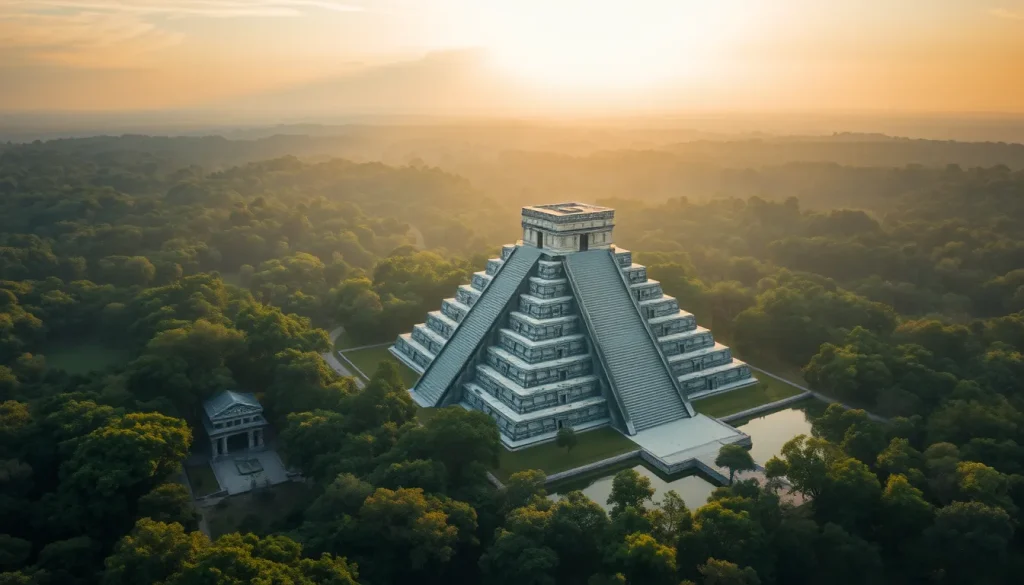
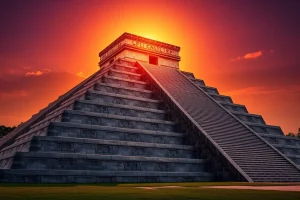
The city’s importance was also cemented through its monumental architecture, which served as a physical manifestation of power. Structures such as El Castillo, the Warriors’ Temple, and the circular observatory known as El Caracol were not just functional buildings but statements of authority. They demonstrated the ruling elite’s ability to mobilize labor and their mastery over the cosmos. By aligning these structures with celestial events, the leaders of Chichén Itzá legitimized their rule through divine connection, ensuring the city remained a sacred site and a political capital for generations.
Evidence & Sources
Archaeological evidence supporting the importance of Chichén Itzá is extensive and continues to grow. The site was named a UNESCO World Heritage Site in 1988 and was voted one of the New Seven Wonders of the World in 2007, highlighting its global significance. Excavations have unearthed artifacts indicating trade networks that extended far beyond the Yucatán, including obsidian from central Mexico and gold from further south. These findings confirm the city’s role as a commercial hub. Furthermore, the sheer density of structures within the site suggests a high population concentration, supporting estimates that 35,000 people may have lived there at its peak.
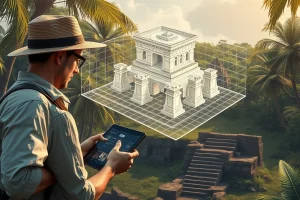
In the realm of digital heritage, modern technology has enhanced our understanding of the site’s layout and significance. While traditional excavation reveals artifacts, digital archaeological methods such as LiDAR (Light Detection and Ranging) and 3D modeling allow researchers to map the extent of the urban sprawl beneath the jungle canopy without destructive digging. These technologies have helped identify causeways, or sacbeob, connecting Chichén Itzá to other sites, reinforcing its status as a political capital with a wide sphere of influence. Digital reconstructions of El Castillo and the Great Ball Court also allow scholars to test acoustic properties and light effects, providing empirical data on how the ancients experienced these spaces during rituals.
Historical records, though scarce from the Maya themselves, are supplemented by post-conquest documents and oral histories that refer to the Itza people. The Itza were an ethnic group of Mayans who ruled much of present-day Mexico and Central America prior to the arrival of European colonists. The convergence of material evidence, such as the stylistic shifts in architecture from the Puuc style to the Central Mexican style, alongside digital spatial analysis, provides a robust framework for understanding the city’s evolution from a Late Classic focal point into a Postclassic powerhouse.
Deep Dive Analysis
Location and Strategic Geography
Chichén Itzá is located about 120 miles from the modern-day resort town of Cancun, on Mexico’s Yucatan Peninsula. The archeological site is situated in Tinúm Municipality, Yucatán, Mexico. Its location in the Northern Maya Lowlands was strategic. Unlike the southern lowlands which relied on river systems, the north depended on cenotes. The presence of the Xtoloc cenote and the Sacred Cenote provided reliable water, making the site viable for large-scale urbanization. This geographic advantage was a primary driver of its longevity and importance.
Construction and History
The city likely saw its first settlers around 550 CE. It served as a major focal point in the Northern Maya Lowlands from the Late Classic (c. 600–900 AD) through the Terminal Classic (c. 800–900 AD) and into the early portion of the Postclassic period (c. 900–1200 AD). The construction history is divided into phases. The earliest structures, such as the Casa de las Monjas (“Nunnery”), exhibit Puuc and Chenes styles typical of the Northern Maya. Later structures, like the Warriors’ Temple and El Castillo, show the influence of central Mexico. This nearly 1,000-year history indicates sustained importance and continuous investment in the site’s infrastructure.
Architecture and Stylistic Fusion
The site exhibits a multitude of architectural styles, reminiscent of styles seen in central Mexico and of the Puuc and Chenes styles of the Northern Maya lowlands. This variety suggests the city may have had the most diverse population in the Maya world. The fusion of Mayan construction techniques with new elements from central Mexico is evident in the use of colonnades, serpent motifs, and warrior statues. This architectural syncretism is a key indicator of the city’s role as a cultural bridge, facilitating the exchange of artistic and religious ideas across Mesoamerica.
Astronomical Interpretation
Astronomy was central to the city’s design. El Castillo, a pyramid that rises 79 feet, is aligned to cast a shadow resembling a serpent during the equinoxes. The circular observatory known as El Caracol contains windows aligned with the movements of Venus. The Maya and Toltec vision of the world and the universe is revealed in their stone monuments and artistic works. These alignments were not merely decorative; they were functional tools for maintaining the calendar and scheduling agricultural and religious events, reinforcing the elite’s control over time itself.
Archaeological Evidence
Excavations have revealed thousands of artifacts, including jade, turquoise, and copper bells, indicating long-distance trade. The Sacred Cenote has yielded human remains and precious offerings, confirming its use for ritual sacrifice. New discoveries are still being unearthed in the area, providing even more insight into the culture and accomplishments of the Mayan people. Digital heritage initiatives continue to document these findings, ensuring preservation against environmental degradation and tourism impact.
Alternative Interpretations
The presence of central Mexican styles was once thought to have been representative of direct migration or even conquest from central Mexico. However, most contemporary interpretations view the presence of these non-Maya styles more as the result of cultural diffusion. Some scholars argue that the “Toltec” influence might be a later mythologizing of the site’s history by post-classic groups seeking to legitimize their own rule by connecting to the prestige of Chichén Itzá.
Scholar Consensus
Despite debates on the nature of the foreign influence, there is consensus that Chichén Itzá was one of the largest Maya cities and it was likely to have been one of the mythical great cities, or Tollans. It was a sacred site that was one of the greatest Mayan centres of the Yucatán peninsula. The combination of military imagery, religious iconography, and economic capacity confirms its status as a regional capital.
Visitor Misconception
A common misconception is that the site was abandoned suddenly due to a single catastrophe. In reality, the decline was gradual, and the site remained a place of pilgrimage long after its political power waned. Additionally, visitors often climb the pyramids, but this is now restricted to preserve the structure. Understanding the site requires recognizing it as an active archaeological zone where new discoveries continue to refine our knowledge of the Maya civilization.
FAQ
What does the name Chichén Itzá mean?
The name is a Mayan language term for “at the mouth of the well of the Itza,” referring to the cenotes that provided water to the city.
Who built Chichén Itzá?
It was built by the Maya people, with significant architectural influence from Central Mexican cultures, often associated with the Toltecs.
Is Chichén Itzá still being studied?
Yes, it remains an active archeological site where new discoveries are still being unearthed, providing insight into Maya culture.
Leave a Reply