
Short Answer
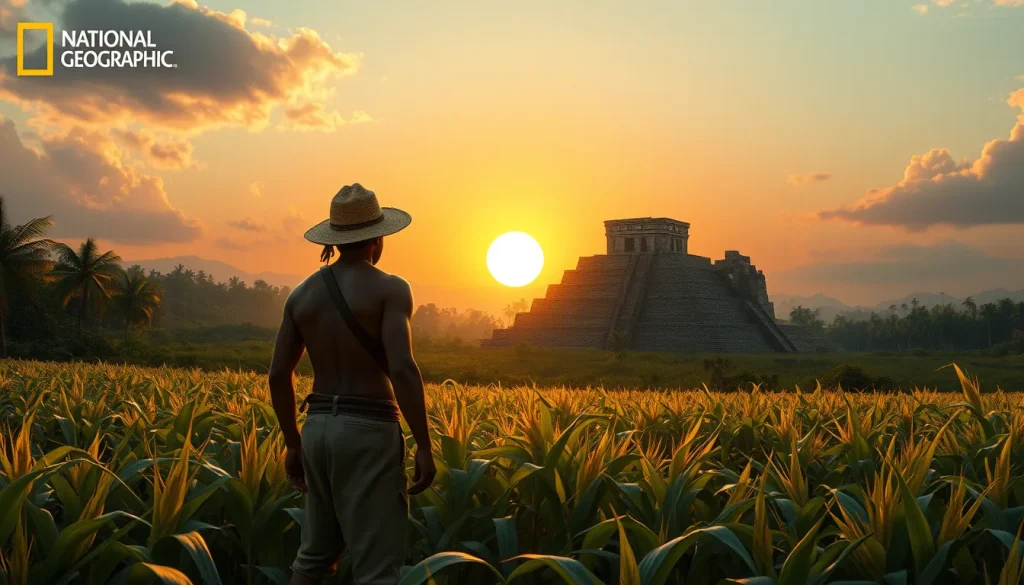
The relationship between the ancient Maya civilization and the natural world was not merely practical but profoundly cosmological. Agriculture, the backbone of Maya society, was inextricably linked to the movements of the heavens. For the Maya, the cycles of the sun, moon, and planets were not abstract astronomical phenomena but direct instructions for survival, dictating the rhythms of planting, harvesting, and the rituals necessary to ensure fertility. This integration of astronomy and agriculture created a sophisticated system of Traditional Ecological Knowledge (TEK) that allowed Maya communities to thrive in diverse ecological zones for millennia. Recent archaeological investigations and collaborations with modern Maya descendants continue to uncover the depth of this connection, challenging earlier assumptions that such knowledge was reserved solely for the elite.
Main Explanation
The influence of astronomy on Maya agriculture was primarily mediated through the observation of solar cycles. The sun was the central deity and timekeeper, governing the agricultural year. In the hinterlands of Northwestern Belize, specifically at the site of Blue Creek, archaeological evidence suggests that ancient Maya farmers utilized solar observation to structure their agricultural rhythms. This was not a passive observation but an active engagement where the positioning of the sun relative to horizon markers signaled the onset of critical farming phases. The solar year was divided into periods that corresponded with the rainy and dry seasons, essential for maize cultivation. These periods were often marked by rituals performed at specific architectural structures oriented to capture solar zeniths or solstices.
Beyond the physical act of farming, astronomy imbued agricultural labor with spiritual significance. The calendar systems, such as the Haab’ and the Tzolk’in, were interwoven with celestial events to determine auspicious days for planting. A day deemed unfavorable by the sacred calendar could delay agricultural activities regardless of weather conditions, highlighting the priority of cosmological order over immediate meteorological convenience. This system ensured that agricultural work was synchronized with the broader cosmic order, reinforcing the belief that human survival depended on maintaining harmony with the heavens. The integration of these cycles meant that agriculture was a ritual act as much as an economic one, requiring the participation of community members in ceremonies that acknowledged the debt owed to celestial forces.
Modern research emphasizes that this knowledge was not static. Contemporary Maya communities retain elements of this Traditional Ecological Knowledge, using weather forecasting techniques rooted in ancestral observation to cope with modern climate change. Studies indicate that this knowledge is dynamic, contributed to by both elders and younger generations, and remains a vital resource for sustainability. The continuity of these practices suggests that the ancient influence of astronomy on agriculture was not lost but adapted, surviving through oral traditions and community practices even after the collapse of classic political structures. This resilience underscores the depth of the astronomical foundation underlying Maya agricultural systems.
Evidence & Sources
Archaeological and ethnohistorical evidence provides robust support for the astronomical regulation of Maya agriculture. A pivotal study published in Latin American Antiquity focuses on the site of Blue Creek in Northwestern Belize. Researchers identified architectural alignments and ritual deposits that correlate with solar observation points used to mark agricultural cycles. The study, titled Agricultural Rhythms and Rituals: Ancient Maya Solar Observation in Hinterland Blue Creek, Northwestern Belize, demonstrates that even in hinterland regions away from major urban centers, farmers employed sophisticated astronomical methods to manage their fields. This finding disrupts the notion that high-level astronomical knowledge was confined to major cities like Tikal or Chichén Itzá, indicating a widespread literacy in celestial observation among rural populations.
Further evidence comes from collaborative research between Western scientists and Indigenous Maya descendants. An article in Science highlights projects where descendants team up with scholars to interpret ancient sites like the Temple of the Great Jaguar in Tikal. These collaborations reveal that modern Maya daykeepers still invoke sacred calendar days, such as T’zi’, for ceremonies related to justice and balance, which historically extended to agricultural management. The use of the K’iche’ language and traditional counting methods during these ceremonies preserves the numerical and astronomical logic of the ancient systems. This living heritage provides a unique lens through which archaeological data can be interpreted, bridging the gap between stone monuments and the human behaviors that animated them.
Additionally, research published in Frontiers in Sustainable Food Systems examines Mayan Traditional Knowledge on weather forecasting. This study underscores the relevance of ancient astronomical knowledge in contemporary contexts, particularly in coping with climate change. It documents how Indigenous peoples integrate Traditional Ecological Knowledge with modern science, validating the accuracy and utility of ancestral observation methods. The research suggests that the ancient Maya likely used similar integrative approaches, combining celestial data with environmental indicators like animal behavior and plant phenology. Finally, academic work by Michael Grofe on the astronomical symbolism of the Era as the Maya agricultural year provides theoretical grounding, suggesting that large-scale time cycles were also mapped onto agricultural productivity, linking the fate of the crops to the fate of the cosmos.
Deep Dive Analysis
Module A: Definition of Solar Agricultural Calibration
Definition: Solar Agricultural Calibration refers to the systematic alignment of agricultural activities with observed solar positions and calendar cycles. It is the mechanism by which the Maya synchronized human labor with celestial time.
How it works: The system relies on horizon astronomy, where specific mountains, structures, or natural features mark the rising or setting points of the sun during solstices and equinoxes. When the sun aligns with these markers, it signals the start of a specific agricultural phase, such as land clearing or planting. This visual cue is cross-referenced with the sacred calendar to ensure ritual propriety.
Key components: The primary components include the solar year (365 days), the sacred calendar (260 days), horizon markers, and ritual specialists. The interaction between the solar year and the sacred calendar creates a 52-year cycle, known as the Calendar Round, which governed long-term agricultural planning and land management strategies.
Example: At Blue Creek, Northwestern Belize, structures were oriented to capture the sun’s position during the zenith passage. This event, occurring twice a year in the tropical zone, was critical for determining the onset of the rainy season, essential for maize cultivation. Rituals performed at these times were believed to summon the rain deities necessary for crop success.
Historical evidence: Archaeological surveys at Blue Creek have identified architectural alignments consistent with solar observation. Furthermore, ethnohistorical records and modern ethnographic studies, such as those involving K’iche’ speakers in Guatemala, confirm the persistence of calendar-based agricultural decision-making. The collaboration between scientists and Maya descendants at Tikal further validates the continuity of these observational practices.
Common misconceptions: A prevalent misconception is that astronomical knowledge was the exclusive domain of the priestly elite in major cities. Evidence from hinterland sites like Blue Creek suggests that rural farmers also possessed and utilized this knowledge. Another misconception is that these practices were purely superstitious; in reality, they represented a sophisticated form of data collection and environmental management that ensured sustainability over centuries.
FAQ
Did only Maya priests understand astronomy?
No, evidence from sites like Blue Creek indicates that rural farmers also utilized astronomical observation for agricultural planning.
How does modern Maya knowledge relate to ancient practices?
Modern Maya descendants continue to use traditional calendars and weather forecasting methods, collaborating with scientists to preserve this knowledge.
What celestial event was most important for farming?
The solar zenith passage and solstices were critical for determining the onset of the rainy season and planting times.

Leave a Reply