
Short Answer
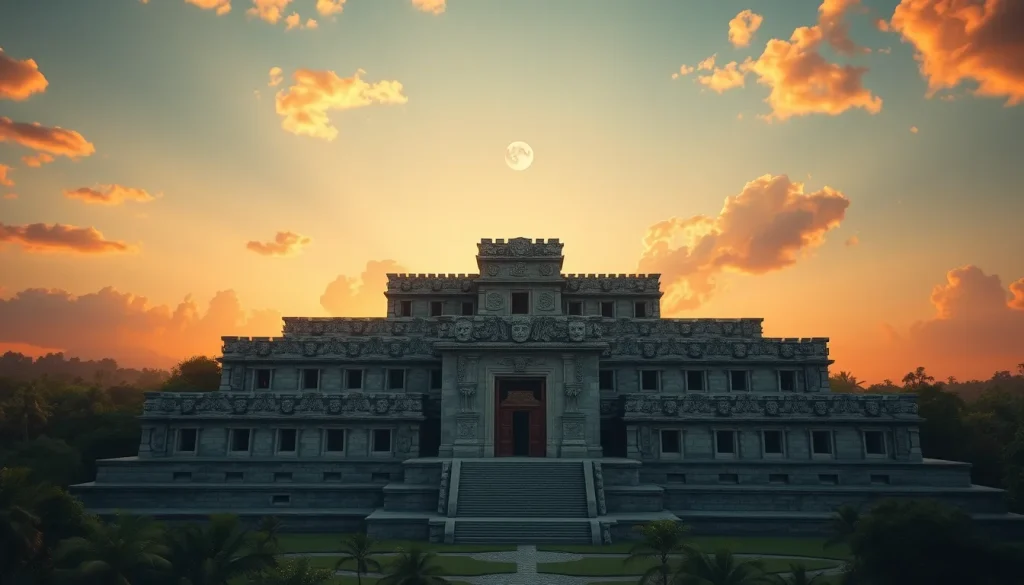
The Governor’s Palace at Uxmal stands as one of the most sophisticated examples of Maya architecture, distinguished not only by its aesthetic grandeur but by its precise integration with celestial mechanics. Located in the Puuc region of the Yucatan Peninsula, this massive structure was constructed around AD 900 under the rule of Lord Chac. Unlike many other ceremonial buildings that prioritize solar alignments, the Governor’s Palace is uniquely oriented to track the complex cycles of Venus. This alignment reflects a deep cosmological understanding where the spatial relationships of the ritual center mirrored the celestial order. The building’s orientation faces the point on the horizon where Venus first rises as the Morning Star, specifically targeting an infrequently occurring extreme position. This architectural choice underscores the significance of Venus in Maya warfare, agriculture, and ritual timing during the Late Classic to Terminal Classic periods.
Main Explanation
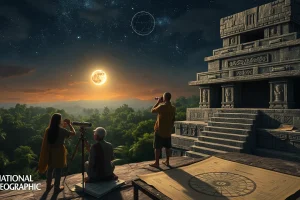
The primary astronomical definition of the Governor’s Palace is its orientation toward the southernmost rising point of Venus as the Morning Star. This alignment is not merely symbolic but is embedded in the physical dimensions and positioning of the structure. The palace is a tripartite building, composed of three parts connected by soaring transverse vaults, measuring approximately 328 feet in length. It sits atop an immense four-tiered platform that rises more than 50 feet above the ground level, providing an unobstructed view of the horizon necessary for accurate astronomical observation. This elevation was critical for Maya astronomers who needed to sight celestial bodies over the dense jungle canopy. The orientation contrasts sharply with nearby structures such as El Adivino (The Pyramid of the Magician), whose temples face the setting sun at the summer solstice. This collocation of pyramidal forms obeyed relationships of celestial order, reflecting the cosmos in the spatial relationships of the ritual center.
The significance of the Venus alignment extends beyond simple orientation. The Maya recognized that the Venus synodic mean is almost 584 days, but observed that the Venus synodic can vary between 581 and 587 days. The architecture of Uxmal, particularly the Governor’s Palace and the Nunnery Quadrangle, preserves knowledge of these variations. The building faces the horizon point where Venus appears after its period of invisibility, a moment of great ritual importance known as the heliacal rising. This event was often associated with the initiation of warfare or significant royal ceremonies. The alignment to an infrequently occurring extreme position suggests that the palace was built to commemorate a specific astronomical event or cycle that held particular significance for Lord Chac and the ruling lineage of Uxmal. The integration of such precise data into stone demonstrates that the building itself served as a permanent record of astronomical knowledge, functioning as both a residence of power and a tool for cosmic observation.
Evidence & Sources
Archaeological and epigraphic evidence strongly supports the astronomical interpretation of the Governor’s Palace. A hieroglyphic inscription above the central doorway of the Palace relates specifically to the concern with Venus and other celestial phenomena. According to research by Harvey M. Bricker and Victoria R. Bricker, part of this inscription depicts zodiacal constellations, and its uppermost row serves as a sort of map of the constellations at the ‘base of the sky’ at the time of the Venus alignment. This Throne Inscription from Uxmal is now recognized as one of the major sources of information about the pre-Columbian Maya zodiac. The presence of these glyphs confirms that the builders intentionally encoded astronomical data into the decorative program of the facade.
Further evidence is found in the counts of mosaic facade elements, doors, steps, and colonnettes of the East, West, and North Buildings of the Nunnery Quadrangle, which are closely associated with the Governor’s Palace complex. Studies suggest that these features, taken together, preserve knowledge of eight facts about the sun, moon, and Venus. For instance, the counts reflect that the moon’s synodic period is 29.53+ days and the lunar sidereal period lasts nearly 27.33 days. Additionally, the architecture encodes the relationship that any five consecutive Venus synodics equal or come to within one day of eight vague years of 365 days each. Cheek glyphs, flanking bird-serpents, and plumed-snake headbands found on the masks suggest that most of the masks on the East Building, West Building, and Governor’s Palace represent not Chac but Kukulcan-Venus. This iconographic shift supports the astronomical interpretation over a purely rain-god focused theology.
Historical documentation also corroborates the architectural significance. In 1841, John Lloyd Stephens wrote of the Governor’s Palace noting that there is no rudeness or barbarity in the design, but rather an air of architectural symmetry and grandeur. Modern art historians and architects, including Frank Lloyd Wright, have considered it the finest example of ancient American architecture. Jeff Kowalski, author of The House of the Governor, believes it stands as the symbol of a pivotal moment in the history of Maya architecture. The convergence of epigraphic data, architectural metrology, and historical observation creates a robust case for the astronomical function of the site.
Deep Dive Analysis
Location and Context
The Governor’s Palace is situated at the Maya site of Uxmal in the Yucatan Peninsula. It dominates the landscape, set on an immense four-tiered platform which rises 50 feet above ground level. A grand ceremonial staircase leads up to it, emphasizing its importance within the site layout. In the distance, El Adivino rises massively, providing a contrasting orientation that highlights the specific celestial focus of the Palace.
Construction and History
The House of the Governor was built around AD 900 by the Uxmal ruler Lord Chac. This period marks the Late Classic to Terminal Classic transition, a time when Maya architecture in the Puuc region reached its zenith. The construction involved massive labor resources to create the platform and the 328-foot long superstructure. The building is a tripartite structure, composed in three parts connected by soaring transverse vaults. This design allowed for large interior spaces while maintaining structural integrity using corbelled vaulting techniques typical of the Maya.
Architecture and Dimensions
The gigantic building is 328 feet long and stands on the summit of an immense four-tiered platform. The platform itself is over 50 feet high. The sheer scale of the structure was designed to be visible from afar and to elevate the rulers closer to the celestial realm. The facade is decorated with intricate stone mosaics. These are not merely decorative; counts of these elements correlate with astronomical cycles. The building’s length and the number of doorways are believed to encode calendar data, specifically relating to the Venus cycle and lunar periods.
Astronomical Interpretation
The Palace faces the point on the horizon where Venus rises at the Morning Star. This is not the average rising point but an extreme position that occurs infrequently. The alignment suggests the building was dedicated to the observation and ritualization of Venus cycles. The Maya understood that the Venus sidereal period is nearly 224 days long and that 13 Venus sidereals virtually equal five Venus synodics. The architecture physically manifests these mathematical relationships. The orientation allowed priests and rulers to predict the appearance of Venus, which was crucial for timing events.
Archaeological Evidence
The primary evidence comes from the hieroglyphic inscription above the central doorway. This Throne Inscription depicts zodiacal constellations and maps the sky at the time of the Venus alignment. Additionally, the mosaic facade elements on the associated Nunnery Quadrangle buildings preserve knowledge of facts such as the Venus synodic mean of almost 584 days. The variation between 581 and 587 days is also accounted for in the architectural counts. Iconography such as plumed-snake headbands links the structure to Kukulcan-Venus rather than solely to the rain god Chac.
Alternative Interpretations
While the Venus alignment is the dominant scholarly consensus, some earlier interpretations focused heavily on the rain god Chac due to the prevalence of Chac masks in Puuc architecture. However, recent analysis suggests these masks often represent Kukulcan-Venus in this specific context. There is also discussion regarding the solar alignments of nearby structures like El Adivino, which faces the setting sun at the summer solstice. This suggests a dual system of observation at Uxmal, with different buildings dedicated to different celestial bodies.
Scholar Consensus
Archaeologists and archaeoastronomers agree that the Governor’s Palace is aligned to Venus. The work of Aveni, Bricker, and Kowalski supports the view that the building is a monumental calendar. The consensus holds that the orientation to the extreme rising position of Venus is intentional and precise. The inscription is recognized as a major source for the pre-Columbian Maya zodiac. The building is viewed as a symbol of a pivotal moment in Maya architecture where cosmology drove design.
Visitor Misconception
A common misconception among visitors is that all Maya pyramids and palaces face cardinal directions or align solely with the sun. The Governor’s Palace demonstrates that planetary alignments, particularly Venus, were equally important. Another misconception is that the masks depict only Chac; evidence suggests many represent Kukulcan-Venus. Visitors may also underestimate the height of the platform, which was engineered specifically to clear the horizon for observation, not just for grandeur.
FAQ
What celestial body is the Governor's Palace aligned with?
The Governor's Palace is aligned to the rising of Venus as the Morning Star, specifically targeting an infrequently occurring extreme position on the horizon.
Who built the Governor's Palace at Uxmal?
The structure was built around AD 900 by the Uxmal ruler known as Lord Chac.
What is depicted in the Throne Inscription above the doorway?
The inscription depicts zodiacal constellations and serves as a map of the constellations at the 'base of the sky' at the time of the Venus alignment.
How high is the platform supporting the Palace?
The Palace stands on an immense four-tiered platform that rises more than 50 feet above ground level.

Leave a Reply