
Short Answer
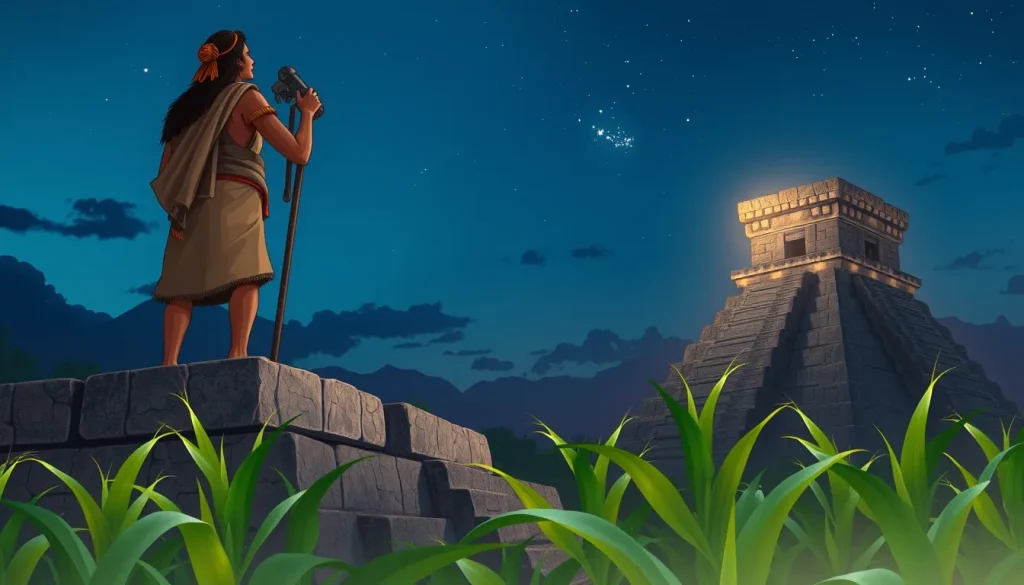
The relationship between the celestial sphere and terrestrial subsistence was fundamental to ancient Maya civilization. Among the various astronomical phenomena observed by Maya skywatchers, the Pleiades star cluster, known in various Mesoamerican contexts as a significant marker, held a pivotal role in regulating the agricultural calendar. Unlike the solar year which dictates the seasons broadly, the heliacal rising of the Pleiades provided a specific, observable signal for the commencement of planting activities. This integration of stellar observation with agronomic practice exemplifies the concept of agro-astronomy, where celestial events are directly tied to food production and survival strategies.
Recent scholarship highlights that the Pleiades experience was not isolated to the Maya but was shared across Polynesia, Mesoamerica, and the Andes, indicating a pan-indigenous understanding of this cluster’s utility. For the Maya, the cluster’s appearance in the morning twilight before sunrise marked a renewal of time and earth fertility. This article examines the archaeological and textual evidence supporting the role of the Pleiades in Maya astronomy, specifically focusing on how these observations were codified into the agricultural cycle through manuscripts like the Madrid Codex and monumental inscriptions.
Main Explanation
The core mechanism linking the Pleiades to Maya agriculture was the heliacal rising. This astronomical event occurs when a star or star cluster first becomes visible above the eastern horizon just before sunrise, after a period of invisibility due to its conjunction with the sun. For the Maya, this moment was not merely a poetic occurrence but a practical deadline. The visibility of the Pleiades in the pre-dawn sky correlated with the onset of the rainy season in many parts of the Maya lowlands, making it an ideal natural indicator for when to prepare fields and plant maize.
This stellar timing was embedded within a broader cosmological framework where the sky and earth were interconnected. The Maya did not view astronomy as a separate scientific discipline but as an integral part of ritual and daily life. The movement of the Pleiades was tracked alongside other celestial bodies, particularly Venus, to create a robust predictive model for weather and agricultural yield. Research indicates that the Pleiades were tied to Indigenous worldviews involving traditional weaving, weather prediction, and agriculture. The heliacal rising was particularly significant, serving as a anchor point for calendrical calculations that extended beyond the immediate solar year.

The precision of these observations suggests a long-term accumulation of data. Maya astronomers understood the difference between the sidereal year (the time it takes Earth to orbit the sun relative to fixed stars) and the tropical year (the cycle of seasons). By monitoring the Pleiades, they could reconcile these cycles to ensure their agricultural calendar remained synchronized with the actual environmental conditions. This sophistication allowed them to anticipate climatic shifts and adjust planting schedules accordingly, mitigating the risks of drought or flood that could threaten societal stability.
Evidence & Sources
Archaeological and textual evidence provides concrete support for the significance of the Pleiades in Maya culture. One of the most compelling sources is the Postclassic Madrid Codex. Research presented by Susan Milbrath demonstrates that an unusual almanac in the Madrid Codex integrates observations of the Venus cycle with eclipse events in the context of the agricultural year. Within this 260-day almanac, imagery depicts eclipse glyphs associated with Tzolkin dates that coordinate with eclipses visible in Yucatan during the fifteenth century. Crucially, the almanac depicts seasonal events in the context of a repeating pattern linked with the Pleiades.
In the Madrid Codex, the Chicchan serpent plays the role of Venus in a sequence showing a fertile aspect of the planet linked with the 260-day agricultural cycle and the Pleiades. This textual evidence confirms that Venus positions and eclipse events were closely watched in relation to the planting cycle, reflecting a form of agro-astronomy. The codex serves as a manual for priests and astronomers, outlining the ritual actions required to maintain cosmic order and ensure agricultural success based on these stellar and planetary positions.
Further evidence is found in Maya inscriptions which contain numerous examples of long intervals of time. Michael J. Grofe’s analysis of Maya inscriptions considers the evidence that these intervals incorporated precise calculations of both the sidereal year and the tropical year. These inscriptions count backward and forward from fixed points of historical reference to specific mythological dates, often thousands of years in the past or future. The methodology used to assess these distance numbers suggests they were intentionally calculated to incorporate astronomical measurements, rather than being coincidental. This indicates that the timing of celestial events like the Pleiades rising was part of a deep-time mathematical tradition.
Architectural evidence also supports the importance of astronomical orientation. Studies on the architecture of Chichen Itza suggest that certain structures were aligned to capture specific astronomical images and orientations. While specific Pleiades alignments at Chichen Itza are part of ongoing research, the broader pattern of astronomical architecture in the region confirms that buildings were often designed to frame or mark celestial events. This physical embedding of astronomy into the landscape reinforces the idea that observing the Pleiades was a public and monumental activity, not just a private calculation.
Deep Dive Analysis
Celestial Object: The Pleiades (Messier 45), an open star cluster in the constellation of Taurus. In Maya context, often associated with a group of stars signaling seasonal change.
Observational Cycle: The primary cycle of interest is the heliacal rising. The cluster becomes invisible for a period when it is too close to the sun’s glare. Its return to the morning sky marks the beginning of a new observational year. This cycle is sidereal in nature but was used to track tropical seasonal changes.
How Maya Observed It: Observations were conducted during morning twilight. Skywatchers likely used horizon markers, such as mountain peaks or architectural sightlines, to confirm the exact day of first visibility. The naked eye was sufficient to identify the cluster due to its brightness and distinct grouping.
Archaeological/Textual Evidence: The Madrid Codex provides the strongest textual link, associating the Pleiades with the 260-day agricultural cycle and the Chicchan serpent. Inscriptions analyzed by Grofe show precise calculations of sidereal and tropical years, implying the data needed to track such stars over centuries was recorded in stone.
Calendar Connection: The Pleiades rising was synchronized with the 260-day ritual calendar (Tzolkin) and the agricultural year. Milbrath’s research indicates the cluster was linked with a sequence showing a fertile aspect of Venus, connecting stellar timing with planetary cycles within the 260-day framework.
Architecture Connection: While specific Pleiades temples are debated, the general orientation of structures at sites like Chichen Itza reflects a culture that built according to astronomical images and orientations. Buildings served as fixed observation points to standardize the viewing of celestial events across generations.
Cultural Meaning: The cluster represented fertility and the renewal of the agricultural cycle. Its appearance was a signal for planting maize, the staple crop. It was tied to Indigenous worldviews involving weather prediction and agriculture, reinforcing the spiritual connection between the sky and the earth’s bounty.
Uncertainty/Debate: While the Madrid Codex link is strong for the Postclassic period, evidence for the Classic period is more inferential based on inscriptions regarding year lengths. There is ongoing debate regarding the specific architectural alignments at sites like Chichen Itza and whether they target the Pleiades specifically or general cardinal directions. Additionally, distinguishing between the sidereal and tropical year in specific inscriptions requires complex epigraphic analysis, as noted by Grofe, and not all distance numbers are universally agreed upon in their astronomical intent.
FAQ
Why was the Pleiades cluster more important than the sun for planting?
While the sun dictates seasons, the heliacal rising of the Pleiades provided a specific, sharp signal that correlated closely with local rainfall patterns necessary for maize cultivation.
Did the Maya know the difference between sidereal and tropical years?
Yes, inscriptions indicate precise calculations of both the sidereal year and the tropical year, showing advanced understanding of astronomical measurements.
Is there physical evidence of Pleiades worship in Maya temples?
Evidence exists in codices like the Madrid Codex and architectural orientations at sites like Chichen Itza, though specific temples dedicated solely to the Pleiades are less clearly defined than solar temples.
How does the Madrid Codex link the Pleiades to agriculture?
The Codex depicts seasonal events in a repeating pattern associated with the 260-day agricultural cycle and the Pleiades, linking them to Venus and eclipse events.
Leave a Reply