

Short Answer
The Maya Calendar Round represents one of the most sophisticated timekeeping mechanisms developed in pre-Columbian Mesoamerica. It is not a single calendar but rather a synergistic system that combines two distinct cycles: the sacred 260-day Tzolk’in and the solar 365-day Haab. By interlocking these two cycles, the Maya created a larger period of 18,980 days, equivalent to 52 solar years, known as the Calendar Round. This system was fundamental to Maya cosmology, serving practical purposes in agriculture and administration while simultaneously anchoring sacred rituals and astronomical observations. Understanding how these cycles combine requires an examination of their mathematical structure, their archaeological evidence, and their enduring cultural significance.
Main Explanation
The core of the Calendar Round lies in the synchronization of two independent counting systems. The first is the Tzolk’in, often referred to as the sacred almanac. According to archaeological and ethnohistorical data, this cycle consists of 260 unique days formed by the combination of 13 day numbers and 20 day names. As noted by the Foundation for the Advancement of Mesoamerican Studies (FAMSI), the day names include Imix, Ik’, Ak’bal, K’an, and continuing through to Ajaw. The numbers run from 1 to 13. When a number reaches 13, it resets to 1, while the day name continues to the next in the sequence of 20. This creates a cycle where a specific combination, such as 1 Imix, will not recur until 260 days have passed.
The second cycle is the Haab, which approximates the solar year. The Haab is composed of 18 months, each containing 20 days, plus a short final month of 5 days known as Wayeb’ (or Uayeb). This totals 365 days. The months have specific names such as Pop, Wo, Sip, and Sotz’, as detailed in calendrical records. Days within the Haab months are numbered from 0 to 19, with the exception of Wayeb’, which runs from 0 to 4. The seating of a month, denoted as day 0, marks the beginning of that month’s cycle. While the Tzolk’in is sacred and used for divination, the Haab is often associated with seasonal and civil activities.
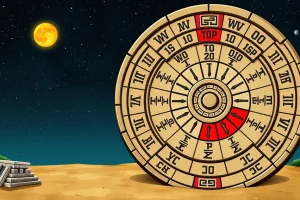
The Calendar Round emerges when these two cycles run simultaneously. Because 260 and 365 share a common factor, they do not align every year. The least common multiple of 260 and 365 is 18,980 days. Dividing this number by 365 days per year yields exactly 52 years. This means that a specific date combination, such as 4 Ahau 8 Kumk’u, will only repeat once every 52 years. For the Maya, this 52-year period was a significant lifetime marker. It was long enough to record historical events uniquely within a generation but short enough to remain relevant to human memory. The completion of a Calendar Round was often marked by significant ceremonies, reflecting the belief that time was cyclical and burdensome, requiring ritual renewal to ensure the sun would continue to rise.
Evidence & Sources
Archaeological evidence for the Calendar Round is abundant across the Maya region, found on stelae, altars, and in codices. Epigraphic analysis reveals that dates were typically recorded using both the Tzolk’in and Haab components together. For instance, a date might be inscribed as 13 Mol, 12 Ahau, combining the Haab month and day with the Tzolk’in day name and number. This dual recording system allowed scribes to pinpoint dates with high precision within the 52-year window. Modern digital heritage projects and databases, such as those maintained by FAMSI, catalog these day names and month structures to preserve the accuracy of the calendrical system for contemporary study.
Scholarly work by archaeologists like Dr. Diane Davies highlights that the Maya calendars served a variety of purposes, both practical and sacred. They were used in astronomical calculations to chart the movements of the sun, moon, stars, and planets. The Mathematical Association of America notes that the Maya were great observers of the cycles of time, recording accurate accounts of discrepancies in the solar year. They noted that a 365-day year precessed through all the seasons twice in 1,101,600 days, demonstrating a deep understanding of long-term astronomical cycles beyond the immediate 52-year Round. This evidence underscores that the Calendar Round was not merely a ritual tool but part of a complex scientific framework.
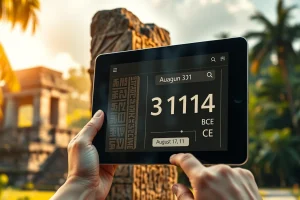
Furthermore, contemporary usage confirms the resilience of this system. Data from modern calendar converters shows that the Maya calendar is still active today. For example, on August 30, 2026, the Maya date is recorded as 13 Mol, 12 Ahau within the Long Count series 13.0.13.16.0. This continuity illustrates that the Calendar Round is not a relic of the past but a living tradition maintained by modern Maya communities. The integration of these ancient counts with the Common Era calendar in digital tools allows for precise cross-referencing, validating the historical records against modern chronological standards.
Deep Dive Analysis
Module D: Calendar System Analysis
Units: The Calendar Round relies on the fundamental units of the Tzolk’in and Haab. The Tzolk’in uses 13 numbers and 20 named days (e.g., Imix, Ik’, Ak’bal). The Haab uses 18 months of 20 days (numbered 0-19) and one month of 5 days (Wayeb’). The basic unit is the kin (day), which aggregates into the 260-day and 365-day cycles.
Calculation: The mathematical basis of the Calendar Round is the Least Common Multiple (LCM) of 260 and 365. The prime factorization of 260 is 2^2 * 5 * 13. The prime factorization of 365 is 5 * 73. The LCM is calculated as 2^2 * 5 * 13 * 73, which equals 18,980 days. When divided by the 365-day Haab year, this results in exactly 52 years. When divided by the 260-day Tzolk’in, it results in exactly 73 Tzolk’in years. This mathematical harmony ensured that no date combination repeated within the 52-year span.
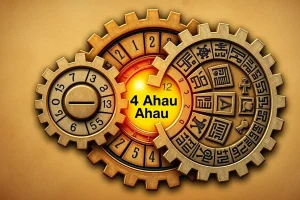
Diagram Description: Conceptually, the Calendar Round is often visualized as two interlocking gears. One gear has 260 teeth (Tzolk’in) and the other has 365 teeth (Haab). As the gears turn, specific teeth align only once per full revolution of the larger system. This mechanical analogy helps explain why a specific day like 1 Imix 0 Pop is unique for 52 years. The gears do not reset simultaneously until the full 18,980 days have elapsed.
Example Date: A specific example of a Calendar Round date is 13 Mol, 12 Ahau. In this pairing, 13 Mol refers to the 13th day of the Haab month Mol, and 12 Ahau refers to the 12th number of the Tzolk’in day Ahau. According to modern conversions, this date corresponds to August 30, 2026. Another example from historical records is 1 Imix, which begins the Tzolk’in count, paired with a Haab date like 0 Pop, the seating of the first month.
Relationship to Other Calendars: The Calendar Round operates alongside the Long Count calendar. While the Calendar Round repeats every 52 years, the Long Count provides a linear count of days from a mythical creation date, allowing for unique identification of dates over millennia. The Long Count date 13.0.13.16.0 includes the Calendar Round date 13 Mol, 12 Ahau within its structure. The Long Count resolves the ambiguity of the Calendar Round by specifying which 52-year cycle is being referenced.
Historical Use: Historically, the Calendar Round was used for recording the reigns of rulers, their conquests, and important dynastic events. It was also essential for divination. Each day in the Tzolk’in had specific auspices or spiritual qualities, and the combination with the Haab month could influence the outcome of ceremonies. The 52-year cycle was particularly significant; the completion of a cycle was a time of potential danger and renewal, often marked by the New Fire ceremony in broader Mesoamerica, ensuring the continuation of the cosmic order.
Current Traditions: Today, the Maya calendar continues to be used by contemporary Maya peoples in Guatemala and Mexico for agricultural planning and religious ceremonies. Digital heritage tools now allow users to convert Gregorian dates into Maya dates, preserving this knowledge. The interest in the Maya calendar surged around 2012, though much of the public discourse was misinformed. Scholars clarify that 2012 marked the end of a Long Count b’ak’tun, not the end of the Calendar Round or time itself.
Misconceptions: A common misconception is that the Calendar Round predicts the end of the world. This stems from confusion between the 52-year Calendar Round and the 13-b’ak’tun cycle of the Long Count. The Calendar Round simply cycles continuously. Another misconception is that the Haab is perfectly accurate to the solar year. The Maya recorded an accurate account of the discrepancy, knowing the 365-day year precessed through the seasons over long periods, but the Calendar Round itself does not account for leap years, causing it to drift relative to the equinoxes over centuries.
FAQ
How long is the Maya Calendar Round?
The Calendar Round is 18,980 days long, which is exactly 52 solar years.
What is the difference between the Haab and Tzolk'in?
The Tzolk'in is a 260-day sacred cycle used for divination, while the Haab is a 365-day solar cycle used for seasonal and civil matters.
Does the Maya Calendar predict the end of the world?
No, the Calendar Round cycles continuously every 52 years. Misconceptions about 2012 related to the Long Count, not the Calendar Round.

Leave a Reply