
Short Answer
Introduction to Maya Chronometry and Timekeeping
The ancient Maya civilization, which flourished on the Yucatan Peninsula and surrounding regions, developed one of the most sophisticated and accurate calendar systems in human history. Emerging around 1800 BC and reaching its peak during the Classic Period between 250 and 800 AD, the Maya utilized their advanced knowledge of astronomy and mathematics to track time with remarkable precision. Their calendar system was not merely a tool for agriculture but served deep ceremonial, historical, and cosmological purposes. Unlike the linear Gregorian calendar used in much of the modern world, the Maya conceptualized time as cyclical, interwoven with sacred rhythms and celestial movements. This comprehensive reference explores the four primary components of the Maya calendar system: the Tzolk’in, the Haab’, the Calendar Round, and the Long Count.
The complexity of the Maya calendar system reflects a society deeply invested in observing the sky. Using their knowledge of astronomy and mathematics, the ancient Maya developed mechanisms to measure time periods of varying lengths based on solar, lunar, planetary, and human cycles. These calendars were rooted in older Mesoamerican indigenous civilizations, particularly the Olmec, demonstrating a continuity of knowledge across centuries. The system allowed the Maya to chronologically date mythical and historical events, align rituals with celestial phenomena, and maintain social order through shared temporal frameworks. Understanding these systems requires an analysis of archaeological inscriptions, codices, and modern digital heritage preservation efforts.
The Tzolk’in: The Sacred 260-Day Cycle
The Tzolk’in is often referred to as the sacred calendar of the Maya. It consists of a cycle of 260 days, formed by the combination of 20 day names and 13 numbers. This calendar does not correspond directly to a solar or lunar year but is believed to be based on human gestation periods and agricultural cycles relevant to the region. The Tzolk’in was primarily used for divination, scheduling ceremonies, and determining auspicious dates for various activities. Each day in the Tzolk’in cycle carries a specific spiritual significance, influencing the actions and fate of individuals born under that sign.
Structure of the Tzolk’in
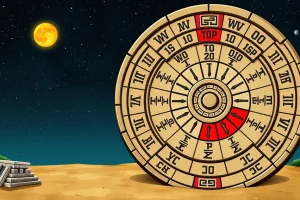
The mechanics of the Tzolk’in involve two interlocking cycles. One cycle consists of 20 named days, while the other consists of 13 numbers. The days proceed sequentially from 1 to 13, then restart at 1, while the day names proceed through their list of 20. This creates a unique combination of number and name every day for 260 days (13 multiplied by 20). Once the cycle completes, it begins anew. The 20 day names include Imix, Ik’, Ak’bal, K’an, Chikchan, Kimi’, Manik’, Lamat, Muluk, Ok, Chuen, Eb’, Ben, Ix, Men, Kib’, Kab’an, Etz’nab’, Kawak, and Ajaw. This sequence is consistent across Maya inscriptions and codices, such as the Paris Codex.
The significance of the 260-day count extends beyond simple timekeeping. It was integral to the ritual life of the Maya, guiding priests and rulers in decision-making. The interplay between the numbers and names created a complex web of meanings, where specific combinations were associated with gods, directions, and colors. This system highlights the Maya view that time itself was sacred and laden with spiritual power. The Tzolk’in remains in use today among contemporary Maya communities in the highlands of Guatemala, demonstrating the enduring legacy of this ancient knowledge system.
The Haab’: The Solar Vague Year
The Haab’ is the Maya solar calendar, approximating the solar year with a count of 365 days. While not as precise as the modern Gregorian calendar regarding leap years, the Haab’ was highly effective for agricultural planning and seasonal tracking. The Haab’ cycle is composed of 19 months. Eighteen of these months are made of 20 days each, and the final month is a short period of 5 days. This structure results in the calculation: 18 multiplied by 20 plus 5 equals 365 days. The Haab’ was essential for coordinating planting and harvesting cycles, ensuring the survival and prosperity of Maya communities.
The Months of the Haab’
The 19 months of the Haab’ have specific names and hieroglyphic representations. The months include Pop, Wo, Sip, Sotz’, Sek, Xul, Yaxk’in, Mol, Ch’en, Yax, Sak, Kej, Mak, K’ank’in, Muwan, Pax, K’ayab’, K’umk’u, and Wayeb’. The final month, Wayeb’, is particularly significant. Consisting of only 5 days, the Wayeb’ was considered a dangerous or unlucky period when the boundaries between the mortal realm and the underworld were believed to be thin. During this time, special precautions were taken to avoid misfortune. The seating of each month, such as 0 Pop (seating of Pop), marked the beginning of the monthly cycle, distinct from the numbered days that followed.
Archaeological evidence shows that the Haab’ was often used in conjunction with the Tzolk’in to specify dates more precisely. While the Tzolk’in provided the sacred context, the Haab’ provided the seasonal context. Together, they formed a dual system that covered both the spiritual and practical aspects of Maya life. The hieroglyphs corresponding to the nineteen months of the Haab’ calendar are found on numerous stelae and architectural features across Maya sites, serving as a permanent record of time’s passage.
The Calendar Round: Synchronizing Sacred and Solar Time
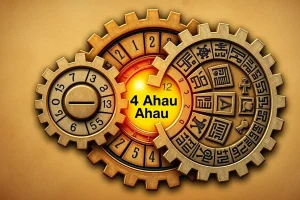
The Calendar Round is a cycle of 52 years that results from the synchronization of the 260-day Tzolk’in and the 365-day Haab’. Because 260 and 365 share a common factor, the two calendars realign exactly every 18,980 days, which equals 52 solar years. This period was of immense importance to the Maya, marking a complete cycle of time similar to a century in modern reckoning. The completion of a Calendar Round was often celebrated with significant ceremonies, including the lighting of new fires, symbolizing the renewal of time and the continuation of the cosmos.
Significance of the 52-Year Cycle
For the ancient Maya, the Calendar Round represented a full lifetime for many individuals and a generational marker for society. Events recorded within a Calendar Round were unique; a specific combination of Tzolk’in and Haab’ dates would not repeat for 52 years. This allowed historians and priests to identify specific events within living memory. However, for events spanning longer periods, the Long Count was necessary. The Calendar Round underscores the Maya fascination with cycles of time, where history and prophecy were viewed as repeating patterns rather than linear progressions.
The mathematical relationship between the Tzolk’in and Haab’ demonstrates the sophistication of Maya arithmetic. The least common multiple of 260 and 365 is 18,980. This calculation required an understanding of number theory that was advanced for its time. The Calendar Round served as a practical tool for administration and record-keeping, ensuring that tax collections, tribute payments, and ritual obligations were met according to the correct temporal schedule. It bridged the gap between the sacred rhythm of the Tzolk’in and the solar rhythm of the Haab’.
The Long Count: Linear Historical Time
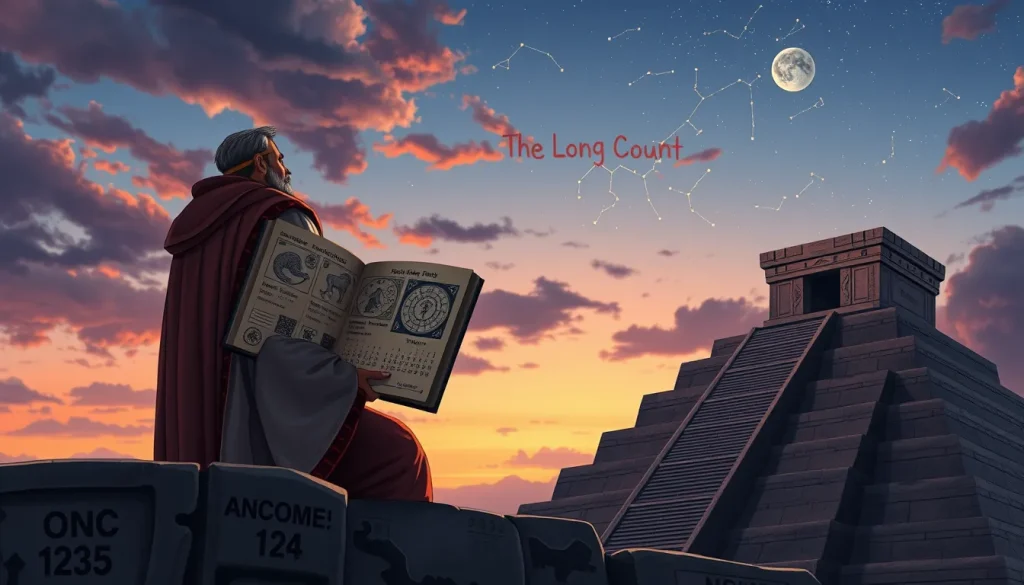
In addition to the cyclical calendars, the Maya developed the Long Count calendar to chronologically date mythical and historical events. Unlike the Calendar Round, which repeats, the Long Count counts days linearly from a mythical starting point. This system allowed the Maya to record history over vast periods without ambiguity. The Long Count is structured using a modified base-20 vigesimal system. The basic unit is the kin (day), followed by the uinal (20 days), the tun (360 days), the katun (7,200 days), and the baktun (144,000 days). This hierarchy allowed for the expression of very large numbers.
The 13 Baktun Cycle
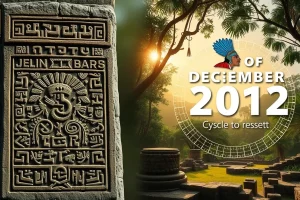
A major cycle in the Long Count is the 13 baktun cycle, which measures 1,872,000 days or approximately 5,125.366 tropical years. This is one of the longest cycles found in the Maya calendar system. This cycle ended on the winter solstice, December 21, 2012. The completion of this cycle was misinterpreted in popular culture as the end of the world, but archaeological and epigraphic evidence confirms it was simply the end of one major cycle and the beginning of another. The Maya viewed this as a time of transition and renewal rather than apocalypse. Inscriptions at sites like Coba and on the Leyden Plaque demonstrate how Long Count dates were converted and recorded.
The Long Count provided a framework for historical chronology that超越了 the limitations of the 52-year Calendar Round. It allowed the Maya to place their kings and events within a grand cosmic timeline. The starting point of the Long Count, often correlated to August 11, 3114 BC in the Gregorian calendar, marks the creation of the current world order in Maya mythology. By using the Long Count, Maya scribes could assert the legitimacy of their rulers by connecting them to this deep mythical past. The precision of the Long Count is a testament to the Maya commitment to preserving their history for future generations.
Mathematics and Astronomy Behind the Calendars
The accuracy of the Maya calendar system was underpinned by advanced mathematics and astronomical observation. The Maya utilized a vigesimal (base-20) number system, which included the concept of zero, a mathematical innovation that was rare in the ancient world. This system facilitated the complex calculations required to manage the interlocking cycles of the Tzolk’in, Haab’, and Long Count. Astronomy was important for agriculture, and based on astronomical observations, the Maya invented an elaborate system of calendars. They tracked the movements of the sun, moon, Venus, and other celestial bodies with remarkable precision.
Observational Accuracy
The Maya solar calendar, called Haab’, is a count of 365 days and thus approximates the solar year. While it lacks the leap year correction of the Gregorian calendar, the Maya were aware of the discrepancy and adjusted their rituals accordingly over long periods. Their observations of Venus, for instance, were accurate to within a few days over centuries. This data was recorded in codices such as the Dresden Codex. The integration of astronomical data into the calendar system allowed the Maya to predict eclipses and planetary conjunctions, which were often seen as omens or messages from the gods.
“Using their knowledge of astronomy and mathematics, the ancient Maya developed one of the most accurate calendar systems in human history.” – Living Maya Time, Smithsonian Institution
This quote underscores the scientific achievement of the Maya. Their ability to synthesize observation with mathematical theory resulted in a timekeeping system that rivalled contemporary civilizations in Europe and Asia. The calendar was not static; it was a living system that evolved as their understanding of the cosmos deepened. The mathematical relationships between the cycles, such as the 52-year Calendar Round, required sustained intellectual effort to maintain and verify. This scientific rigor was applied to both practical needs, like agriculture, and ceremonial needs, like ritual scheduling.
Archaeological Evidence and Inscriptions
The primary source of knowledge regarding the Maya calendar system comes from archaeological evidence, including stelae, altars, pottery, and codices. Stelae are stone monuments carved with hieroglyphic texts that often record Long Count dates alongside historical events. These inscriptions provide the backbone for modern correlations between the Maya calendar and the Gregorian calendar. For example, actual examples of dates found on a stela in Coba and on the Leyden Plaque show how to convert from Long Count dates into calendar rounds. These artifacts serve as the empirical basis for our understanding of Maya chronometry.
Codices and Manuscripts
Despite the destruction of many Maya books during the Spanish conquest, several codices survive, including the Paris Codex, which contains information on animal constellations and calendar cycles. These manuscripts reveal the intricate details of the Tzolk’in and Haab’ day names and month names. Figure 1 in FAMSI research displays the 20 day names of the Tzolk’in, while Figure 2 displays the 19 month names of the Haab’. These visual records confirm the consistency of the calendar system across different regions and time periods. The glyphs are not merely decorative; they are functional records of time.
Modern archaeology continues to uncover new inscriptions that refine our understanding of the calendar. LiDAR scans and 3D modeling of sites like Tikal and Calakmul have revealed previously unknown structures that may contain further calendrical data. The preservation of these sites is crucial for ongoing research. Each new discovery has the potential to adjust the correlation constants or reveal new variations in how different Maya city-states implemented the calendar system. The physical evidence remains the ultimate authority on Maya timekeeping practices.
The 2012 Phenomenon and the 13th Baktun
The end of the 13th baktun cycle on December 21, 2012, garnered significant global attention, often fueled by misinterpretations of Maya prophecy. According to the Long Count calendar, this date marked the completion of a 5,125-year cycle. The 13 baktun cycle of the Maya Long Count calendar measures 1,872,000 days. This cycle ended on the winter solstice, December 21, 2012. Contrary to popular apocalyptic theories, Maya inscriptions indicate that time continues beyond this date. The end of a cycle was viewed as a time of renewal and transformation, consistent with the cyclical nature of Maya cosmology.
Modern Interpretations
Scholars emphasize that the Maya did not predict the end of the world in 2012. Instead, they celebrated the completion of a grand cycle. Contemporary Maya leaders have clarified that their calendar continues into the future, with new cycles beginning where the old ones ended. The focus on 2012 highlighted the enduring relevance of the Maya calendar system in the modern imagination. It also spurred increased interest in Maya archaeology and culture, leading to greater efforts in heritage preservation. The event served as a reminder of the sophistication of ancient American civilizations.
The scientific consensus, supported by sources like the Mathematical Association of America, confirms that the Long Count is a linear count that simply rolled over. The civilization of the Maya, which has existed since about 1800 BC, developed these systems to understand their place in the universe. The 2012 phenomenon, while sensationalized, brought attention to the accuracy and complexity of the Long Count. It underscored the need for accurate educational resources to counter pseudoscience with archaeological fact.
Digital Heritage and Modern Preservation
In the 21st century, digital heritage technologies play a vital role in preserving and studying the Maya calendar system. 3D modeling, LiDAR scans, and digital archives allow researchers to analyze inscriptions without risking damage to fragile artifacts. Projects like “Living Maya Time” by the Smithsonian Institution provide accessible online resources that educate the public about the calendar’s mechanics. These digital tools ensure that the knowledge of the Maya calendar is not lost to time or degradation. They also facilitate collaboration among international scholars.
Technology in Archaeology
Digital heritage perspectives include the use of high-resolution imaging to decipher eroded glyphs. This technology helps recover data that was previously unreadable, potentially unlocking new dates and historical records. Furthermore, virtual reconstructions of Maya sites allow students and enthusiasts to visualize how calendars were integrated into architecture. Temples were often aligned with celestial events, functioning as massive stone calendars. Digital models can simulate these alignments, demonstrating the astronomical precision of Maya builders. This integration of technology and archaeology ensures the legacy of the Maya calendar endures.
The preservation of the Maya calendar system is not just about protecting stones and books; it is about safeguarding intangible cultural heritage. Contemporary Maya communities still use the Tzolk’in, and digital platforms help bridge the gap between ancient texts and living traditions. By documenting these practices, digital heritage specialists ensure that the calendar remains a living system rather than a relic of the past. This approach respects the continuity of Maya culture from the Classic Period to the present day.
Conclusion: Legacy of Maya Timekeeping
The Maya calendar system stands as a monumental achievement in the history of science and human thought. Comprising the Tzolk’in, Haab’, Calendar Round, and Long Count, it reflects a deep understanding of mathematics, astronomy, and cosmology. The system served practical, ceremonial, and historical purposes, guiding the lives of millions over centuries. Its accuracy rivals modern systems, and its complexity continues to inspire research and wonder. The Maya calendar is a testament to the intellectual capacity of indigenous civilizations in the Americas.
Today, the legacy of the Maya calendar persists through archaeological study, digital preservation, and contemporary cultural practice. It reminds us that time is not merely a measurement but a meaningful construct shaped by culture and observation. As we continue to uncover new inscriptions and apply new technologies, our understanding of the Maya calendar will only deepen. The system remains a powerful symbol of human ingenuity and our enduring quest to understand the rhythms of the universe.
FAQ
What is the difference between the Haab' and Tzolk'in?
The Haab' is a 365-day solar calendar used for agricultural and seasonal tracking, while the Tzolk'in is a 260-day sacred calendar used for divination and ritual scheduling.
Did the Maya calendar end in 2012?
No, the Maya calendar did not end in 2012. The date marked the completion of a 13 baktun cycle in the Long Count, signifying renewal rather than the end of time.
How accurate was the Maya solar calendar?
The Maya Haab' calendar approximated the solar year with 365 days. While it lacked a leap year, the Maya adjusted for discrepancies over long periods using astronomical observations.
Leave a Reply