
Short Answer
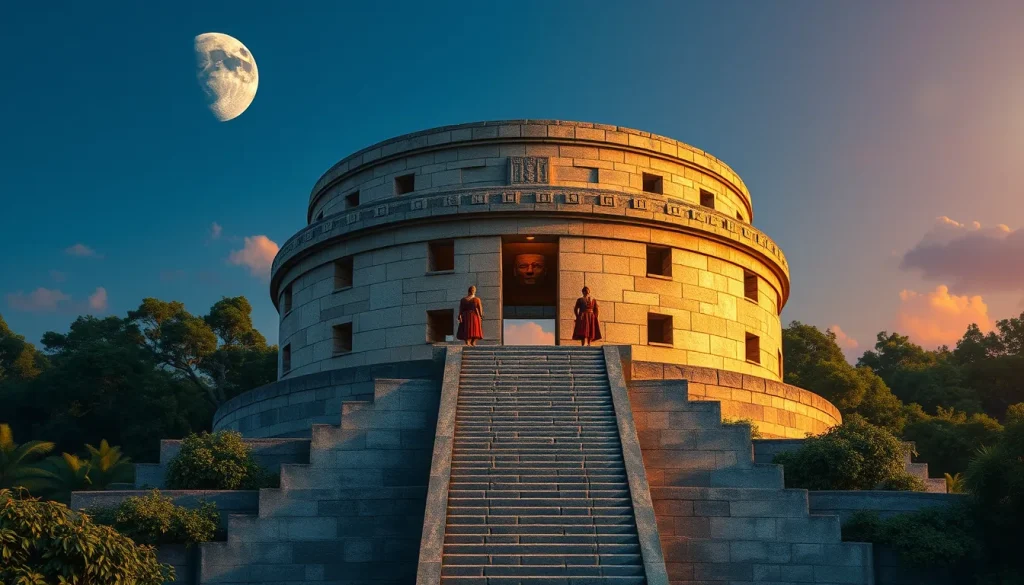
El Caracol stands as one of the most enigmatic and architecturally distinct structures within the ancient Maya city of Chichén Itzá. Located in the Yucatán Peninsula of Mexico, this pre-Columbian building is frequently identified by archaeologists and historians as an observatory used for astronomical tracking. Unlike the typical rectangular Maya temples, El Caracol features a circular tower set upon a series of rectangular platforms. The name El Caracol, which translates to ‘the snail’ in Spanish, was bestowed by later Spanish observers due to the winding spiral staircase found inside the tower. This structure represents a sophisticated fusion of architectural engineering and celestial knowledge, serving as a critical tool for Maya priests and leaders to monitor the heavens.
Main Explanation
The primary function of El Caracol is believed to be astronomical observation, a role supported by its unique design and orientation. The structure is composed of a large circular tower set on a platform with a central staircase, which itself rests upon a larger rectangular base. This multi-layered foundation elevates the tower above the dense tree canopy of the Yucatán, providing unobstructed views of the sky essential for sky-watching in a region otherwise flat and densely vegetated. The tower itself is constructed of three superimposed buildings, with the lower section formed by two concentric walls that enclose circular chambers. These chambers feature doorways facing the cardinal points, adorned with masks of Chaac, the Maya rain god, indicating a connection between celestial events and agricultural cycles.
While the upper portions of the tower have deteriorated over centuries, evidence suggests the dome originally housed a series of openings or windows. These apertures were not merely for ventilation but were strategically aligned with the appearance of certain stars and planets at specific dates. From this vantage point, Maya priests could decree the appropriate times for rituals, celebrations, corn-planting, and harvests. The circular design of the dome resembles structures found in the central highlands of Mexico, though it differs significantly from Toltec structures at Tula, highlighting a unique fusion of architectural styles and religious imagery specific to Chichén Itzá.
Evidence & Sources
Archaeological and archaeoastronomical evidence strongly supports the interpretation of El Caracol as an observatory. Modern analysis of the building’s alignment reveals that the grand staircase marking the front of El Caracol faces 27.5 degrees north of west. This orientation is out of line with the other buildings at the site, suggesting it was designed for a specific purpose rather than general urban planning. Research indicates this alignment corresponds almost perfectly with the extreme northern setting position of Venus. Venus held tremendous significance for the Maya civilization; it was considered the sun’s twin and associated with a war god. Maya leaders utilized the changing position of Venus to plan appropriate times for raids and battles, making the accurate tracking of this planet a matter of state security and religious duty.
Further evidence is found in the structural details described in historical and contemporary records. The base of the structure is decorated with a cornice of rounded corners, and the frieze above the doors features motifs made of feathers and serpents alongside the Chaac masks. Although the cylindrical structure atop the platform is now decayed, its original form was designed to house the observation mechanisms. The windows in the observatory’s dome are aligned with the appearance of certain stars, allowing for precise calendrical calculations. These findings are corroborated by multiple institutional sources, including archaeological surveys and heritage documentation, which confirm the building’s role as a lookout on the heavens rather than a residential or purely ceremonial space.
Deep Dive Analysis
Location and Context
El Caracol is situated to the south of El Osario within the Great North Platform of Chichén Itzá. Its placement is strategic, allowing it to rise above the surrounding scrub brush and flat landscape of the Yucatán. In a region where dense trees make sky-watching impossible from ground level, the tower atop El Caracol sits high on a four-cornered but not quite square platform, giving excellent unobstructed views of the skies and surrounding landscape. This elevation was crucial for the accuracy of their observations, ensuring that the horizon was visible for tracking celestial risings and settings.
Construction and History
The Caracol is really built of three superimposed buildings, reflecting possible phases of construction or renovation over time. The first part of the cylindrical tower is formed by two concentric walls which enclose a pair of circular chambers each with four doorways. The second level comprises the cornice of the first level and a second, narrower one, which frames a frieze. The third and fourth parts of the tower have deteriorated, but the remaining structure indicates a complex engineering effort. The spiral staircase inside, which gives the building its Spanish name, allows access to the upper viewing chambers. This internal design is unique among Maya structures in the region, suggesting specialized knowledge or influence from other cultures.
Architecture and Design
The circular design resembles some central highlands structures, although, surprisingly, not those of Toltec Tula. In a fusion of architectural styles and religious imagery, there are Maya Chaac rain-god masks over four external doors facing the cardinal points. This orientation connects the structure to the four directions, a fundamental concept in Maya cosmology. The base is set on another rectangular platform, decorated with a cornice of rounded corners on the upper part. The integration of the spiral staircase within the tower is a defining feature, differentiating it from the standard step-pyramid temples found elsewhere at Chichén Itzá, such as El Castillo.
Astronomical Interpretation
In particular, El Caracol seems to be carefully aligned with the motions of Venus. The alignment of the staircase and the windows suggests a focus on tracking the synodic cycle of this planet. Venus had tremendous significance for the Maya; this bright planet was considered the sun’s twin and a war god. Mayan leaders used the changing position of Venus to plan appropriate times for raids and battles. Additionally, the windows in the observatory’s dome are aligned with the appearance of certain stars at specific dates. From the dome the priests may have decreed the times for rituals, celebrations, corn-planting and harvests, linking astronomy directly to agriculture and societal organization.
Archaeological Evidence
There is plenty of evidence suggesting that El Caracol was used as a lookout on the heavens. To modern eyes, the rounded dome of El Caracol—actually the decayed remains of what was a cylindrical structure—looks a lot like it could house a telescope. It doesn’t, of course, but the structural alignments provide the data. The specific angle of 27.5 degrees north of west is a key piece of archaeological data that links the physical structure to celestial mechanics. The presence of Chaac masks also links the astronomy to rain cycles, which were vital for survival in the Yucatán.
Alternative Interpretations
While the observatory theory is dominant, some interpretations focus on the religious symbolism over the practical utility. The structure’s dedication to Chaac suggests it may have been used primarily for rain rituals rather than pure data collection. However, given the Maya sophistication in mathematics and astronomy, these functions are not mutually exclusive. The building serves both as a temple to the rain god and a machine for tracking time. Some modern interpretations might suggest spiritual energy centers, but archaeological evidence supports the astronomical and ritualistic functions grounded in observable celestial phenomena.
Scholar Consensus
The scholarly consensus identifies El Caracol as one of the few circular structures built by the Maya believed to have been used for astronomical observations. It is considered one of the most fascinating and important of all Chichén Itzá’s buildings. The alignment with Venus is widely accepted in archaeoastronomy circles. The structure stands as a testament to the Maya’s advanced understanding of the cosmos, integrating their religious beliefs with precise observational data to guide their civilization.
Visitor Misconception
A common misconception among visitors is that the structure housed a telescope or similar optical instrument. It does not, of course. The observations were made with the naked eye, using the structure’s windows and doorways as sighting lines. Another misconception is that the name El Caracol is of Maya origin; it is actually Spanish, named for the snail-like spiral staircase. Understanding these distinctions helps visitors appreciate the true ingenuity of the Maya engineers who built it without metal tools or wheeled vehicles.
FAQ
Why is El Caracol called 'The Snail'?
It is named El Caracol (Spanish for 'snail') due to the spiral staircase inside the tower, not because of its external shape.
Did the Maya use telescopes in El Caracol?
No, there is no evidence of telescopes. Observations were made with the naked eye using the building's windows and alignments.
What celestial body was El Caracol aligned with?
The structure is carefully aligned with the motions of Venus, which was significant for war and agriculture.
Leave a Reply