
Short Answer
The descent of the plumed serpent at Chichén Itzá remains one of the most celebrated spectacles in Mesoamerican archaeology. Every year, thousands of visitors gather at the Pyramid of Kukulkan, also known as El Castillo, to witness the interplay of sunlight and shadow that creates the illusion of a serpent slithering down the staircase. Popular culture and tourism narratives often assert that this phenomenon occurs precisely on the spring and autumn equinoxes. However, recent scientific inquiry suggests this temporal alignment is not as exact as traditionally claimed. A 2026 study published in Arqueología Mexicana indicates that the light-and-shadow display involves complex temporal patterns that extend beyond the equinox dates, prompting a reevaluation of Maya archaeoastronomy and architectural intent.
Main Explanation
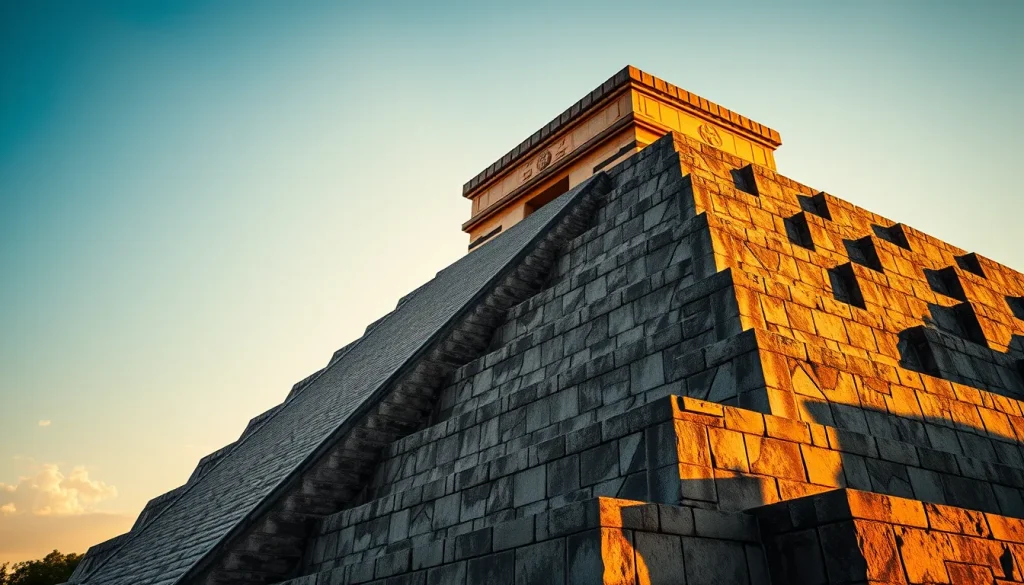
The phenomenon in question involves the projection of seven triangles of light along the balustrade of the pyramid’s staircase during sunset. As the sun sets, shadows cast by the stepped levels of the pyramid interact with the angled balustrade, creating a undulating pattern that resembles the body of a serpent. This visual effect is widely interpreted as the descent of Kukulkan, the Maya manifestation of the Plumed Serpent deity. While the visual correlation is undeniable, the chronological precision attributed to the event is now under scrutiny. Traditional explanations posit that the Maya architects designed the structure to function as a calendar marker specifically for the equinoxes. Yet, emerging data suggests the effect is visible over a broader window of time, challenging the notion of a singular, precise calendrical event.
The architectural geometry required to produce this effect is sophisticated. The pyramid’s orientation and the specific dimensions of the staircase steps are critical factors. According to earlier architectural studies, the effect relies on the sun’s azimuth at sunset. If the phenomenon were strictly equinoctial, the alignment would need to be perfect for only two days a year. However, the new research implies that the temporal patterns in light and shadow are more flexible, potentially serving a broader ritual period rather than a single day. This distinction is vital for understanding how the Maya integrated astronomy into their sacred architecture. It shifts the interpretation from a simple calendar marker to a more nuanced cosmological statement about time, light, and divine presence.
Evidence & Sources
The primary evidence for rethinking this phenomenon comes from a collaborative team including Orlando Casares Contreras, Arturo Montero García, Jesús Galindo Trejo, and David Wood Cano. Their 2026 analysis highlights that the shadow effect is not limited to the equinox but follows a pattern that suggests intentional design over a duration. This contrasts with earlier assumptions that the event was a precise equinoctial marker. The team’s work builds upon foundational archaeoastronomical research, such as the 2010 study by Tomás García-Salgado, which noted that a line across the pyramid’s base coincides with the orientation of the summer-winter solstice. This solstice alignment suggests that the pyramid’s orientation serves multiple astronomical functions, not just equinoctial ones.
Furthermore, archaeoacoustic evidence adds another layer of complexity to the site’s design. Research published in The Journal of the Acoustical Society of America in 2010 identified a chirped echo at the temple that emulates the call of the quetzal bird. This acoustic phenomenon is linked to the ethnohistory of the quetzal as a messenger of the gods. While archaeologists initially found no evidence of intentional design for the shadow effect alone, the combination of acoustic and visual cues suggests a multisensory ritual environment. The chirped echo is cognitively distinct, often perceived by visitors as unnatural or supernatural. This supports the hypothesis that the site was designed to evoke specific cosmological associations, whether the shadow effect was perfectly equinoctical or part of a broader temporal cycle. The convergence of acoustic and visual data strengthens the argument for intentional design, even if the precise timing differs from popular belief.
Deep Dive Analysis
Location
The Pyramid of Kukulkan is located in the central precinct of Chichén Itzá, in the Yucatán Peninsula, Mexico. This site was a major focal point in the Northern Maya Lowlands during the Terminal Classic and Early Postclassic periods. The pyramid dominates the Great Ball Court area and is positioned to maximize astronomical observations relative to the surrounding landscape.
Construction and History
Archaeological excavations have confirmed that the current structure conceals an earlier, smaller pyramid beneath it. This layering indicates that the site underwent significant modification and expansion over time. The existence of the earlier structure suggests that the astronomical orientation may have been established before the final facade was completed. This complicates the question of whether the light effect was intended for the final version or inherited from previous iterations of the temple.
Architecture
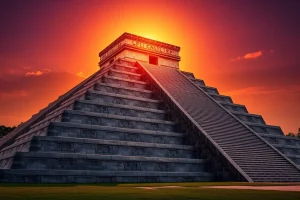
The pyramid consists of nine terraced levels topped by a temple structure. The staircase where the shadow effect occurs is identified in recent 2026 research as the northwest staircase, although earlier studies referenced the northeast stairway. The balustrades are angled to catch the setting sun. The geometry creates seven triangles of light that appear to creep downwards. This specific number may hold cosmological significance, potentially relating to the levels of the underworld or celestial realms in Maya mythology.
Astronomical Interpretation
Traditionally, the effect is linked to the equinoxes, marking the beginning of agricultural cycles. However, the 2026 study implies the effect is part of a broader temporal pattern. The sun’s path relative to the pyramid’s orientation allows for the shadow effect to be visible for several days surrounding the equinox, rather than on the day alone. This suggests the Maya may have prioritized a ritual period over a singular calendrical date.
Archaeological Evidence
Physical evidence includes the alignment of the pyramid’s base with solstice orientations. Additionally, the acoustic properties of the staircase provide indirect evidence of intentional design. The lack of explicit written records in extant Mayan codices regarding this specific light effect means archaeologists must rely on architectural analysis and ethnographic analogy. The Popol Vuh offers mythological context, interpreting the effect as gods coming to the Sovereign Plumed Serpent, but this is a later highland Maya text.
Alternative Interpretations
Some scholars debate whether the effect was intentional or accidental. Given the precision required to create the seven triangles, accidental formation is unlikely. However, the exact timing remains debated. Some propose the effect was a secondary benefit of a structure primarily oriented for solstices. Others argue the equinox effect was the primary design goal, with solstice alignments being secondary. The 2026 research leans towards a more complex interaction of light that defies simple binary classifications.
Scholar Consensus
The current consensus is shifting away from the idea of a precise equinox-only event. Scholars now agree that the effect was likely intentional but served a broader ritual function. The integration of archaeoacoustics and archaeoastronomy provides a more holistic view of the site. The consensus acknowledges that while the equinox is significant, it is not the sole temporal marker encoded in the architecture.
Visitor Misconception
The most common misconception is that the shadow appears only on the equinox. Visitors often plan trips specifically for March 20 or September 22, expecting a unique event. In reality, the effect is visible for a period before and after these dates. Additionally, visitors often attribute supernatural powers to the shadow, whereas archaeological evidence points to sophisticated geometric and astronomical knowledge. Understanding the nuance of the temporal patterns enhances the appreciation of Maya scientific achievement without resorting to pseudoscience.
FAQ
Does the serpent shadow only appear on the equinox?
No. Recent 2026 research indicates the shadow effect is visible over a broader period surrounding the equinox, not just on the specific day.
Was the shadow effect intentionally designed by the Maya?
Most scholars agree it was intentional due to the precise geometry required, though debate continues on whether it was the primary design function versus solstice alignment.
What is the significance of the chirped echo at the pyramid?
The echo emulates the call of the quetzal bird, a sacred messenger in Maya culture, suggesting the site was designed for multisensory ritual experiences.
Leave a Reply