

Short Answer
The relationship between celestial phenomena and agricultural cycles stands as one of the most sophisticated achievements of ancient Maya civilization. In the tropical latitudes of Mesoamerica, the sky was not merely a backdrop but a functional calendar essential for survival. Among the various celestial markers utilized by the Maya, the Pleiades star cluster and the zenith passage of the Sun held particular significance. These astronomical events provided critical timing cues for planting maize, managing water resources, and conducting rituals intended to ensure bountiful harvests. Understanding how these elements intertwined requires a careful examination of archaeological data, ethnohistorical records, and cross-cultural astronomical studies.
While modern interpretations sometimes conflate various stellar events, archaeological evidence distinguishes between the heliacal rising of the Pleiades and the solar zenith passage. Both phenomena were observable from the Maya region, yet they served different but complementary roles within the agricultural year. The Pleiades, known in various Maya languages by names such as Tzab-ek, were closely tied to weather prediction and the onset of the rainy season. Conversely, the zenith passage of the Sun, a phenomenon unique to tropical latitudes, marked specific solar dates that aligned with the solar year and agricultural rhythms. Together, these observations formed a complex system of timekeeping that guided the daily and seasonal lives of the ancient Maya.
Main Explanation
The agricultural calendar of the ancient Maya was deeply embedded in their cosmological worldview. Astronomy was not an abstract science but a practical utility used to achieve pragmatic goals such as planting fields at optimal times. The Pleiades star cluster, observable from every continent except Antarctica, is tied to Indigenous worldviews, astronomy, calendaring, traditional weaving, weather prediction, and agriculture. For the Maya, the heliacal rising of the cluster—its first visible sighting in the morning twilight before sunrise—was particularly significant. This event often coincided with the beginning of the rainy season, signaling the time to prepare fields for planting.
In addition to stellar observations, the movement of the Sun played a crucial role. Among the astronomical phenomena occurring only in certain parts of the globe, the Sun’s zenith and nadir passages stand out prominently. The Sun reaches the zenith exclusively in tropical latitudes, which includes the majority of the Maya homeland. On the Tropics of Cancer and Capricorn, these events coincide with the solstices, whereas in the intermediate belt each of the two phenomena occurs twice a year on dates that vary as a function of geographic latitude. The idea that the ancient Mesoamericans paid attention to both zenith and nadir Sun has long been very popular and is supported by architectural alignments found at various sites.
The integration of these celestial events into agriculture was seamless. The practice of looking to and tracking the heavens, stars, sun, and moon has roots and parallels in many cultures around the world. In epochs both ancient and contemporary, humans have looked to the stars for a variety of reasons, including seeking wisdom and better understandings of the passage of time. In cases both ancient and contemporary, humans have often observed the stars in order to achieve pragmatic goals such as planting fields at optimal times or learning to predict and associate the behavior of their environment based on cosmological signs. For the Maya, the convergence of the Pleiades’ visibility and the solar zenith passages created a reliable framework for scheduling the intensive labor required for maize cultivation.
Evidence & Sources
Archaeological studies have long been interested in the methods that ancients used to observe the stars, looking for evidence of observational practices in architectural ruins, codices, glyphs, artifacts, stone alignments, and natural landscape features. Working with living peoples, cultural anthropologists have also gathered important insights regarding astronomical practices, showing how the stars and cosmos play important roles in timing cyclical practices across the world. Specific research into the Pleiades experience in Polynesia, Mesoamerica, and the Andes highlights the cluster’s tie to Indigenous worldviews and agriculture. The heliacal rising is particularly significant in these contexts, serving as a pan-regional marker for seasonal change.
Further evidence comes from studies of agricultural rhythms and rituals in hinterland areas such as Blue Creek, Northwestern Belize. Research into ancient Maya solar observation in these regions demonstrates how solar cycles were monitored to regulate agricultural activities. The alignment of structures with solar zeniths suggests that buildings served as observational tools. Additionally, the study of zenith and nadir passages of the Sun in Mesoamerica exemplifies the extent to which geographic latitude determines the significance attributed to particular celestial events. The variation in dates for these passages as a function of geographic latitude implies that local observers had to calibrate their calendars to their specific location, reinforcing the idea of localized astronomical knowledge.
Archaeological evidence also includes codices and glyphs that record celestial events. While the Dresden Codex is famous for Venus tables, other glyphs reference star clusters and solar positions. The practical utility of astronomy in cross-cultural contexts shows that these practices were not isolated but part of a broader human tendency to use the sky for environmental prediction. The convergence of data from architectural alignments, ethnohistorical accounts, and comparative astronomy provides a robust foundation for understanding how the Maya tracked the zenith passage and the Pleiades to sustain their agricultural systems.
Deep Dive Analysis
Celestial Object and Observational Cycle
The primary celestial objects in this context are the Pleiades star cluster (Messier 45) and the Sun. The Pleiades follow a yearly cycle of visibility, disappearing into the solar glare for a period before reappearing in the morning sky. The Sun, meanwhile, follows an ecliptic path that brings it directly overhead (zenith) twice a year for locations between the Tropics of Cancer and Capricorn. These cycles are predictable and consistent, making them ideal for calendrical purposes.
How Maya Observed It
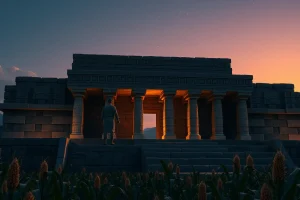
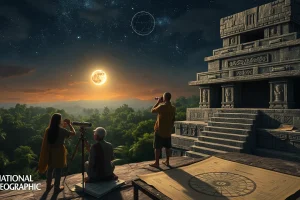
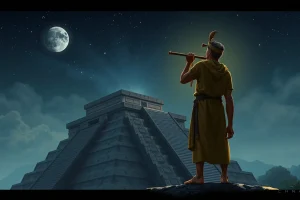
Maya astronomers observed these phenomena using the naked eye, often aided by architectural features. Structures were aligned to frame the sunrise on specific dates, including zenith passage days. For the Pleiades, observation likely involved watching the eastern horizon during twilight. The lack of light pollution in the ancient world made such observations clearer than in modern times. Architectural windows and doorways may have been used to pinpoint the exact moment of heliacal rising or zenith culmination.
Archaeological and Textual Evidence
Evidence for these practices is found in the orientation of temples and pyramids. Many Mesoamerican structures are aligned to celestial events. Textual evidence includes glyphs in codices that depict star clusters and solar positions. Research Notes of the AAS published findings on the Pleiades experience in Mesoamerica, confirming the cluster’s tie to agriculture and weather prediction. Similarly, the Journal of Skyscape Archaeology has published detailed analyses of zenith and nadir passages, confirming their relevance in Mesoamerican cosmology.
Calendar Connection
The Maya calendar system, including the Haab’ and Tzolk’in, was synchronized with these astronomical events. The zenith passage dates did not align perfectly with the European calendar but were fixed within the solar year relative to the observer’s latitude. The Pleiades’ heliacal rising often marked the beginning of the agricultural cycle, correlating with specific days in the Haab’. This synchronization ensured that religious festivals and agricultural labor occurred at the optimal time.
Architecture Connection
Architecture served as a permanent record of astronomical knowledge. Buildings oriented to the zenith passage allowed priests to confirm the date without complex calculations. This architectural astronomy reinforced the authority of the ruling class, who claimed the ability to intercede with the gods to ensure rain and sun. The alignment of structures at sites like Blue Creek demonstrates the practical application of this knowledge in hinterland communities, not just major urban centers.
Cultural Meaning
Culturally, these events were imbued with spiritual significance. The return of the Pleiades was seen as a return of life and moisture. The zenith Sun was associated with maximum power and heat. These were not just mechanical markers but moments of cosmic renewal. Rituals accompanied these observations to maintain cosmic order. The integration of astronomy into daily life ensured that the community remained synchronized with the natural world.
Uncertainty and Debate
Despite strong evidence, uncertainties remain. Not all architectural alignments are universally agreed upon as astronomical. Some may be oriented to topographical features rather than celestial ones. Additionally, the specific names and myths surrounding the Pleiades vary across different Maya groups. While the general utility is clear, the specific ritual practices associated with the zenith passage may have varied by region and time period. Ongoing archaeological work continues to refine our understanding of these complex systems.
FAQ
Did the Maya track the zenith passage of the Pleiades or the Sun?
While the Pleiades were tracked for their heliacal rising, the zenith passage phenomenon specifically refers to the Sun in Mesoamerican archaeology. Both were used for agricultural timing.
How often does the solar zenith passage occur in the Maya region?
In the tropical latitudes where the Maya lived, the Sun passes through the zenith twice a year, with dates varying based on specific geographic latitude.
Why was the Pleiades cluster important to Maya agriculture?
The heliacal rising of the Pleiades signaled the onset of the rainy season, indicating the optimal time for planting maize and other crops.
What evidence supports these astronomical practices?
Evidence includes architectural alignments of temples, glyphs in codices, and cross-cultural ethnographic studies of Indigenous astronomical practices.

Leave a Reply