
Short Answer
Maya E-Groups represent one of the most distinctive and enduring forms of monumental architecture in the ancient Maya Lowlands. Originally identified during archaeological excavations at Uaxactún, Petén, Guatemala in the 1920s, these complexes were initially interpreted as sophisticated astronomical observatories designed specifically for sighting equinoctial and solstitial sunrises. Over the following decades, hundreds of architectural compounds sharing this configuration were discovered across the central Lowlands of the Yucatan peninsula. While early hypotheses attributed a paramount role to these structures for precise astronomical observation, contemporary research indicates a more nuanced function involving ritual performance, sacred geography, and cosmological symbolism alongside observational utility.
Main Explanation
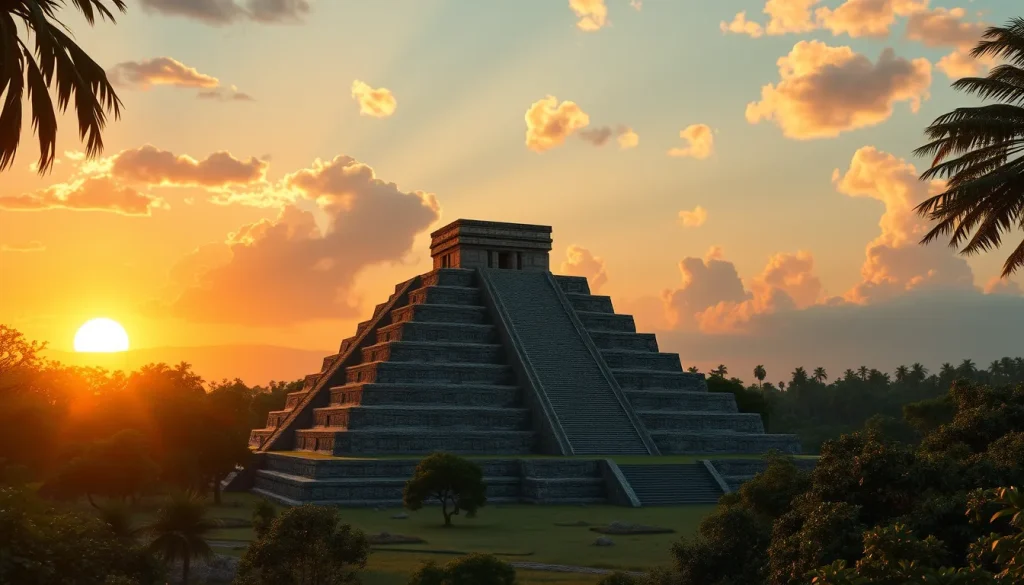
An E-Group architectural assemblage typically consists of a specific arrangement of structures oriented to facilitate solar observation. The standard configuration includes a large radial pyramid situated on the west side of a plaza, serving as the viewing platform. Opposite this, on the east side, stands a raised platform supporting three temples arranged in a linear north-south orientation. From the vantage point of the western pyramid, an observer could watch the sun rise over the eastern temples. The northernmost temple generally aligned with the summer solstice sunrise, the southernmost with the winter solstice sunrise, and the central temple with the equinoxes.
This architectural pattern was constructed and used for more than a millennium, appearing prominently during the Preclassic period and continuing into the Classic period. The durability of this design suggests it held profound cultural significance beyond mere utility. While the alignment with solar cycles is evident, recent investigations have shown that these alignments were rarely astronomically accurate in a strict scientific sense. Instead, the E-Group likely served as a stage for ritual performance referencing yearly solar and agricultural cycles, embedding the community within a sacred cosmological order.
Evidence & Sources
The understanding of E-Groups has evolved significantly through quantitative analyses of alignment data and archaeological context. A study published in PLOS One utilized quantitative analyses of a reasonably large sample of alignment data to test hypotheses regarding the astronomical function of these complexes. The research highlights the range of hypotheses proposed, from those attributing a paramount role in astronomical observations to those considering them merely allegorical or commemorative allusions to celestial cycles without observational use.
Significant scholarly debate was advanced by Aimers and Rice in 2006, who argued that accurate solar alignment was probably only a minor element, primarily an early one, of a larger set of metaphorically linked design considerations. Their work emphasizes concepts of sacred geography and ritual performance over strict observational accuracy. Furthermore, recent publications by the Institute of Maya Studies, including work by Ivan Šprajc in 2022, continue to examine the intersection of astronomical hypotheses and archaeological reality at sites like Uaxactún. These sources collectively suggest that while the Maya possessed advanced astronomical knowledge, the E-Group architecture served a broader socio-political and religious function within urban planning.
Deep Dive Analysis
Location and Distribution
E-Groups are most commonly found in the central Lowlands of the Yucatan peninsula, with the prototype located at Uaxactún in Petén, Guatemala. Their distribution indicates a shared cultural tradition across multiple Maya city-states, suggesting the exchange of architectural ideas and cosmological concepts throughout the region.
Construction and History
These architectural assemblages were constructed and used for more than a millennium. They are among the most enduring forms in Mesoamerican monumental architecture, originating in the Preclassic period. Their longevity implies that even as specific astronomical alignments might have drifted due to architectural modifications over centuries, the symbolic form remained vital to Maya identity.
Architecture and Layout
The typical E-Group consists of a large radial pyramid on the west side and three temples on a raised platform on the east side. The radial pyramid allows for 360-degree visibility and ritual access from all sides, while the eastern temples act as markers against the horizon. This layout creates a controlled space for viewing celestial events.
Astronomical Interpretation
Since the 1920s, E-groups have been thought to mark the solstices and equinoxes. The alignment allows observers to track the sun’s movement along the horizon throughout the year. However, more recent investigations have shown that these alignments were rarely accurate to the precise day of the solstice or equinox across all discovered sites.
Archaeological Evidence
Quantitative analyses of alignment data reveal variations in orientation that do not always match perfect solar azimuths. This evidence supports the theory that while solar observation was a component, it was not the sole or always the primary driver of construction. The archaeological reality often diverges from the idealized astronomical hypothesis.
Alternative Interpretations
Scholars now argue that E-Groups incorporated concepts of sacred geography and ritual performance. The structures may have served to legitimize rulership by connecting the king to celestial cycles and agricultural fertility. The architecture functioned as a metaphor for the cosmos, reinforcing social hierarchy through ritual participation.
Scholar Consensus
The current consensus acknowledges that accurate solar alignment was likely only a minor element of the design. The complexes are viewed as multi-functional spaces where astronomy, ritual, and urban planning intersected. They were not merely scientific instruments but sacred landscapes.
Visitor Misconception
A common misconception is that E-Groups were precise scientific observatories akin to modern telescopes. Visitors often expect perfect alignment on solstice days. In reality, the structures were part of a larger ceremonial complex where symbolic accuracy often outweighed astronomical precision.
FAQ
Were E-Groups used exclusively for astronomy?
No, while they facilitated solar observation, recent research indicates they also served ritual, political, and cosmological functions within sacred geography.
Where was the first E-Group discovered?
The first E-Group was identified during archaeological excavations at Uaxactún, Petén, Guatemala in the 1920s.
Are the solar alignments in E-Groups accurate?
Investigations show that alignments were rarely astronomically accurate; symbolic alignment was often prioritized over precision.





Leave a Reply