
Short Answer
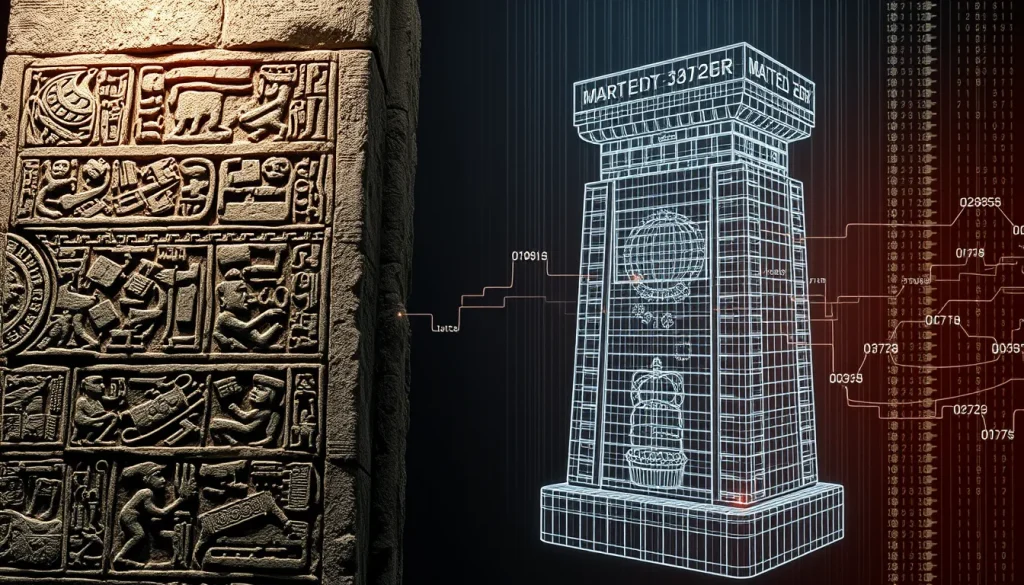
The preservation of Maya intellectual heritage represents one of the most critical challenges in modern Mesoamerican archaeology. The ancient Maya developed a sophisticated writing system and complex mathematical concepts, recorded primarily on stone monuments, ceramic vessels, and bark-paper codices. However, these materials are inherently fragile, susceptible to environmental degradation, looting, and physical decay. The digital preservation of Maya mathematical codices and glyphs has emerged as a vital interdisciplinary field, combining archaeology, computer science, and linguistics to create enduring records of this ancient knowledge. By leveraging advanced imaging, machine-readable text encoding, and dynamic data infrastructure, researchers are ensuring that the decipherment and study of Maya script can continue uninterrupted for future generations.
This digital turn is not merely about creating backups; it is about enhancing accessibility and analytical capability. Traditional methods of documentation, such as hand-drawn copies or static photography, often fail to capture the three-dimensional nature of carved glyphs or the subtle variations in brush strokes found in codices. Modern digital preservation seeks to overcome these limitations by creating high-fidelity multimedia archives that allow scholars worldwide to analyze inscriptions without risking damage to the original artifacts. This shift supports the ongoing decipherment of the script, which remains partially incomplete, and facilitates the study of Maya mathematics, astronomy, and calendar systems with unprecedented precision.
Main Explanation
Digital preservation in the context of Maya epigraphy involves a multi-layered approach to documenting, encoding, and disseminating information about hieroglyphic texts. At the foundational level, this includes the digitization of physical artifacts using high-resolution photography and 3D laser scanning. These techniques capture the surface topology of stone stelae and the texture of codex pages, preserving details that might be lost to erosion over time. For example, the MAAYA Project (Multimedia Analysis and Access for Documentation and Decipherment of Maya Epigraphy), initiated around 2014, focused on advanced image and video retrieval techniques to support the documentation of these cultural heritage assets. Such projects utilize computer vision algorithms to classify and retrieve specific glyph variants, aiding in the comparative analysis required for decipherment.
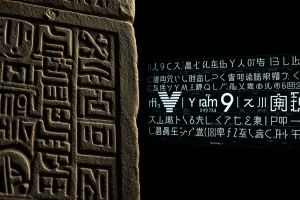
Beyond imaging, a crucial component of digital preservation is the encoding of the script itself into machine-readable formats. For decades, Maya glyphs existed primarily as images, making text search and computational linguistic analysis impossible. Recent efforts, such as those reported at the DH2018 conference, have focused on integrating Maya hieroglyphs into the Unicode standard. This work, led by scholars including Carlos Pallán Gayol and Deborah Anderson, addresses the technical challenges of encoding a logographic and syllabic system that contains hundreds of distinct signs. By achieving machine-readable Mayan text via Unicode, researchers can interchange data reliably across different computer systems and devices, fostering collaboration across international institutions.
Furthermore, digital preservation extends to the creation of dynamic research infrastructures. Unlike static publications, digital databases can be updated continuously as new decipherments are made or new artifacts are discovered. The ClassicMayan Portal, for instance, hosts working papers and databases that reflect the current state of analytical processes. These platforms treat data as “living,” allowing for daily updates and revisions in light of ongoing scholarly work. This flexibility is essential for a field where understanding evolves rapidly, ensuring that the digital record remains synchronized with the latest archaeological and epigraphic insights.
Evidence & Sources
The efficacy of digital preservation strategies is supported by a growing body of academic literature and institutional projects. The MAAYA Project, involving collaborators from EPFL, the University of Bonn, and the University of Geneva, demonstrated the utility of 3D surveying and image retrieval techniques in cultural heritage contexts. Their work highlighted how advanced computational methods could assist in the decipherment of hieroglyphic writings by organizing vast visual corpora. The project’s publications, cited in academic databases, underscore the intersection of computer science and archaeology in preserving Maya epigraphy.
Significant progress is also documented in the encoding and markup of Maya hieroglyphic writing. A 2021 study published in the Journal of the Text Encoding Initiative, titled “The Code of Maya Kings and Queens,” detailed the methodologies for encoding Maya text using XML and TEI (Text Encoding Initiative) standards. Authors such as Christian M. Prager and Nikolai Grube outlined how markup languages can represent the complex graphematics of the script. This work provides a structured framework for representing the semi-deciphered logographic and syllabic elements of the writing system, ensuring that digital texts remain interpretable even as software technologies change.
Additionally, the ClassicMayan Portal’s Working Paper 5, published in August 2025, offers a snapshot of the “Digital Catalog of Maya Hieroglyphs.” This document describes a database infrastructure that is subject to continual expansion and refinement. It explicitly states that the information presented represents provisional yet methodologically controlled snapshots of current knowledge. This transparency is crucial for academic integrity, distinguishing between established facts and evolving hypotheses within the digital record. The portal’s commitment to extending functionalities, such as refined filtering and search capabilities, demonstrates a long-term strategy for enhancing the scholarly usability of the data.
These sources collectively validate the transition from analog to digital preservation. They confirm that the integration of Unicode, 3D modeling, and dynamic databases is not theoretical but actively implemented by leading research institutions. The collaboration between archaeologists like Nikolai Grube and computer scientists ensures that the technological solutions are grounded in epigraphic reality, addressing the specific needs of Maya scholarship rather than applying generic digital archiving tools.
Deep Dive Analysis
Module F: Digital Archaeology
Technology Description
The core technologies driving the digital preservation of Maya codices and glyphs include Unicode encoding, 3D laser scanning, and TEI XML markup. Unicode provides a universal character encoding standard that allows Maya glyphs to be treated as text rather than images. 3D scanning captures the physical geometry of inscribed artifacts, while TEI XML provides a semantic layer that describes the structure and meaning of the text within a digital document.
How It Works
Unicode encoding involves mapping each distinct Maya glyph sign to a unique code point within the international standard. This process requires consensus among epigraphers on the classification and variation of signs. Once encoded, glyphs can be typed, searched, and processed by software. 3D scanning utilizes laser triangulation or structured light to create point clouds of monuments, which are then converted into mesh models. TEI XML works by wrapping text in tags that define its role, such as identifying a royal name, a date, or a grammatical particle.
Field Workflow
In the field, archaeologists utilize portable 3D scanners to document stelae and altars in situ. This non-invasive method captures data before any potential damage occurs. Back in the laboratory, epigraphers transcribe the visual data into Unicode characters using specialized keyboards or input methods. These transcriptions are then marked up using TEI guidelines, linking the digital text to the 3D models and high-resolution photographs. This workflow ensures that the digital surrogate is richly connected to the physical source.
Output/Data
The primary outputs are machine-readable text corpora, 3D model repositories, and dynamic databases. These datasets allow for computational analysis, such as frequency counts of specific glyphs or spatial analysis of inscription placement. The data is often stored in open-access repositories or portals like the ClassicMayan Portal, ensuring long-term accessibility. The “living data infrastructure” model means these outputs are versioned and updated regularly.
Example
A concrete example is the encoding work described in the 2018 DH2018 paper by Pallán Gayol and Anderson. They reported on the rapidly expanding repository of digitally encoded, machine-readable Mayan texts. This repository allows scholars to query texts for specific grammatical structures or historical events, a task that was previously impossible when relying solely on printed facsimiles.
Strengths
The primary strength of this approach is durability and accessibility. Digital files do not degrade like paper or stone. Furthermore, machine-readability enables new forms of research, such as network analysis of social connections mentioned in texts. The ability to update databases ensures that the digital record keeps pace with scholarly decipherment, unlike static print publications which become outdated upon release.
Limitations
Limitations include the dependency on technology and standards. If Unicode standards shift or software becomes obsolete, data migration is required. Additionally, the encoding process is labor-intensive and requires high levels of expertise in both epigraphy and digital humanities. There is also the risk of “digital decay,” where file formats become unreadable over time without active maintenance.
Accuracy
Accuracy depends on the quality of the initial capture and the consensus on glyph identification. 3D scanning offers sub-millimeter accuracy for physical dimensions. However, semantic accuracy relies on the current state of decipherment, which is incomplete. The ClassicMayan Portal addresses this by labeling data as provisional snapshots, acknowledging the evolving nature of epigraphic knowledge.
Cultural Heritage Considerations
Digital preservation must respect the cultural significance of the artifacts to descendant communities. Open access must be balanced with ethical considerations regarding sacred knowledge. Projects like MAAYA and ClassicMayan involve collaboration with international teams, promoting a shared stewardship of Maya heritage. The goal is to democratize access while maintaining scholarly rigor and cultural sensitivity.
FAQ
Why is Unicode important for Maya glyphs?
Unicode allows Maya glyphs to be treated as text rather than images, enabling searchability and computational analysis across different devices.
Are digital databases of Maya glyphs considered final?
No, databases like the ClassicMayan Portal are considered living infrastructure that is updated daily as new research emerges.
What technologies are used to preserve stone monuments?
3D laser scanning and structured light surveying are used to create high-fidelity digital models of inscribed monuments.
Leave a Reply