
Short Answer
The ancient Maya civilization, flourishing in the tropical southern lowlands of Central America, faced a paradoxical environmental challenge: abundant rainfall during wet seasons contrasted sharply with severe water scarcity during annual dry periods. To sustain dense urban populations, Maya engineers developed sophisticated hydraulic systems that functioned for over a millennium. These systems were not merely utilitarian but represented a complex intersection of ecological knowledge, labor organization, and political power. Recent archaeological research highlights how these cities stored and managed water through reservoirs, constructed wetlands, and irrigation technologies, adapting to climate instability until the Terminal Classic period.
Main Explanation
Maya hydraulic engineering was defined by the necessity of capturing and storing rainwater in a karstic landscape where surface water quickly percolates underground. Unlike river valley civilizations such as Egypt or Mesopotamia, the Maya could not rely on perennial rivers for irrigation in the southern lowlands. Instead, they constructed extensive networks of reservoirs, dams, and canals. These features ranged from massive state-level projects to smaller household-level technologies. The period of peak complexity spanned from the Middle Preclassic to the Terminal Classic, approximately 400 B.C. to A.D. 1000. During this time, water management technologies became ubiquitous features on the landscape, requiring significant labor to build and maintain.
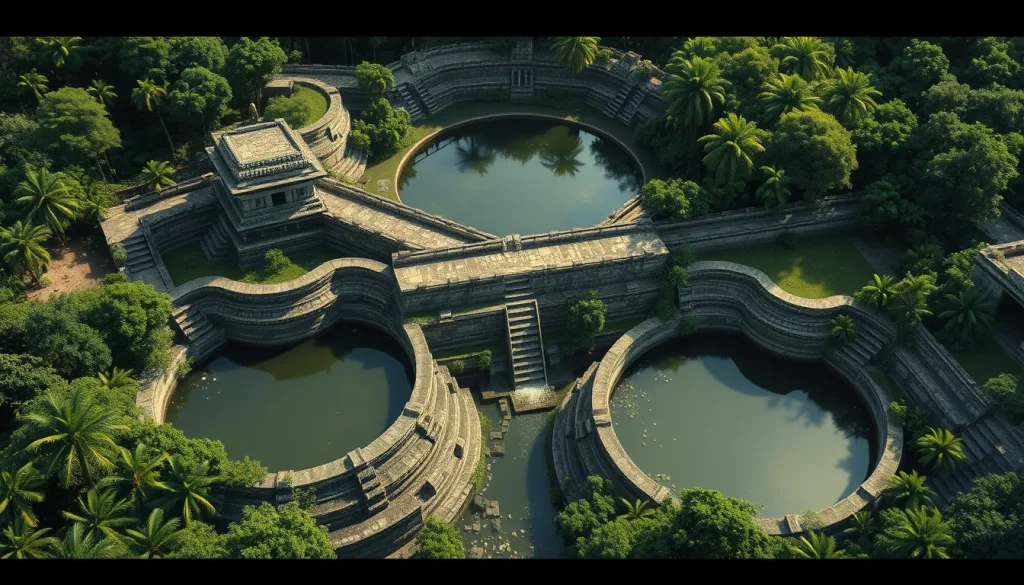
A critical component of this engineering was the use of constructed wetlands. Modern analysis suggests that Maya reservoirs functioned similarly to contemporary constructed wetlands (CWs). In still-water systems, nutrient build-up can promote algal growth, rendering water nonpotable and creating breeding grounds for mosquitoes that spread endemic diseases. The Maya mitigated this through the strategic use of aquatic plants within their reservoir systems. These plants helped keep water clean, demonstrating an advanced understanding of biological filtration. This sustainable land use allowed cities like Tikal to optimize water resources despite limited surface availability. The organization of these systems often reflected social hierarchy, with centralized management for large dams and community-level oversight for smaller storage features.
Evidence & Sources
Archaeological evidence for Maya water management is found in the form of small dams, reservoirs, wells, irrigation canals, and agricultural terraces. Excavations at Tikal, Guatemala, have provided pivotal data regarding sustainable land use and water optimization. Studies led by researchers such as Vernon L. Scarborough and Nicholas P. Dunning have utilized sediment cores and landscape analysis to reconstruct ancient water systems. These investigations reveal that water management was integral to urban planning, with reservoirs often located near major ceremonial centers to reinforce political authority through resource control.
Furthermore, climate data indicates that water management strategies were tested by periods of climate instability. Research published in 2011 examined the relationship between climate change and Classic Maya water management, suggesting that prolonged droughts stressed these systems. More recent studies from 2023 posit that Maya reservoirs functioned as constructed wetlands to combat water scarcity during annual dry seasons. The archaeological record shows that these technologies were maintained for over a thousand years, indicating a high degree of resilience. However, the visibility of these features varies; while large dams are prominent, smaller household technologies often require detailed survey methods to identify. The combination of traditional excavation and modern digital heritage tools continues to refine our understanding of these ancient infrastructures.
Deep Dive Analysis
Location and Distribution
Maya hydraulic systems were primarily located in the tropical southern lowlands of Central America, including sites like Tikal. The karstic terrain of this region necessitated artificial storage solutions as rain percolated rapidly through the limestone bedrock. Reservoirs were strategically placed within urban centers to maximize catchment from paved plazas and causeways. This distribution ensured that water was accessible to the population during the dry season, which could last several months. The ubiquity of these technologies across the Maya area during the Classic period underscores their importance to survival and political stability.
Construction and History
Construction of water management features required great amounts of labor, often associated with centralized, state-level management. Dams and canals were built using stone and plaster liners to prevent seepage. The historical timeline for these technologies spans from the Middle Preclassic (400 B.C.) to the Terminal Classic (A.D. 1000). Over this millennium, engineering techniques evolved to address increasing population pressures and climate variability. Maintenance was continuous, as sedimentation and vegetation growth could compromise reservoir capacity. The longevity of these systems testifies to the organizational capacity of Maya society to mobilize labor for public works.
Architecture and Engineering Design
The architecture of Maya water systems included sophisticated filtration mechanisms. Some reservoirs featured sand boxes or layered substrates designed to filter particulates before water entered storage zones. Constructed wetlands utilized specific aquatic plants to manage water quality, preventing stagnation and algal blooms. This biological engineering reduced the risk of waterborne diseases and mosquito proliferation. Canals directed water from catchment areas to reservoirs, while dams regulated flow and storage levels. The design prioritized both volume and potability, ensuring that stored water remained safe for human consumption throughout the dry season.
Astronomical and Seasonal Interpretation
While primarily functional, water management was linked to seasonal cycles governed by astronomical observations. The Maya calendar tracked solar and seasonal years to predict rainfall patterns. Water storage was timed to coincide with the wet season, ensuring maximum capacity before the dry months. Although less explicitly astronomical than observatories like El Caracol, the management of water resources was deeply tied to cosmological beliefs regarding rain deities and agricultural cycles. The failure of these systems during periods of climate instability suggests that astronomical prediction alone could not mitigate extreme environmental shifts.
Archaeological Evidence
Evidence of ancient water technologies is found in the form of physical remains on the landscape. Sediment cores extracted from reservoir bottoms provide data on water quality, algal growth, and usage over time. Digital heritage technologies, such as LiDAR, have recently enhanced the detection of smaller water management features that are not visible from the ground. These tools reveal the scale of irrigation ditches and terraces associated with agricultural production. The archaeological record confirms that these technologies were ubiquitous during the peak of Maya political complexity. Excavations continue to uncover new details about how these systems were integrated into daily life.
Alternative Interpretations
Some earlier interpretations viewed Maya water systems as primitive or purely reactive to environmental stress. However, current evidence supports the view that they were proactive and sophisticated. Alternative theories sometimes suggest that natural depressions were used without modification, but geological surveys confirm extensive human engineering. There is debate regarding the degree of centralized control versus household autonomy. While large dams imply state management, smaller wells and storage features suggest community or household-level oversight. This dual system allowed for flexibility in resource distribution during times of scarcity.
Scholar Consensus
The scholarly consensus affirms that Maya water management was sophisticated and essential for urban sustainability. Researchers agree that reservoirs functioned similarly to modern constructed wetlands, utilizing biological processes to maintain water quality. There is broad agreement that these systems supported dense populations for over a thousand years. The integration of water management with political authority is widely accepted, as control over water resources reinforced elite power. However, debates continue regarding the specific role of water scarcity in the Classic Maya collapse. Most scholars agree it was a contributing factor alongside political and social stresses.
Visitor Misconception
A common misconception among visitors and popular media is that the Maya lacked advanced technology due to the absence of metal tools or wheels. In reality, their hydraulic engineering demonstrates high technical proficiency adapted to their environment. Another misconception is that water systems were solely the responsibility of kings. Evidence shows household and community involvement in maintenance and smaller-scale management. Additionally, some believe the collapse was sudden due to water failure, but records indicate a prolonged period of adaptation before abandonment. Understanding these nuances corrects the narrative of Maya technological capability and resilience.
FAQ
How did the Maya keep reservoir water clean without modern filtration?
The Maya used aquatic plants within reservoirs to function as constructed wetlands, which prevented algal growth and kept water potable.
Did climate change contribute to the collapse of Maya water systems?
Yes, periods of climate instability and prolonged droughts stressed the water management systems, contributing to sustainability challenges during the Terminal Classic.
Were water systems managed by the government or households?
Evidence suggests a mix of centralized state-level management for large dams and community or household-level management for smaller technologies.

Leave a Reply