
Short Answer
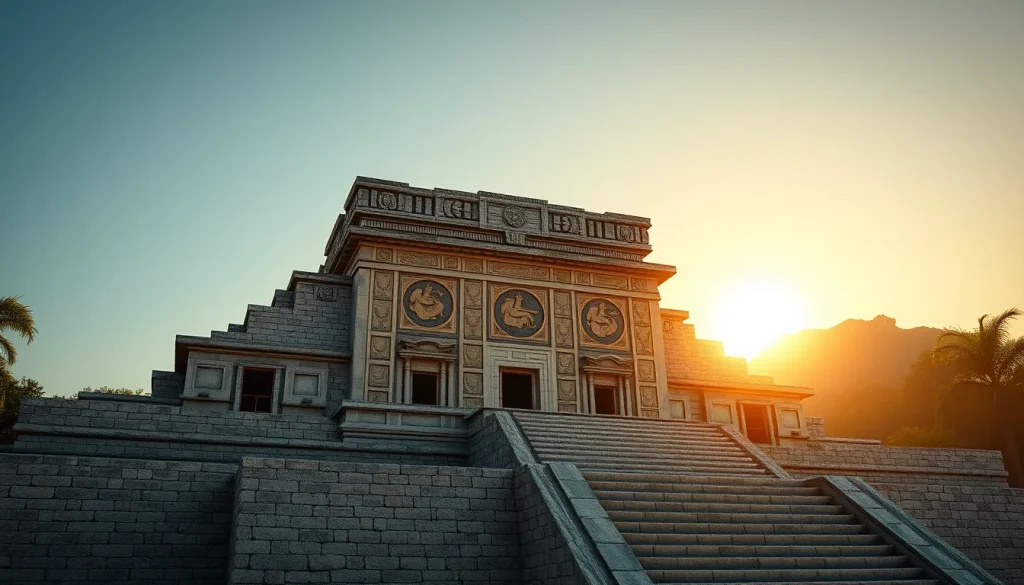
The ancient Maya city of Uxmal, located in the Puuc region of the Yucatán Peninsula, represents one of the most sophisticated examples of Pre-Columbian urban planning and ceremonial architecture. Among its many structures, the Governor’s Palace (Palacio del Gobernador) stands out not only for its architectural grandeur but for its precise integration of astronomical knowledge into stone. This massive complex, constructed around AD 900 under the rule of Lord Chac, serves as a primary source for understanding how the Maya encoded celestial cycles, particularly those of the planet Venus, into their built environment. The building is not merely a residence but a cosmological map, aligning with horizon events and preserving mathematical data regarding solar, lunar, and planetary periods within its facade elements.
Main Explanation
The Governor’s Palace is a tripartite building composed of three distinct sections connected by soaring transverse vaults. It measures approximately 328 feet in length and is set upon an immense four-tiered platform that rises more than 50 feet above the surrounding ground level. This elevated position was not solely for defensive advantage or status display; it was crucial for astronomical observation, providing an unobstructed view of the horizon where celestial bodies rise and set. The structure faces a specific direction calibrated to the movements of Venus, the most culturally significant planet in the Maya cosmos, often associated with warfare, rain, and agricultural cycles.
Architecturally, the palace exhibits the classic Puuc style, characterized by intricate mosaic facades and geometric precision. However, beyond aesthetics, the decoration serves a didactic and ritual function. The building contains over 350 Venus glyphs on its facade, indicating the cultural importance of the planet to the rulers of Uxmal. These glyphs are not random decorations but part of a larger system of information storage. The counts of mosaic facade elements, doors, steps, and colonnettes of the East, West, and North Buildings of the Nunnery Quadrangle, often associated with the Governor’s Palace complex, suggest that these features preserve knowledge of specific astronomical facts. These include the moon’s synodic period of 29.53+ days, the lunar sidereal period of nearly 27.33 days, and the Venus synodic mean of almost 584 days.
Evidence & Sources
The assertion that the Governor’s Palace is an astronomical instrument is supported by multiple lines of archaeological and epigraphic evidence. Primary among these is the hieroglyphic inscription located above the central doorway of the Palace, known as the Throne Inscription. Research published in the Cambridge Archaeological Journal demonstrates that this inscription relates specifically to the concern with Venus and other celestial phenomena. Part of the inscription depicts zodiacal constellations, and its uppermost row functions as a map of the constellations at the ‘base of the sky’ at the time of the Venus alignment. This inscription is now recognized as one of the major sources of information about the pre-Columbian Maya zodiac.
Further evidence is found in the numerical symbolism embedded in the architecture. Counts of architectural features suggest the Maya builders encoded complex correlations between celestial cycles. For instance, the data preserved in the masonry indicates that any five consecutive Venus synodics equal or come to within one day of eight vague years of 365 days each. Additionally, the relationship between the Venus sidereal period (nearly 224 days) and the synodic period is reflected, with 13 Venus sidereals virtually equaling five Venus synodics. The iconography also supports this; cheek glyphs, flanking bird-serpents, and plumed-snake headbands suggest that most of the masks on the East Building, West Building, and Governor’s Palace represent not Chac, the rain god, but Kukulcan-Venus. This suggests that at least some Pure Florescent architecture was dedicated to the Venus cult.
Deep Dive Analysis
Module B: Building/Site Analysis
Location
The Governor’s Palace is situated at the Maya site of Uxmal in present-day Yucatán, Mexico. It dominates the southern side of the main ceremonial complex, positioned to maximize visibility of the southeastern horizon.
Construction and History
The House of the Governor was built around AD 900 by the Uxmal ruler Lord Chac. This period marks the Late Classic to Terminal Classic transition, a time when Uxmal was a dominant regional power. Jeff Kowalski, author of The House of the Governor, believes the structure stands as the symbol of a pivotal moment in the history of Maya architecture. In 1841, John Lloyd Stephens wrote of the Governor’s Palace: “There is no rudeness or barbarity in the design or proportions; on the contrary, the whole wears an air of architectural symmetry and grandeur.” This sentiment has been echoed by modern art historians and architects, including Frank Lloyd Wright, who considered it the finest example of ancient American architecture.
Architecture
The building is 328 feet long and stands on the summit of an immense four-tiered platform that rises 50 feet above ground. The tripartite design allows for multiple vantage points and ritual spaces. The vaulted ceilings demonstrate advanced engineering capabilities, allowing for wide interior spaces without central support columns, which would have obstructed sightlines or ritual movement.
Astronomical Interpretation
The orientation of the Governor’s Palace can be related to the extremes of the planet Venus on the horizon. The building is designed to face the rising of Venus as a morning star, according to some interpretations. However, the specific alignment targets the extreme positions of the planet, which occur infrequently. This alignment would have allowed priests and rulers to predict Venus’s heliacal rising, a critical event for scheduling warfare and rituals.
Archaeological Evidence
Archaeological evidence includes the aforementioned Throne Inscription which depicts zodiacal constellations. Furthermore, the sheer number of Venus glyphs (over 350) on the facade provides quantitative evidence of the building’s dedication. The architectural counts mentioned in American Antiquity (1980) provide mathematical evidence, showing that the builders intentionally incorporated periods such as the 584-day Venus synodic cycle into the physical dimensions and element counts of the structure.
Alternative Interpretations
While the association with Venus is undisputed, the specific orientation remains a subject of scholarly debate. Two opposing interpretations have been forwarded regarding its orientation. One interpretation links the palace with the southernmost rising point of the morning star. Another suggests it refers to the northerly extremes of the evening star. Recent analysis suggests the Governor’s Palace at Uxmal likely aligns with Venus’s northerly extremes as the evening star, though the morning star association remains prevalent in popular literature and some earlier scholarship.
Scholar Consensus
The scholarly consensus affirms that the Governor’s Palace is associated with Venus in terms of both its sculptural decoration and its orientation. It is aligned to an infrequently occurring extreme position of Venus on the horizon. The Throne Inscription from Uxmal is recognized as a major source of information about the pre-Columbian Maya zodiac. The debate lies primarily in distinguishing whether the alignment prioritizes the morning or evening apparition, though both are aspects of the same Venus cycle.
Visitor Misconception
A common misconception among visitors is that the Governor’s Palace was a residential dwelling for a secular ruler in the modern sense. While it bears the name “Palace,” its primary function was likely administrative and ritualistic, serving as a center for astronomical observation and statecraft tied to celestial omens. The presence of over 350 Venus glyphs and zodiacal inscriptions indicates it was a temple of astronomy as much as a seat of government. Additionally, visitors often assume the masks depict the rain god Chac exclusively, whereas evidence suggests many represent Kukulcan-Venus.
FAQ
What is the Governor's Palace aligned with?
The Palace is aligned to an infrequently occurring extreme position of Venus on the horizon, with debate over whether it targets the morning or evening star extremes.
Who built the Governor's Palace at Uxmal?
It was built around AD 900 by the Uxmal ruler known as Lord Chac.
Why are there so many Venus glyphs on the facade?
The over 350 Venus glyphs indicate the cultural importance of the planet and suggest the building served as a center for Venus-related rituals and astronomy.
Does the inscription mention zodiac constellations?
Yes, the Throne Inscription above the central doorway depicts zodiacal constellations and maps the sky at the time of the Venus alignment.



Leave a Reply