Short Answer
Introduction to El Caracol Structure
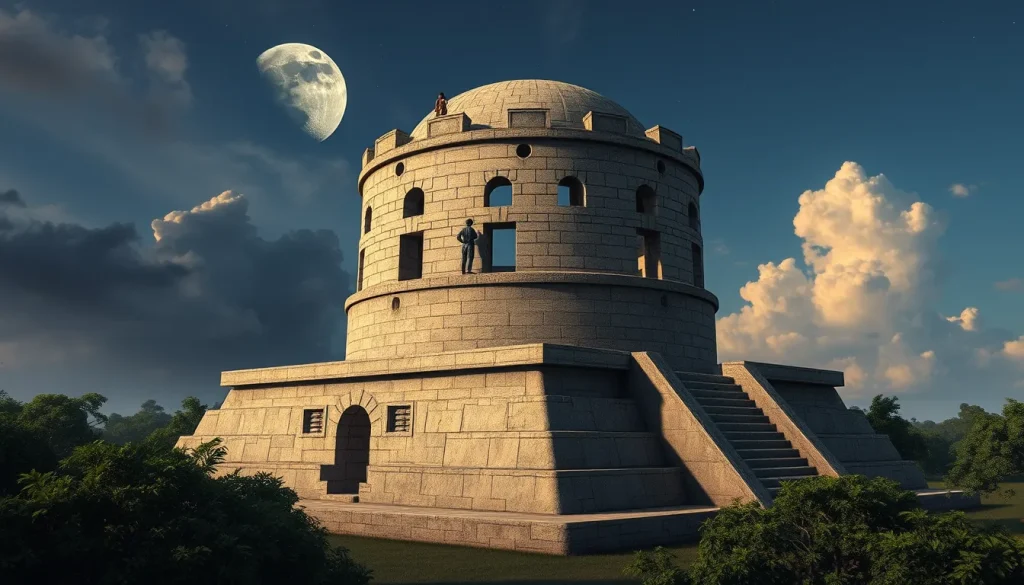
El Caracol, situated within the ancient Maya city of Chichén Itzá in the Yucatán Peninsula of Mexico, stands as one of the most enigmatic and architecturally distinct structures of the Post Classic period. Often referred to as the Observatory, this building diverges significantly from the typical rectilinear architecture found throughout the site. Its unique cylindrical shape and internal spiral staircase have fascinated archaeologists, astronomers, and historians for over a century. The structure serves as a critical case study in understanding the intersection of Maya architecture, cosmology, and practical astronomy.
The name El Caracol translates to the snail in Spanish, a designation derived from the winding spiral staircase located inside the tower. This internal feature is rare in Maya construction and suggests a specific functional purpose related to access to the upper levels. While popular culture often romanticizes the building as a high-tech telescope housing, scientific investigation reveals a more nuanced reality grounded in naked-eye observation and ceremonial alignment. The structure remains a testament to the sophisticated astronomical knowledge held by the Maya civilization.
Historical Context and Construction Date
Chronologically, El Caracol belongs to the Post Classic period of Mesoamerican chronology. According to archaeological evidence, including stelae found on the Upper Platform, the structure is dated to around AD 906. This places its construction during a time when Chichén Itzá was a dominant regional power, exhibiting strong influences from both traditional Maya culture and central Mexican styles, particularly those associated with the Toltec influence and the cult of Quetzalcoatl.
The positioning of El Caracol within the greater site plan of Chichén Itzá is deliberate. It is not aligned with the cardinal directions in the same manner as the nearby Castillo (El Castillo). Instead, its orientation appears to be driven by astronomical phenomena rather than urban grid conformity. This deviation underscores the building’s specialized function. The historical context suggests that the builders prioritized celestial observation over strict urban symmetry, highlighting the importance of astronomy in Maya political and religious life during the 10th century.
Architectural Features and Design
The architectural design of El Caracol is optimized for sky-watching in the dense vegetation of the Yucatán. The tower sits high on a four-cornered but not quite square platform, elevating the observers above the leafy canopy. In the Yucatán, where the landscape is flat as a tortilla and dense with trees and scrub brush, sky-watching of any kind is impossible without some way to rise above the vegetation. The tower atop El Caracol gives excellent unobstructed views of the skies and surrounding landscape.
The Upper Platform and Dome
To modern eyes, the rounded dome of El Caracol—actually the decayed remains of what was a cylindrical structure—looks like it could house a telescope. It does not, of course, but there is plenty of evidence suggesting that El Caracol was used as a lookout on the heavens. The upper chamber contains windows and shafts that have been measured for their alignment with celestial bodies. The decayed state of the dome complicates precise reconstruction, but laser scans and digital heritage models have helped archaeologists visualize the original sightlines.
The Spiral Staircase
The internal spiral staircase is the defining feature of the building. It allowed priests and astronomers to ascend to the viewing platform securely. The design minimizes the structural footprint while maximizing height, a practical engineering solution for the time. The staircase also holds cosmological significance, potentially representing the path of celestial bodies or the spiral motion of certain astronomical phenomena observed by the Maya.
Astronomical Alignments and Orientations
The primary scientific interest in El Caracol stems from its astronomical alignments. Systematic studies involving careful measurement have been made to test the structure for astronomical orientation. A seminal interdisciplinary study initiated by Anthony F. Aveni, Sharon L. Gibbs, and Horst Hartung in 1975 investigated the possible astronomical orientation of the Caracol. Their work remains a cornerstone of archaeoastronomy in Mesoamerica.
The grand staircase that marks the front of El Caracol faces 27.5 degrees north of west. This orientation is out of line with the other buildings at the site, but it is an almost perfect alignment for specific celestial events. Investigations reveal a number of significant astronomical events coinciding with many of the measured alignments. However, not every alignment appears to have an astronomical match which researchers can recognize. It may be that only some of the sighting possibilities discussed were actually functional.
The Significance of Venus in Maya Cosmology
In particular, El Caracol seems to be carefully aligned with the motions of Venus. Venus had tremendous significance for the Maya; this bright planet was considered the sun’s twin and a war god. Mayan leaders used the changing position of Venus to plan appropriate times for raids and battles. The observers could view the sky above the vegetation on the Yucatán Peninsula without any obstruction, allowing them to track the planet’s complex movements.
The Venus Cycle
Mayan astronomers knew from naked-eye observations that Venus appeared on the western and disappeared on the eastern horizons at different times in the year, and that it took about 584 days to complete one cycle. They also knew that five of these Venus cycles equaled eight solar years. Venus would therefore make an appearance at the northerly and southerly extremes. The windows and shafts of El Caracol are believed to frame these extreme positions, allowing astronomers to predict the heliacal rising and setting times which could have served to mark important dates in the calendar.
Solar and Lunar Cyclical Observations
While Venus is the primary focus of El Caracol’s alignments, the structure also incorporates solar and lunar observations. The search of significant astronomical events to match the alignments has included only those which seem of obvious functional importance: sun, moon, and planetary extremes and the setting positions of the brightest stars. The emphasis is placed on those celestial bodies which are documented in the literature as having been of importance.
Some alignments correspond to the solstices and equinoxes, which were critical for the Maya agricultural calendar. The interplay between solar and Venusian cycles allowed the Maya to maintain a complex calendar system that synchronized civil time with celestial events. This synchronization was essential for scheduling religious ceremonies and asserting the divine authority of the ruling class.
Digital Heritage and Modern Archaeological Methods
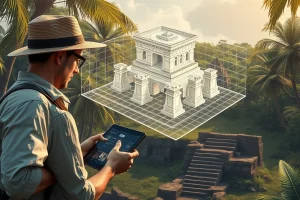
Modern archaeology has embraced digital heritage technologies to study El Caracol without invasive excavation. Laser scans of El Caracol have provided precise measurements of the structure’s dimensions and alignments. These 3D models allow researchers to simulate sightlines from the upper windows under various historical vegetation conditions.
Digital reconstruction helps address the issue of the decayed dome. By modeling the original cylindrical structure, specialists can test hypotheses about visibility and alignment that are impossible to verify with the ruins alone. This interdisciplinary approach combines traditional archaeology with computer science and astronomy to test certain works of ancient Mesoamerican architecture for astronomical orientation. These tools ensure that the interpretation of El Caracol remains grounded in empirical data rather than speculation.
Scientific Debates and Archaeological Scrutiny
Despite the evidence, scientific debate persists regarding the extent of El Caracol’s function as an observatory. The 1975 study by Aveni et al. noted that while many alignments match astronomical events, not all do. Perhaps hitherto unrecognized constellations were sighted in the windows, perhaps fainter stars. The researchers proposed no grand cosmic scheme for the astronomical design of the Caracol but inferred that the building, apart from being a monument related to Quetzalcoatl, was functional for observation.
“While we propose no grand cosmic scheme for the astronomical design of the Caracol it can be inferred that the building, apart from being a monument related to Quetzalcoatl, was…” — Aveni, Gibbs, and Hartung, Science (1975)
Critical scrutiny avoids pseudoscience and alien theories common in pop culture. The focus remains on documented importance and functional importance to the Maya. The building may have served dual purposes: a practical observatory for astronomers and a symbolic monument reinforcing the connection between the rulers and the cosmos. The ambiguity in some alignments suggests that our understanding of Maya constellations may be incomplete.
Legacy and Preservation
Today, El Caracol is a protected monument within the Chichén Itzá archaeological zone. Preservation efforts focus on stabilizing the structure against environmental degradation while allowing continued research. The site attracts scholars and visitors interested in Maya Astronomy and Archaeology. Understanding El Caracol provides insight into how ancient civilizations interacted with their environment and the cosmos. It stands as a unique structure at the pre-Columbian Maya civilization site, reminding us of the sophistication of ancient scientific inquiry.
The legacy of El Caracol extends beyond archaeology into education and cultural heritage. It serves as a primary example in discussions of ancient observatories worldwide. By maintaining the integrity of the site and utilizing modern digital tools, heritage specialists ensure that future generations can continue to learn from this ancient tower. The continued study of El Caracol promises to reveal more about the intricate relationship between Maya architecture and the heavens.
Comparative Data of Celestial Cycles
The following table outlines the key celestial cycles tracked by Maya astronomers using structures like El Caracol, highlighting the mathematical precision involved in their observations.
| Celestial Body | Cycle Duration | Significance | Alignment Feature |
|---|---|---|---|
| Venus | 584 days | War god, Sun’s twin | Window shafts, Staircase orientation |
| Solar Year | 365 days | Agriculture, Calendar | Solstice markers |
| Venus Cycle Set | 5 cycles = 8 years | Long-term planning | Repeated alignments |
| Moon | 29.5 days (approx) | Ritual timing | Lunar extremes |
Key Architectural and Astronomical Features
To summarize the critical elements that define El Caracol’s function and design, the following list details the primary features identified by archaeological survey:
- Spiral Staircase: Internal winding access giving the structure its name.
- Upper Platform: Elevated viewing area above the vegetation canopy.
- Window Shafts: Openings aligned with Venus and solar extremes.
- Staircase Orientation: Faces 27.5 degrees north of west.
- Cylindrical Tower: Unique shape distinguishing it from other Maya buildings.
- Stele Dating: Provides the AD 906 construction timeframe.
- Quetzalcoatl Connection: Architectural motifs linking to central Mexican influence.
These features collectively support the interpretation of El Caracol as a specialized instrument for observing the heavens, integrated within the religious and political framework of Chichén Itzá.
FAQ
Was El Caracol actually used as a telescope?
No. While the dome looks like it could house a telescope to modern eyes, the Maya used naked-eye observations. The structure provided elevation above the vegetation to view celestial bodies without obstruction.
Why is Venus so important to the alignment of El Caracol?
Venus was considered the sun's twin and a war god by the Maya. Leaders used its changing positions to plan appropriate times for raids and battles, making its tracking politically and religiously vital.
What does the name El Caracol mean?
El Caracol means 'the snail' in Spanish. It is named due to the spiral staircase inside the tower, which is a unique feature in Maya architecture.
Leave a Reply