
Short Answer
The study of ancient Mesoamerican chronology relies heavily on the ability to translate indigenous timekeeping systems into the Western Gregorian calendar. At the heart of this translation lies the Goodman-Martinez-Thompson (GMT) correlation. This mathematical constant serves as the bridge between the Maya Long Count calendar and the Julian Day Number, allowing archaeologists and historians to assign specific Western dates to ancient inscriptions. Without this correlation, the sophisticated historical records left by the Maya civilization would remain floating in time, disconnected from the global historical timeline.
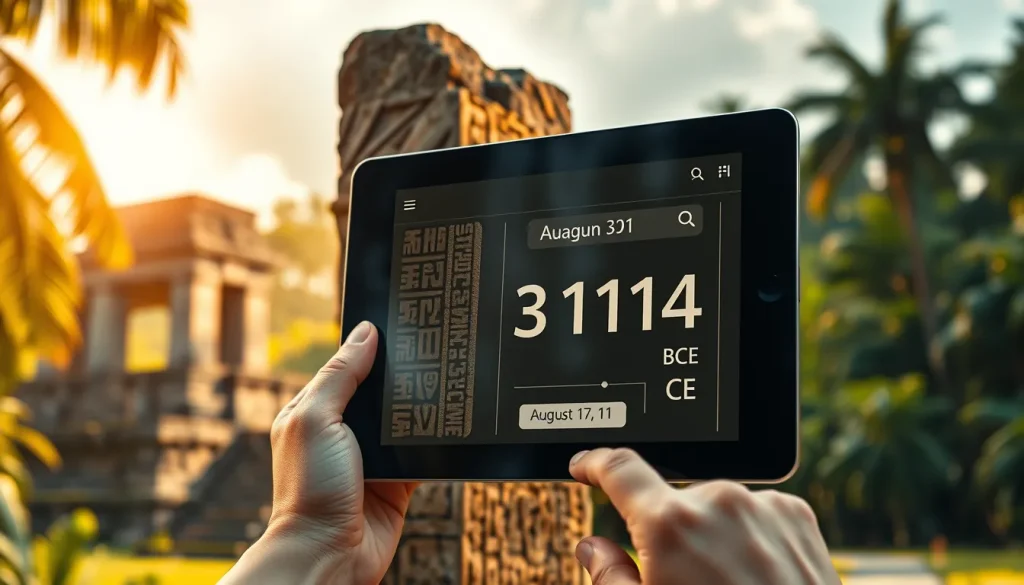
The necessity of a correlation arises because the Maya calendar systems, particularly the 260-day Tzolkin and the 365-day Haab, operate independently of the solar year in a way that requires a fixed anchor point to align with Western reckoning. The GMT correlation provides this anchor, positing that the mythical creation date of the current Maya era corresponds to August 11, 3114 BCE in the proleptic Gregorian calendar. This alignment is not merely theoretical; it is supported by centuries of continuous tradition among modern Maya communities and rigorous astronomical data found on carved monuments.
Understanding the Correlation Problem
To understand the significance of the GMT correlation, one must first appreciate the complexity of Mesoamerican timekeeping. The Maya utilized multiple overlapping calendar cycles. The most sacred of these is the 260-day count, known as the Tzolkin to the Maya and the Tonalpouhalli to the Aztecs. As noted by astrological historians, this count is a remarkable instrument that resonates with planetary cycles and life on Earth, functioning as a kind of biorhythmic scale rather than a seasonal tracker. Because it is not connected to the seasons, it does not require leapday corrections, but this independence creates a challenge for modern researchers.
In order to know when a particular day in the ancient past arrived according to our modern calendar, scholars must either keep daily records of the passage of days, as indigenous Maya daykeepers do, or have a method of correlating it with the Western calendar. One effective way of correlating the 260-day astrological calendar with the Western calendar is to link it to a Julian date. Historians and astronomers have numbered all the days as far back as several millennia before the Common Era, creating a continuous count of days known as the Julian Day Number. The correlation problem is essentially finding the correct Julian Day Number that corresponds to the base date of the Maya Long Count.
The Goodman-Martinez-Thompson Solution
Over the history of ancient Maya studies, a wide variety of Christian calendar correlation dates have been suggested. Today, the majority of scholars fall into one of two camps: the GMT and the GMT+2. The acronym GMT stands for Goodman-Martinez-Thompson, representing the three early scholars who compiled the evidence correlating the Julian calendar, which was in use during the initial European contact, with the Maya calendar. Their collaborative work synthesized colonial records, ethnohistorical data, and astronomical observations to propose a standard constant.
The GMT correlation has gained significant traction and acceptance because it aligns with the traditions of living Maya people. Of the two primary options available to scholars, the modern Maya of Guatemala who still keep the calendar follow the GMT. Out of respect for this living tradition, many digital heritage projects and educational resources present dates following the original GMT correlation. This continuity suggests that despite centuries of colonization and disruption, the core temporal framework of the Maya people has remained intact, validating the scholarly choice to prioritize this specific correlation constant.
Archaeological and Astronomical Evidence
While ethnographic continuity is powerful, archaeological science demands empirical verification. The GMT+2 correlation has gained popularity in certain academic circles because certain carved monuments with astronomical data correlate better with two days after the original GMT. A primary piece of evidence cited in this debate is the solar eclipse recorded on a stela from Poco Uinic in Chiapas. When calculated using the GMT+2 constant, the astronomical data on this monument aligns more precisely with the known occurrence of the eclipse.
However, the debate remains nuanced. While astronomical data on specific monuments like the Poco Uinic stela might favor a slight adjustment, the weight of historical and ethnographic evidence often pulls the consensus back toward the standard GMT. The existence of the 260-day count in Mesoamerica extends back at least 2,500 years, indicating a deep-rooted system that has survived significant cultural shifts. When analyzing these correlations, archaeologists must balance the precision of retro-calculated astronomy against the continuity of cultural practice. The GMT correlation remains the standard for general historical chronology, while specific astronomical analyses may occasionally utilize variants like GMT+2 to test hypotheses about ancient observational accuracy.
Deep Dive: The Mechanics of Maya Timekeeping
To fully grasp how the GMT correlation functions, one must examine the structure of the Maya Long Count calendar itself. This system is a non-repeating base-20 and base-18 calendar used by pre-Columbian Mesoamerican cultures. Unlike the cyclical Tzolkin, the Long Count counts days linearly from a mythical starting point, much like our own year count but with greater precision and different units.
Units of Measurement
The Long Count is composed of nested units of time. The smallest unit is the kin, which represents one day. Twenty kins make a winal. Eighteen winals make a tun, which approximates a solar year (360 days). Twenty tuns make a katun (approximately 20 years), and twenty katuns make a baktun (approximately 394 years). A standard Long Count date is written as a series of five numbers separated by dots, representing baktuns, katuns, tuns, winals, and kins. For example, a date might be recorded as 13.0.13.15.6.
Calculation and Correlation
The calculation of a Western date from a Long Count date involves adding the total number of days represented by the Long Count to the Julian Day Number of the correlation constant. The GMT correlation constant is typically cited as 584,283. This number represents the Julian Day Number of the Maya creation date. By adding the Long Count total to this base number, researchers arrive at the Julian Day Number for the specific inscribed date, which can then be converted to the Gregorian calendar.
For instance, current data indicates that on Sunday, 16 August 2026, the Maya Long Count date is 13.0.13.15.6. This specific date falls within the 13th Baktun of the current era. The creation date itself is recorded on monuments such as the east side of Stela C at Quirigua. This stela depicts the mythical creation date of 13 baktuns, 0 katuns, 0 tuns, 0 winals, 0 kins, which corresponds to 4 Ahau 8 Cumku. In the proleptic Gregorian calendar, using the GMT correlation, this equates to August 11, 3114 BCE.
Relationship to Other Calendars
The Maya calendar did not exist in isolation. It operated alongside other systems, both within Mesoamerica and globally. In the context of the GMT correlation, the relationship to the Julian calendar is paramount, as the initial contact period records were kept in Julian dates. However, the system also relates to the Common Era (CE) and the Gregorian calendar used today. For example, the date August 16, 2026 CE, corresponds to 10 Mesori in the Coptic calendar and 3 Elul in the Hebrew calendar, demonstrating the complex web of global timekeeping that the GMT correlation helps navigate.
Historical Use and Current Traditions
Historically, the Long Count was used to record dynastic history, wars, and astronomical events on stone monuments. It allowed the Maya to place their rulers within a deep cosmic timeline. Today, the use of the calendar persists. As noted in contemporary records, the modern Maya of Guatemala continue to follow the GMT correlation in their ritual practices. This living tradition is a crucial component of digital heritage efforts, ensuring that modern interpretations of ancient data respect the continuity of the culture that produced it.
Misconceptions
A common misconception involves the end of the 13th Baktun, which occurred in December 2012. Popular culture often misinterpreted this as an end of the world scenario. In reality, it simply marked the completion of a major cycle, akin to an odometer rolling over. The calendar continued into the 14th Baktun, just as our calendar moved from 1999 to 2000. The GMT correlation allows us to track this continuity accurately, showing that time, in the Maya view, is both cyclical and linear, continuing well beyond arbitrary cycle endings.
Significance in Modern Archaeology
The GMT correlation is more than a mathematical conversion tool; it is a key that unlocks the historical narrative of the Maya civilization. By anchoring the Long Count to the Gregorian calendar, archaeologists can synchronize Maya history with other global events, such as the rise and fall of the Roman Empire or the climate events of the Holocene. This synchronization is vital for understanding the broader context of human development. Furthermore, as digital heritage specialists create 3D models and virtual reconstructions of Maya sites, accurate dating is essential for contextualizing architectural phases. Whether analyzing the solar alignments at a site or translating a glyphic text, the GMT correlation remains the foundational standard that ensures scientific accuracy and cultural respect.
FAQ
What does GMT stand for in the Maya calendar?
In this context, GMT stands for Goodman-Martinez-Thompson, the three scholars who developed the standard correlation constant, not Greenwich Mean Time.
Why is there a GMT+2 correlation?
Some astronomical data, such as eclipse records on the Poco Uinic stela, align more precisely with a correlation constant that is two days higher than the standard GMT.
Do modern Maya people use the GMT correlation?
Yes, the modern Maya of Guatemala who still keep the traditional calendar follow the original GMT correlation, which is why many scholars respect and use it.
What is the starting date of the Maya Long Count?
Using the GMT correlation, the mythical creation date of the current era is August 11, 3114 BCE in the proleptic Gregorian calendar.

Leave a Reply