
Short Answer
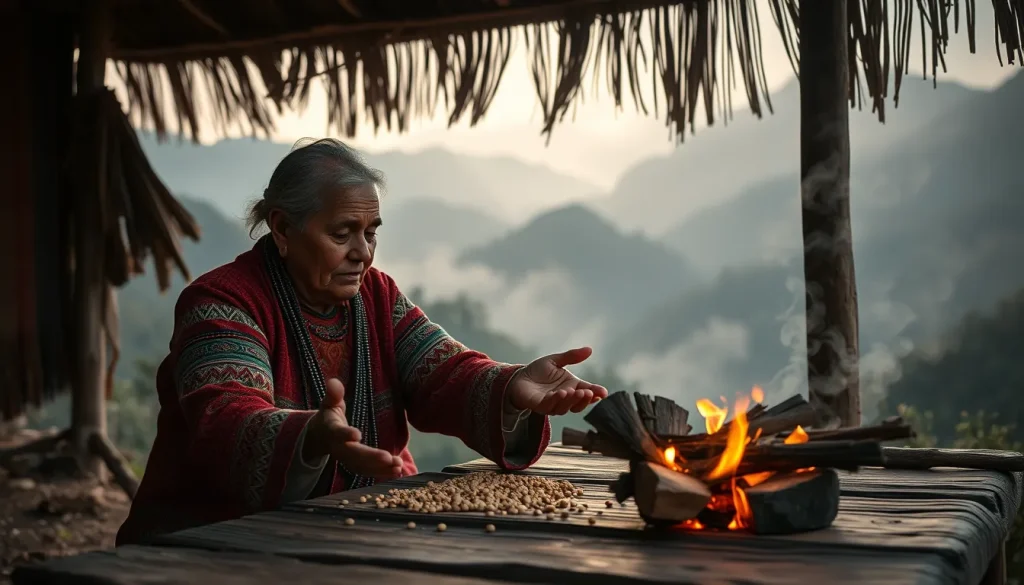
The resilience of Maya cultural heritage is perhaps most visibly embodied in the continued practice of the ancient calendar systems by modern daykeepers. Known as Ajq’ijab’ (singular: Ajq’ij), these spiritual guides serve as the custodians of time, maintaining the ritual calendar known as the Cholq’ij. Despite centuries of colonization, religious suppression, and the devastating civil war in Guatemala during the late 20th century, the knowledge of counting days and conducting ceremonies has survived. This continuity is not merely a historical relic but a living practice that integrates ancient cosmological principles with contemporary community needs. According to recent anthropological studies, the preservation of this knowledge represents a significant act of cultural sovereignty and spiritual rejuvenation among Indigenous Maya communities.
Main Explanation
The role of the Maya daykeeper is central to the spiritual life of many communities in the Guatemalan Highlands, particularly among the K’iche’ Maya. An Ajq’ij is not simply a calendar keeper but a spiritual guide who interprets the energy of specific days to advise community members on agriculture, health, marriage, and ritual offerings. The transmission of this knowledge is primarily oral, passed down through families or through apprenticeship under established guides. This method of transmission ensured survival even when written records were destroyed or when public practice was dangerous. Jean Molesky-Poz notes that since the mid-1980s, when Guatemala returned to civilian rule and achieved relative peace, the Maya have begun openly expressing their spiritual beliefs and practices. This openness has allowed for a more public documentation of rituals that were previously conducted in secrecy.
The core of the daykeeper’s practice revolves around the Cholq’ij, a 260-day sacred calendar. This system is distinct from the 365-day solar calendar (Haab’) used for agricultural cycles, though they often interlock in larger cycles. The Cholq’ij is generated through the combination of 13 numbers and 20 day names, creating a unique energy for each day. Modern daykeepers use this system to determine auspicious times for ceremonies, often involving fire, copal incense, and offerings of maize, beans, and squash. The continuity of these practices demonstrates a profound theological underpinning that views time not as linear, but as cyclical and laden with spiritual significance. Calixta Gabriel Xiquín, a prominent Maya spiritual guide, describes being “born into Maya spirituality,” highlighting that for many, this is an innate cultural identity rather than a chosen religion. Her journey, which included exile during the civil war and collaboration with Hopi communities, illustrates the transnational Indigenous networks that support this spiritual revival.
Evidence & Sources
Academic and journalistic sources provide robust evidence for the continuity of Maya calendar practices. Archaeological and anthropological research, such as the dissertation by P. van den Akker (2018), documents contemporary Maya calendar knowledge and practices in the Highlands of Guatemala. Akker’s work emphasizes the intersection of time, history, and ritual in K’iche’ communities, validating that the calendar is not just a tool for counting days but a framework for understanding history and identity. The study highlights how ritual practices anchor the community in a specific temporal landscape that connects ancestors to the living.
Furthermore, publications in journals such as Estudios de cultura maya discuss the permanence and contemporary use of the Maya Calendar Cholq’ij/Tachb’al Amaq’ in the Guatemalan Highlands. These texts elucidate how the visual language and semiotics of ancient codices, like the Dresden Codex, find echoes in modern ritual practices. The survival of these practices is particularly remarkable given the context of persecution. Reporting from 2023 highlights that Maya spirituality found new footing after surviving persecution and a civil war. The deaths of family members during the conflict and subsequent exile did not extinguish the tradition; instead, it fostered a movement of Indigenous Maya rejuvenating spiritual knowledge in the face of racism and historical trauma. This resurgence is documented as a growing movement where individuals like Xiquín return to their home countries to teach and practice openly. The book Contemporary Maya Spirituality: The Ancient Ways Are Not Lost by Jean Molesky-Poz (2006) draws on in-depth dialogues with Maya Ajq’ijab’ to offer a comprehensive understanding of these theological underpinnings, revealing significant continuities between ancient beliefs and modern expressions.
Deep Dive Analysis
To understand the mechanics of this tradition, one must examine the calendar system itself. The following analysis breaks down the structure of the Cholq’ij as utilized by modern daykeepers.
Units
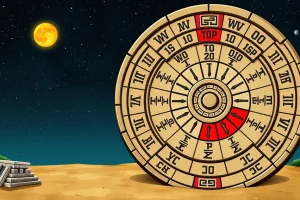
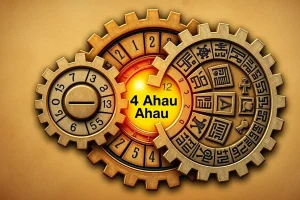
The Cholq’ij calendar consists of 260 days. It is formed by the interlocking of two smaller cycles: a cycle of 13 numbers (1 through 13) and a cycle of 20 day names (such as Imix, Ik, Akbal). Each day is defined by a specific number-name combination, such as 1 Imix or 2 Ik. Once the cycle reaches 13 Ben, the numbers reset to 1 while the day names continue to 14 Ix, creating a unique permutation that does not repeat for 260 days.
Calculation
Calculation is traditionally performed using tz’ite’ seeds (from the Coral Bean tree) or corn kernels. The daykeeper casts the seeds and interprets the patterns based on the current day’s energy. Mathematically, the system relies on the least common multiple of 13 and 20. Modern daykeepers memorize the sequence or use printed calendars that align the sacred 260-day count with the Gregorian solar calendar to facilitate planning for communities.
Diagram Description
Visually, the calendar is often represented as two gear-like wheels rotating against each other. One wheel has 13 teeth (numbers), and the other has 20 teeth (day names). As they rotate, each tooth on the 13-wheel meshes with a tooth on the 20-wheel. A full rotation of the system occurs when both wheels return to their starting position simultaneously after 260 steps.
Example Date
An example of a sacred date is 8 B’atz’. In the contemporary K’iche’ tradition, this day is often associated with artisans and weavers. A daykeeper might advise a weaving cooperative to begin a new project on this day to ensure success. Another example is 1 Aj, which is associated with leadership and community stability.
Relationship to Other Calendars
The Cholq’ij operates alongside the Haab’ (365-day solar calendar) and the Long Count (used for historical dating in antiquity). While the Long Count is less common in daily ritual, the relationship between the Cholq’ij and the Gregorian calendar is critical for modern practice. Daykeepers must correlate the ancient count with modern dates to schedule ceremonies. There are different correlations used by different lineages, but the continuity of the 260-day count remains constant regardless of the solar correlation.
Historical Use
Historically, this calendar governed all aspects of Classic Maya life, from warfare to agriculture. Codices like the Dresden Codex contain tables tracking Venus and eclipse cycles within this framework. Archaeological evidence from sites like Chichén Itzá shows architecture aligned with these calendar cycles. The persistence of the 260-day count into the present day is unique in the history of human timekeeping.
Current Traditions
Today, the calendar is used for naming children, determining marriage compatibility, and scheduling agricultural rituals. As noted in contemporary studies, the calendar is integral to the notion of Cosmovisión Maya in Guatemala. It is not merely superstition but a structured way of engaging with the world. The practice has adapted to modern contexts, with some daykeepers using digital tools to track counts, though the ritual interpretation remains traditional.
Misconceptions
A common misconception is that the Maya calendar “ended” in 2012. In reality, the Long Count cycle completed a b’ak’tun, similar to an odometer rolling over. Modern daykeepers emphasize that time continues cyclically. Another misconception is that all Maya people practice this; in reality, it is specific to those initiated as Ajq’ijab’ or those who seek their counsel, often coexisting with Catholicism.
FAQ
Did the Maya calendar end in 2012?
No, the Maya calendar did not end. The Long Count cycle completed a b'ak'tun, similar to a century ending. Modern daykeepers continue to count days using the Cholq'ij system today.
How does one become an Ajq'ij?
Becoming an Ajq'ij typically involves a calling often recognized in childhood, followed by years of apprenticeship under an established daykeeper to learn the calendar counts and ritual protocols.
Is Maya spirituality compatible with Catholicism?
Yes, many contemporary Maya practice a syncretic form of spirituality, maintaining Indigenous calendar rituals while also participating in Catholic ceremonies, as seen in the life of Calixta Gabriel Xiquín.
Leave a Reply