
Short Answer
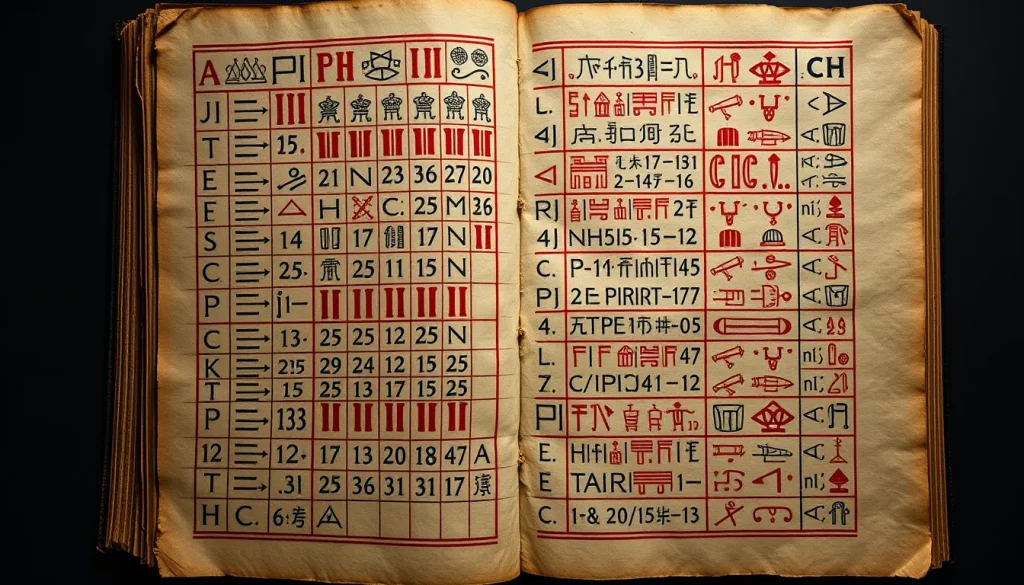
The Dresden Codex stands as one of the most significant surviving artifacts of the Precolumbian Maya civilization, offering a window into their complex understanding of time, astronomy, and ritual. Housed at the SLUB Dresden, this manuscript essentially consists of almanacs and astronomical tables that guided the daily and ceremonial lives of the Maya people. Unlike modern scientific texts focused purely on observation, the Dresden Codex integrates astronomical data with religious prophecy, serving as a tool for priests to determine favorable days for sowing, harvesting, trade, and warfare. Understanding how to read these tables requires a grasp of Maya mathematics, hieroglyphic writing, and the interplay between the 260-day ritual calendar and absolute time indications known as the Long Count.
Main Explanation
The content of the Dresden Codex is divided into 13 different chapters, often extending over several pages, with most pages divided into sections by red-brown lines designated by lower case letters in research. The manuscript functions on two primary levels: the ritual and the astronomical. The ritual component relies on the Tzolk’in, a 260-day calendar where individual days are ruled alternately by 20 deities. Maya priests used these almanacs to prophesy the fate for individual days, determining whether a specific date was favourable or unfavourable for activities such as marriage, birth, health, or hunting. Depending on these prophecies, specific gods were called upon, rites were performed, and sacrifices were offered to maintain cosmic balance.
The astronomical tables, however, represent a higher order of calculation involving absolute time indications according to the Long Count, which began in 3114 BC in the Gregorian calendar correlation. These tables record calculations of planetary orbits and eclipses. The skies served as a kind of farmer’s almanac for when to plant and when to harvest, confirming that agriculture provided the foundation for their civilization. The Precolumbian Maya were closely attuned to the movements of the Sun and the Moon, the stars and the planets, performing rituals and daily tasks according to a timetable established by these celestial bodies. This timetable was based on a highly complex calendar system that independent study confirms was achieved without influence from Old World astronomy.
Reading these tables involves deciphering columns of numbers and short hieroglyphic texts. The numbers often represent intervals of time used to predict future celestial events based on past observations. For instance, the Venus Table tracks the synodic period of the planet, allowing priests to anticipate its appearance as the Morning Star, an event laden with astrological significance. The manuscript contains not just data, but the interpretive framework for that data, linking celestial mechanics directly to terrestrial outcomes. This integration suggests that for the Maya, astronomy was not a separate scientific discipline but an intrinsic part of their cosmology and statecraft.
Evidence & Sources
The scholarly understanding of the Dresden Codex has evolved significantly since the late 19th century. Dr. Ernst Förstemann, working in the Royal Public Library of Dresden, produced a pivotal commentary on the manuscript in the early 1900s. His work, translated by the Museum Committee on Central American Research in 1906, laid the groundwork for deciphering the numerical systems within the codex. Förstemann used Arabic numerals to designate days in his original German edition, though later translations substituted corresponding Maya names to maintain uniformity with students of Maya hieroglyphs. His analysis confirmed the mathematical precision of the tables, particularly regarding the Venus cycles.
Modern research continues to refine these interpretations. A 2016 study published in the Journal of Astronomy in Culture presented a new reading of Dresden Codex Page 24, the “Preface” to the Venus Table. This research demonstrated a much-improved overall coherence in reading the hieroglyphic text, mathematical intervals, and calendric data. Specifically, it identified the Mayan Long Count dates of the Venus Table’s historical correction. The resulting Long Count placement suggests that the manuscript’s Venus Table was an indigenous astronomical discovery made at Chichén Itza, possibly under the patronage of K’ak’ U Pakal K’awiil, a prominent historical figure in the city’s inscriptions during its epigraphic florescence.
Furthermore, scholars Harvey Bricker and Victoria Bricker have offered invaluable insight into the complex world of the Precolumbian Maya through their volume on astronomy in the Maya codices. Their work confirms that the rituals and daily tasks were performed according to a timetable established by celestial bodies. The American Philosophical Society Press publication highlights that the skies served as a farmer’s almanac, reinforcing the practical application of these astronomical tables beyond mere superstition. The SLUB Dresden digital archives now provide access to high-resolution images of the Codex, allowing researchers to examine the red-brown lines and hieroglyphic columns that define the manuscript’s structure without handling the fragile original.
Deep Dive Analysis
Definition
The Astronomical Tables of the Dresden Codex are structured datasets embedded within a ritual manuscript, designed to predict celestial phenomena over long periods. They are not merely observational logs but computational tools used for astrological purposes, as in many other cultures. These tables allow for the projection of planetary positions and eclipse events far into the future based on established cycles.
How it works
The tables function through a system of additive mathematics using Maya numerals. A base date is established, often linked to the Long Count, and specific intervals are added to predict recurrence. For example, the Venus Table uses a base period to calculate the five phases of Venus’s synodic cycle. The calculations account for the discrepancy between the actual synodic period (approximately 583.92 days) and the Maya approximation (584 days) through correction mechanisms found in the text. These corrections ensure the table remains accurate over centuries.
Key components
- Venus Table: Tracks the Morning and Evening Star phases over a 65-year cycle.
- Eclipse Table: Predicts solar and lunar eclipses based on lunar nodes.
- Mars Table: Less understood, but tracks the retrograde motion of the Red Planet.
- 260-Day Almanacs: Ritual calendars ruling daily fate via 20 deities.
- Long Count Dates: Absolute time markers anchoring the tables to history.
Example
Page 24 of the Dresden Codex serves as the “Preface” to the Venus Table. A revised reading of this page identifies specific Long Count dates used for historical correction. The layout justifies the graphical arrangement of the data, suggesting a slightly less-accurate approximation to Venus’s synodic period than traditional interpretations allows, but introduces a justification for the graphical layout that is more straightforward. This page links the astronomical data to the patronage of K’ak’ U Pakal K’awiil at Chichén Itza.
Historical evidence
Dr. Ernst Förstemann’s 1901 commentary provided the first comprehensive numerical analysis. Subsequent work by the Brickers in 2011 confirmed the agricultural foundation of these tables. Recent epigraphic analysis in 2016 connected the Venus Table specifically to Chichén Itza, shifting the provenance from a generic Maya origin to a specific political context involving K’ak’ U Pakal K’awiil.
Common misconceptions
A common misconception is that the tables were used solely for “prophecy” in the modern sense of predicting the end of the world. In reality, they were used to determine favourable or unfavourable days for practical activities like sowing and harvesting. Another misconception is that the Maya lacked mathematical rigor; the correction mechanisms in the Venus Table demonstrate a sophisticated understanding of observational error and cumulative drift over time.
FAQ
What is the primary purpose of the Dresden Codex astronomical tables?
The tables were used for astrological purposes to determine favourable or unfavourable days for activities like sowing, harvesting, trade, and warfare, rather than pure scientific observation.
Where was the Venus Table in the Dresden Codex likely created?
Recent research suggests the Venus Table was an indigenous astronomical discovery made at Chichén Itza, possibly under the patronage of K’ak’ U Pakal K’awiil.
How accurate were the Maya calculations for Venus?
The Maya used a 584-day approximation for Venus's synodic period. While slightly less accurate than modern measurements, they included correction mechanisms in the tables to manage cumulative error over centuries.




Leave a Reply