
Short Answer
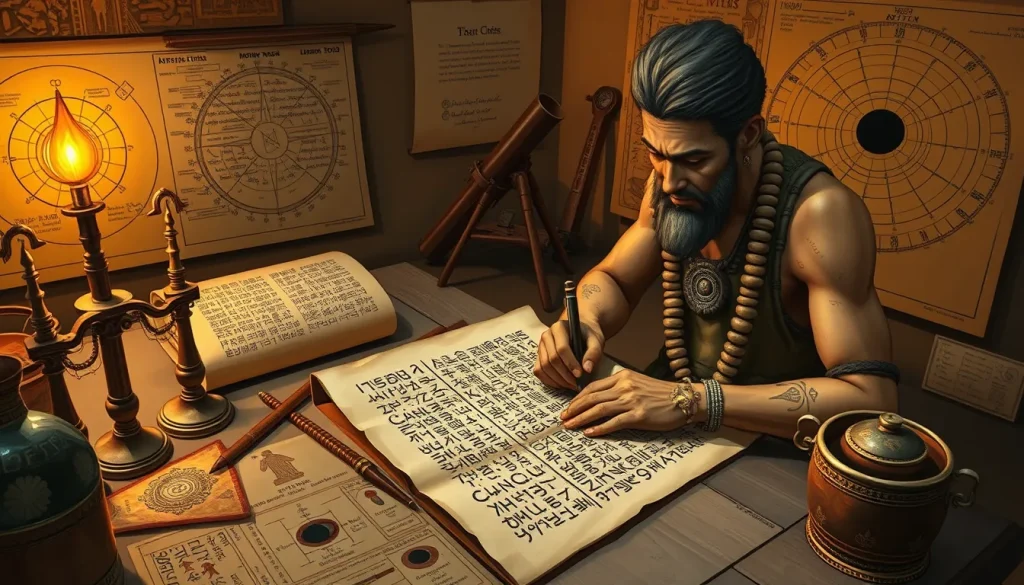
The Precolumbian Maya codices stand as some of the most sophisticated scientific manuscripts produced in the ancient Americas. These indigenous hieroglyphic books, written before the Spanish Conquest, serve as primary evidence for the advanced astronomical knowledge held by Maya scribes and priests. The astronomical data preserved within these fragile bark-paper manuscripts is not merely observational but computational, reflecting a civilization deeply attuned to the movements of the Sun, the Moon, the stars, and the planets. This data was not abstract; it formed the foundation of their agriculture, rituals, and daily tasks, acting as a celestial timetable for planting and harvesting. Understanding what specific astronomical data is preserved requires a careful analysis of the extant codices, primarily the Dresden, Madrid, and Paris manuscripts, through the lens of modern archaeology and epigraphy.
Main Explanation
The astronomical data preserved in the Maya codices is formatted primarily through two distinct structures known to epigraphers as tables and almanacs. Tables generally contain dates in the Long Count calendar, allowing for absolute chronological placement, whereas almanacs typically record dates in the 260-day tzolk’in cycle. The Dresden Codex is the most prominent repository of astronomical tables, containing specific references to astronomical events such as eclipse cycles and the appearance and disappearance of Venus in the sky. In contrast, the Madrid Codex is composed entirely of almanacs, meaning there are no Long Count dates in the manuscript to place it in absolute time without external correlation. Despite this, seasonal and astronomical references occur in numerous almanacs within the Madrid Codex, which scholars like Victoria and Harvey Bricker have used to date the content using astronomical methodology.
For an agriculturally-based society like the Maya, tracking seasonal events was extremely important, and the skies served as a kind of farmer’s almanac. The data preserved includes precise calculations of the synodic period of Venus, which was associated with warfare and ritual timing. The codices also preserve data on lunar cycles, essential for predicting eclipses, which were viewed as dangerous celestial events requiring ritual intervention. Furthermore, seasonal cycles such as solstices and equinoxes are referenced, linking celestial mechanics to the terrestrial agricultural cycle. This far-reaching study confirms that the Maya achieved these astronomical insights independently of Old World civilizations, relying on generations of recorded observation preserved in these volatile organic manuscripts.
Evidence & Sources
Archaeological and textual evidence supporting the astronomical content of the codices comes from decades of epigraphic research and comparative astronomy. Research over the past decade has significantly advanced our understanding of the prehispanic Maya codices, both in terms of their content, including hieroglyphic texts, calendrical structure, and iconography, as well as the physical documents themselves. Recent avenues of exploration include a new emphasis on linguistic and textual analyses and novel methodologies for interpreting calendrical structure. The work of Harvey Bricker and Victoria Bricker offers invaluable insight into this complex world, confirming that the Precolumbian Maya were closely attuned to celestial movements. Their research demonstrates that rituals and daily tasks were performed according to a timetable established by these celestial bodies, based on a highly complex calendar system.
Further evidence is found in the mathematical correlation between the Maya calendar and the Julian Date used in modern astronomy. The relationship between the Mayan and our calendar is expressed by a coefficient known as the correlation constant, which is the number of days added to the Mayan Long Count date to get the Julian Date. There is a surprisingly large uncertainty in the value of this correlation, yielding a shift between both calendars and thus between the history of Maya and of our world. Scholars such as Vladimír Böhm and colleagues have utilized long-periodic astronomical phenomena in the Dresden Codex to attempt to refine this dating. The physical survival of these codices is itself evidence of their high cultural value, as most were destroyed during the Conquest, leaving only a handful to bear witness to this scientific heritage.
Deep Dive Analysis
Definition
Astronomical data in the Maya codices refers to the recorded observations, calculations, and predictive models regarding celestial phenomena preserved in the surviving pre-Columbian manuscripts. This data is encoded using Maya hieroglyphs, numerals, and iconography, structured within calendrical frameworks. It represents a synthesis of empirical observation and cosmological belief, where celestial mechanics were inextricably linked to terrestrial outcomes such as rain, harvest, and political stability.
How It Works
The data functions through a combination of numerical tables and ritual almanacs. Scribes recorded intervals of time between celestial events, such as the number of days between Venus heliacal risings. These intervals were accumulated in tables to predict future occurrences. For example, the Dresden Codex Venus Table tracks the planet’s cycles over decades. Almanacs, often found in the Madrid Codex, use the 260-day tzolk’in to schedule rituals associated with specific astronomical configurations, even if they lack the Long Count dates found in tables.
Key Components
The preserved data focuses on three primary celestial components. First, the Venus cycle, tracking its appearance as the Morning and Evening Star. Second, eclipse tables, which predict solar and lunar eclipses based on lunar nodes and half-years. Third, seasonal markers, including solstices and equinoxes, which guided agricultural activities. These components are interwoven with deity iconography, associating celestial bodies with specific gods who influenced human affairs.
Example
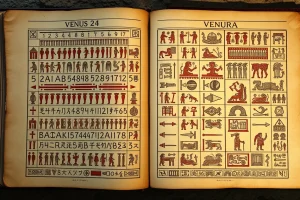
The Dresden Codex contains a series of tables referencing astronomical events such as eclipse cycles and the appearance and disappearance of Venus in the sky. This manuscript provides the clearest example of astronomical data preservation, where numerical coefficients allow modern astronomers to verify the accuracy of Maya calculations. The Venus Table, for instance, corrects for the discrepancy between the 584-day synodic period and the actual orbital period over long durations, demonstrating a sophisticated understanding of astronomical drift.
Historical Evidence
Historical evidence relies on the physical codices themselves and the methodology developed by scholars to interpret them. According to a methodology developed by Victoria and Harvey Bricker, astronomical references in almanacs can be used to date the manuscripts in real or absolute time. This model of how almanacs functioned differs significantly from traditional views, suggesting a dynamic use of the codices over generations. The physical documents, where and when they were painted, and by whom, are now subjects of intense study using non-invasive digital imaging techniques.
Common Misconceptions
A common misconception is that the Maya codices predict the end of the world or contain mystical prophecies unrelated to observational astronomy. In reality, the data is practical and cyclical, focused on maintenance of cosmic order rather than apocalyptic finality. Another misconception is that the Madrid Codex lacks astronomical data because it lacks Long Count dates; however, seasonal and astronomical references occur in a number of its almanacs. Finally, some assume the correlation constant is fixed, yet there is a surprisingly large uncertainty in the value of the correlation, yielding a shift between both calendars.
FAQ
Which Maya codex contains the most astronomical data?
The Dresden Codex contains the most significant astronomical data, including tables for eclipse cycles and the appearance of Venus.
Can the Madrid Codex be dated using astronomy?
Yes, although it lacks Long Count dates, seasonal and astronomical references in its almanacs can be used to date it using methodologies developed by the Brickers.
Did the Maya use astronomy for agriculture?
Yes, the skies served as a farmer's almanac for when to plant and when to harvest, forming the foundation of their civilization.




Leave a Reply