
Short Answer
The mathematical sophistication of the Classic Maya civilization is evidenced by their dual system of numerical notation, a feature that distinguishes their epigraphic record from other Mesoamerican cultures. When analyzing ancient inscriptions, scholars identify two primary methods used by the Maya to express numerals: the normal forms, commonly known as bar and dot notation, and the head variant numerals. This duality was not merely aesthetic but served specific functional and ritualistic purposes within their complex calendar systems and arithmetic processes. Understanding the distinction between these systems is crucial for interpreting Maya chronology, monumental inscriptions, and codices.
According to foundational epigraphic studies, the Maya had two different ways of writing their numerals, namely: (1) With normal forms, and (2) with head variants. Each of the numerals up to and including 19 had two distinct characters which stood for it, similar to how time periods and occasionally days and months were represented. The normal forms are often compared to Roman figures, as they are built up by the combination of certain elements which had a fixed numerical value. In contrast, the head-variant numerals represent a more figurative approach, embedding numerical value within anthropomorphic or zoomorphic imagery. This article examines the structural differences, archaeological evidence, and scholarly understanding of these two numerical systems.
Main Explanation
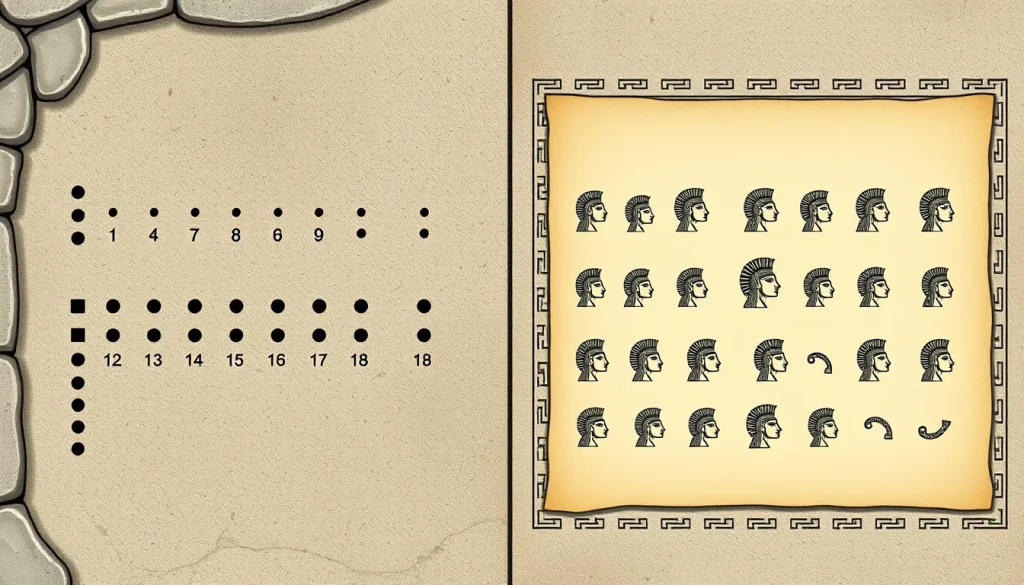
The bar and dot system is the most recognizable form of Maya mathematics. In this system, a dot represents a unit of one, and a bar represents a unit of five. These elements are combined additively to form numbers from zero to nineteen. For example, the number three is written as three dots, while the number ten is written as two bars. This system is highly efficient for calculation and is frequently found in contexts requiring clear arithmetic notation, such as distance numbers in Initial Series or calculations within the Long Count. The efficiency of this system allowed the Maya to perform complex calculations regarding planetary cycles and historical chronologies.
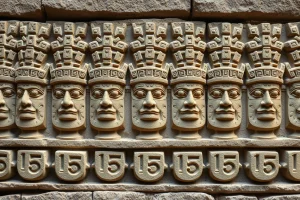
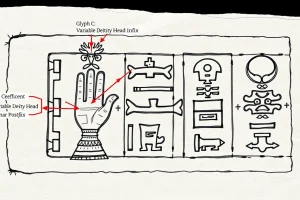
Conversely, the head variant numerals are glyphic representations that depict the head of a deity or a personified number. These are not merely illustrations but function as logograms or semantic signs within the writing system. As noted in recent academic research, one aspect of Maya hieroglyphic writing that continues to fascinate scholars is its pronounced figurativeness, which finds its greatest expression in head variants of signs and in full figure glyphs. For a systematic understanding of these personified signs, it is necessary to divide them into groups, including essential personifications that render names of anthropomorphic or zoomorphic beings by depicting their heads. In the context of numerals, each number from zero to nineteen possesses a unique head variant characterized by specific facial features, headdresses, and suffixes that identify its numerical value.
The primary difference lies in their application and context. While bar and dot numerals are utilitarian, often used for pure calculation or where space was limited, head variants are frequently employed in formal monumental inscriptions where the ritual significance of the number was emphasized. The head variants often appear in conjunction with calendar periods, reinforcing the sacred nature of timekeeping. For instance, a text describing a katun ending might use head variants for the coefficients to honor the deities associated with those time periods. This duality reflects the Maya worldview where mathematics and cosmology were inseparable; numbers were not abstract quantities but entities with divine attributes.
Evidence & Sources
Archaeological and textual evidence supports the existence and usage of both numerical systems across the Maya lowlands and highlands. Early 20th-century scholarship, such as the work preserved in An Introduction to the Study of the Maya Hieroglyphs, established the fundamental distinction between normal forms and head variants. This text outlines that the arithmetical processes will be explained, and the calculations resulting from their application to the calendar will be set forth. The comparison to Roman notation highlights the combinatorial nature of the bar and dot system, whereas the head variants require memorization of distinct iconographic forms.
Modern digital heritage projects and glyph directories continue to catalog these variations. Resources such as the Maya glyphs directory provide visual comparisons that assist students and researchers in distinguishing between the standard numerical glyphs and their head variant counterparts. These directories often list resources on Maya numbers alongside other cultural symbols, indicating the integral role numerals played in the broader symbolic lexicon. The preservation of these glyphs in stone stelae, ceramic vessels, and codices allows for cross-referencing between the two systems. In many instances, a single inscription might utilize bar and dot notation for intermediate calculations while employing head variants for the final recorded date, demonstrating a sophisticated hierarchy of written expression.
Furthermore, contemporary academic publications, such as those found in Estudios Latinoamericanos, analyze the personification of signs. Authors like Nikolai Grube have investigated animated logographs and syllabograms in Maya writing, noting that personified signs are divided into classes including essential personifications. This research underscores that head variant numerals are part of a broader phenomenon of animation in Maya script, where static signs are given life through anthropomorphic features. The FAMSI research archives also provide non-technical introductions to Maya glyphs, dedicating specific chapters to writing numbers with bars and dots versus writing numbers with glyphs, specifically Maya Head Glyphs. These sources confirm that the number 20, often represented by a specific glyph, also possesses variant forms, bridging the gap between the vigesimal system and glyphic representation.
Deep Dive Analysis
Definition
Maya head variant numerals are anthropomorphic glyphic representations of numbers zero through nineteen. Unlike the abstract bar and dot system, these variants personify numerical values, often associating them with specific deities or cosmic forces. They function as logograms within the Maya hieroglyphic script, conveying numerical value through iconography rather than additive symbols.
How it Works
The system operates on a vigesimal (base-20) structure, identical to the bar and dot system. However, instead of combining dots and bars, the scribe selects a specific head glyph corresponding to the desired number. Each head variant possesses unique identifying characteristics. For example, the number one might be depicted with a specific forehead sign, while the number nine might feature a distinct jawline or headdress element. These features are consistent enough across different sites to be deciphered reliably by epigraphers. The head variants can be modified with prefixes or suffixes to indicate tense, plurality, or specific calendrical associations, adding layers of meaning beyond simple quantity.
Key Components
The primary components of a head variant numeral include the facial profile, the headdress, and any accompanying affixes. The facial profile often includes specific markings such as the “flame brow” or distinct eye shapes that correlate to numerical values. The headdress may contain elements related to the deity associated with that number. Additionally, some head variants include a “glyph of completion” or other suffixes that clarify the numerical context. In contrast, the bar and dot system relies solely on the arrangement of two geometric elements: the dot (value 1) and the bar (value 5), along with a shell or floral symbol for zero.
Example
Consider the number 9. In bar and dot notation, this is written as one bar (5) and four dots (4) stacked above it. In head variant notation, this is represented by a specific head glyph often associated with the Jaguar God of the Underworld or a similar nocturnal deity, characterized by a large eye and specific ear spools. If this number appears in a Long Count date, the head variant emphasizes the sacred quality of the 9-day period, whereas the bar and dot version would simply quantify it. Source materials indicate that each of the numerals up to and including 19 had two distinct characters which stood for it, validating this dual representation.
Historical Evidence
Historical evidence for head variant numerals is found throughout the Classic Period (250–900 CE). They appear prominently on stelae at sites like Copan, Quirigua, and Palenque. The text Maya Numbers & Maya Calendar by Mark Pitts dedicates chapters to writing numbers with glyphs, specifically noting Maya Head Glyphs. These inscriptions often record royal accessions, battle victories, and calendrical ceremonies. The consistency of these glyphs across vast geographical distances suggests a standardized scribal training system. The presence of these variants in codices, such as the Dresden Codex, further confirms their use in astronomical tables where ritual precision was paramount.
Common Misconceptions
A common misconception is that head variant numerals are purely artistic decorations without functional value. However, archaeological evidence confirms they were used interchangeably with bar and dot numerals in mathematical contexts. Another misunderstanding is that they represent different values; in reality, both systems represent the same base-20 values. Some modern interpretations erroneously assign New Age spiritual meanings to specific head variants without epigraphic support. Scholarly consensus, supported by sources like Grube’s research on personified signs, maintains that these are structured linguistic and mathematical tools within the Maya writing system, not arbitrary spiritual symbols. The distinction is functional and stylistic rather than numerical; both systems calculate time and quantity identically.
FAQ
Did the Maya use head variants for all numbers?
Head variants existed for numerals up to and including 19. For numbers higher than 19, the positional system was used, often combining these glyphs in vertical columns.
Are head variant numerals harder to read than bars and dots?
For modern epigraphers, head variants require memorization of specific iconographic features, whereas bars and dots are additive and generally easier to decipher quickly.
Why did the Maya use two different systems?
The dual system allowed for flexibility; bars and dots were efficient for calculation, while head variants added ritual significance and aesthetic value to monumental inscriptions.
Leave a Reply