
Short Answer
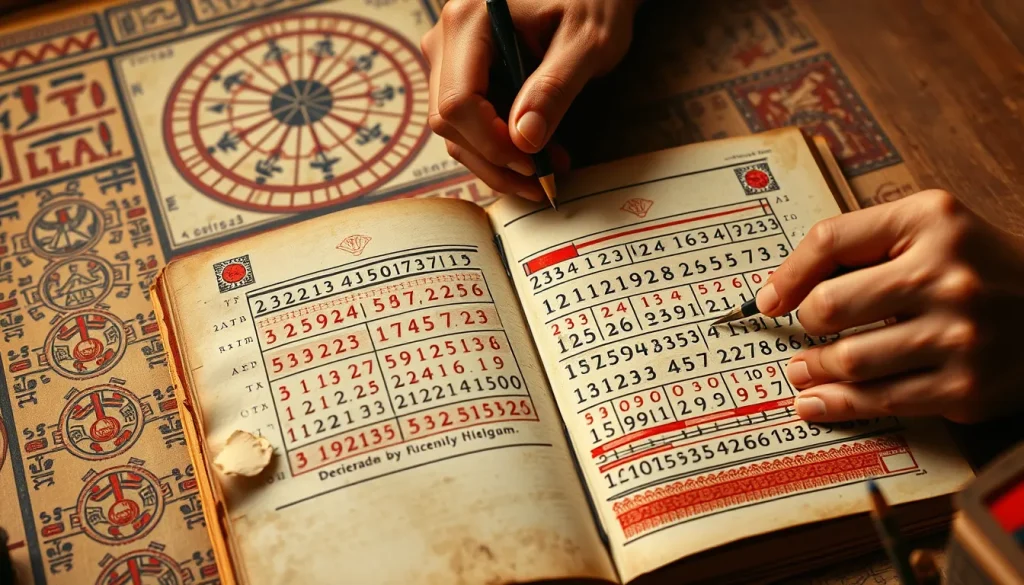
The mathematical achievements of the ancient Maya civilization stand as a testament to their intellectual sophistication, developed independently from the Old World traditions of Europe and Asia. At the heart of this achievement was a numeral system that allowed them to track deep time, predict celestial events, and record dynastic history with remarkable accuracy. Understanding how Maya numbers worked requires an examination of their vigesimal structure, the unique symbols they employed, and the positional logic that governed their arithmetic. Unlike the Hindu–Arabic numeral system used globally today, which is based on powers of ten, the Maya system was built on powers of twenty, reflecting a distinct cultural conceptualization of quantity and place value.
This system was not merely a tool for commerce but was intrinsically linked to their cosmology and calendar systems. The ability to represent infinite values using a limited set of symbols demonstrated a level of abstract thinking that placed the Maya among the few civilizations in human history to independently invent the concept of zero. This article explores the mechanics of Maya numerals, the archaeological evidence supporting their use, and the mathematical elegance that defined their approach to calculation.
Main Explanation
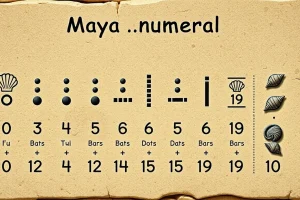
The Maya numeral system was a vigesimal (base-20) positional numeral system. This means that the value of a symbol depends on its position within a vertical stack, much like how the digit ‘1’ represents different values in the numbers 1, 10, and 100 in the modern decimal system. However, while the modern system uses powers of ten (10, 100, 1000), the Maya system used powers of twenty (20, 400, 8000, 160,000). The numerals were constructed using only three fundamental symbols: a dot representing one, a bar representing five, and a shell representing zero.
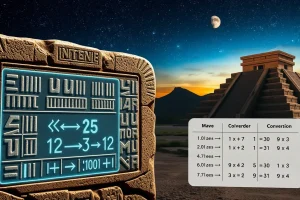
Numbers from one to nineteen were written using combinations of dots and bars. A single dot stood for one, and up to four dots could be used in a row. Once the value reached five, a bar was used. For example, the number thirteen was written as three dots in a horizontal row above two horizontal bars, representing (3 × 1) + (2 × 5). Sometimes, these were also written as three vertical dots to the left of two vertical bars, though the horizontal arrangement was common for single-digit vigesimal places. Upon reaching twenty, the system shifted to a higher position. Numbers after 19 were written vertically in powers of twenty.
The introduction of zero was a critical innovation. Represented by a shell symbol, zero allowed the Maya to indicate an empty place value, which was essential for their positional system to function correctly. This invention occurred independently around 36 BC or earlier, predating many other known uses of zero in mathematics. The direction of writing was vertical, from bottom to top. The bottom row represented the 1s place (20⁰), the row above it represented the 20s place (20¹), the next row represented the 400s place (20²), and so on. For example, the number thirty-three would be written as one dot above three dots atop two bars. The top dot represents “one twenty” (1 × 20), which is added to the bottom section representing thirteen (3 dots + 2 bars). Therefore, (1 × 20) + 13 equals 33.
Evidence & Sources
Archaeological and textual evidence provides robust support for our understanding of Maya mathematics. Historical records indicate that the people of the Yucatán peninsular were descendants of the ancient Maya civilization, which had been in decline from about 900 AD by the time of European contact. Hernán Cortés, who sailed for the coast of Yucatán on 18 February 1519, encountered populations who were heirs to this mathematical tradition. Although the Spanish conquest disrupted many indigenous practices, the mathematical achievements of this civilization remain preserved in stone stelae, codices, and colonial-era transcriptions.
Scholarly analysis, such as that found in American Antiquity, demonstrates that arithmetical procedures including addition, subtraction, multiplication, division, and square root extraction were carried out efficiently using Maya numerals. The system is relatively unique in that it combines properties of both place-value and non-place-value numerical systems. This hybrid characteristic distinguishes it from the purely positional Hindu–Arabic system and the additive Roman numeral system. The Babylonian system also utilized a mixture of properties, but the Maya implementation was distinct in its vertical orientation and specific symbolic representation.
Further evidence comes from institutional records like the MacTutor History of Mathematics, which contextualizes the Maya achievements within the broader history of mathematical discovery. The primary use of this system was for the calendar, astronomy, and dynastic history. Numbers could also be written as deity portraits, known as head variants, which added a layer of cosmological significance to numerical representation. This integration of mathematics and religion underscores the holistic nature of Maya intellectual life, where calculation was not separate from spiritual understanding.
Deep Dive Analysis
Module A: Definition and System Mechanics
Definition: The Maya number system is a vigesimal (base-20) positional numeral system used by the ancient Maya civilization to represent numbers and calendar dates. It is characterized by the use of three symbols and a vertical positional structure.
How it works: The system operates on a base-20 logic. Values are accumulated vertically. The bottom position represents units (1s), the next position up represents twenties (20s), the next represents four hundreds (400s), and subsequent positions follow powers of twenty (20³, 20⁴, etc.). To calculate a total value, one sums the product of the symbol value and its positional power. For instance, upon reaching 20² or 400, another row is started. The number 429 would be written as one dot above one dot above one bar and four dots (1 × 400 + 1 × 20 + 9).
Key components: There are three primary symbols. The Dot represents the value of 1. Up to four dots can be grouped together. The Bar represents the value of 5. A maximum of three bars can appear in a single position before converting to the next higher value (since 4 bars = 20). The Shell represents Zero. This symbol acts as a placeholder to maintain positional integrity when a specific power of twenty has no value.
Example: Consider the number 33. In the Maya system, this is decomposed into 1 × 20 and 13 × 1. Visually, this is one dot in the second position (from the bottom) and three dots over two bars in the first position. The calculation is (1 × 20) + 13 = 33. This demonstrates the additive nature within a position and the multiplicative nature between positions.
Historical evidence: The system was in use long before European contact. The zero was invented independently around 36 BC or earlier. Evidence is found in the Long Count calendar inscriptions which require large numbers to track linear time over centuries. The mathematical system developed by the ancient Maya is considered a masterpiece of intellectual efficiency, allowing them to write numbers infinitely larger than their contemporaries using just three simple symbols and a positional grid.
Common misconceptions: A frequent misunderstanding is that the Maya system was purely base-20 in all contexts. In the calendar Long Count, the third position sometimes represents 18 × 20 (360) rather than 20 × 20 (400) to approximate the solar year. Additionally, some assume the system was only for priests; however, evidence suggests it was integral to administration and astronomy. Another misconception is comparing it directly to Roman numerals; while Romans struggled with clumsy letters where 1988 becomes MCMLXXXVIII, the Maya could write the same number, or numbers infinitely larger, using their efficient positional grid.
FAQ
What symbols did the Maya use for numbers?
The Maya used three symbols: a dot for one, a bar for five, and a shell for zero.
Did the Maya invent zero?
Yes, the Maya independently invented the concept of zero around 36 BC or earlier, represented by a shell symbol.
How were large numbers written?
Large numbers were written vertically in powers of twenty, with each higher row representing a higher value (20, 400, 8000, etc.).
Why did the Maya use base-20?
The vigesimal system likely originated from counting on both fingers and toes, a common practice in Mesoamerican cultures.
Leave a Reply