
Short Answer
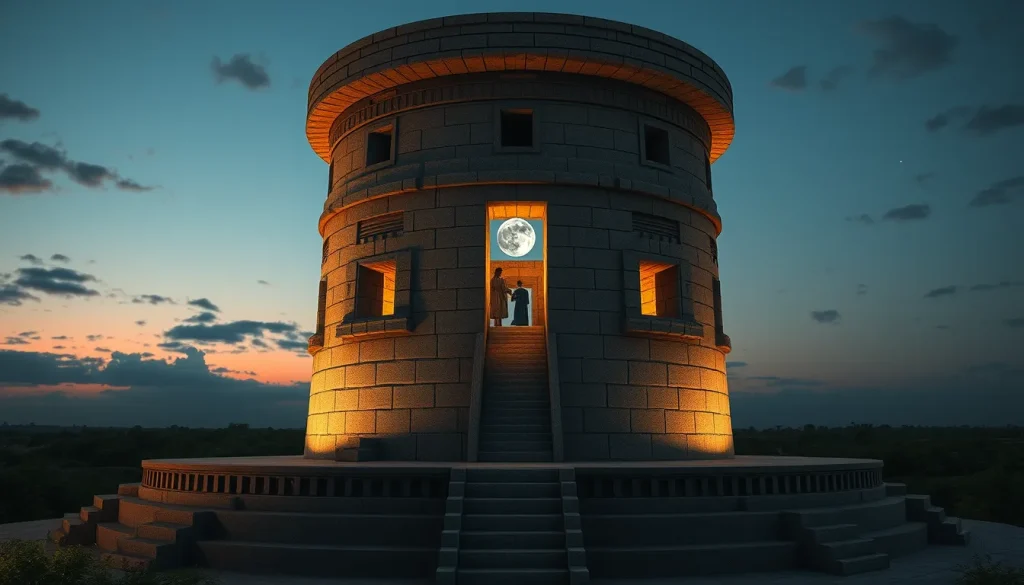
The question of whether El Caracol at Chichén Itzá functioned as a genuine astronomical observatory remains one of the most compelling debates in Mesoamerican archaeology. Known colloquially as “The Snail” due to its internal spiral staircase, this unique structure stands within the ancient Maya civilization site of Chichén Itzá in the Yucatán, Mexico. While popular culture often depicts it as a sophisticated dome-topped telescope housing, archaeological and archaeoastronomical investigations reveal a more complex reality. The building, dated to the Post Classic period around AD 906, exhibits specific architectural alignments that correspond to significant celestial events, particularly the cycles of Venus, the sun, and the moon. However, scholarly consensus indicates that not every alignment possesses a recognizable astronomical match, suggesting the structure served multiple cultural and ritual functions beyond pure data gathering.
Main Explanation
El Caracol is distinct among Maya structures due to its circular tower design, which differs from the typical rectangular pyramids of the region. The primary hypothesis regarding its function is that it served as an observatory, providing Maya astronomers with an elevated vantage point to view the sky above the vegetation of the Yucatán Peninsula. The flattened landscape around Chichén Itza lacks natural markers for horizon observations, making an artificial elevated structure crucial for tracking celestial bodies. The tower’s original shape, conjectured to be a smaller cylinder on top of a larger one, would have allowed observers to view horizon phenomena, such as risings and settings, without obstruction. This capability was vital because horizon phenomena were often considered highly important in early astronomy for calendar maintenance and ritual timing.
The distinction between a site that records astronomical knowledge and one that gathers new data is critical. Most ancient astronomical sites served as records or temples aligned to fixed events. El Caracol, however, is considered by specialists to be an actual likely observatory in an elementary way, meaning it was a building designed for gathering new astronomical data. This functional distinction elevates its significance in the history of science, positioning the Maya not merely as observers of fixed cycles but as active investigators of celestial mechanics. Nevertheless, the building was also a monument related to Quetzalcoatl, blending scientific utility with religious devotion. The integration of astronomy into architecture was not purely pragmatic; it was cosmological, reinforcing the connection between the ruling elite, the gods, and the order of the universe.
Evidence & Sources
The foundational scientific investigation into El Caracol’s astronomical orientation was conducted by Anthony F. Aveni, Sharon L. Gibbs, and Horst Hartung, published in Science in 1975. Their interdisciplinary approach involved careful measurement of the structure’s alignments to test for astronomical orientation. The study revealed a number of significant astronomical events coinciding with many of the measured alignments. Specifically, the search for significant astronomical events included those of obvious functional importance: sun, moon, and planetary extremes, as well as the setting positions of the brightest stars. The researchers emphasized celestial bodies documented in literature as having been of importance to the Maya.
Despite these matches, the 1975 study noted that not every alignment appears to have an astronomical match which archaeologists can recognize. It is possible that only some of the sighting possibilities discussed were actually functional. Furthermore, the search for matches was limited to events deemed important by modern researchers; hitherto unrecognized constellations or fainter stars may have been sighted through the windows. The heliacal rising and setting times of such stars could have served to mark important dates in the calendar that are no longer understood. While no grand cosmic scheme for the astronomical design of the Caracol is proposed, it can be inferred that the building was designed with astronomical intent, even if some alignments remain unexplained or served symbolic rather than observational purposes.
Deep Dive Analysis
To fully understand the function of El Caracol, one must analyze the structure through the lens of architectural archaeology and archaeoastronomy. The following analysis breaks down the site’s characteristics, evidence, and interpretations.
Location and Context
El Caracol is situated within the ancient Mayan city of Chichen Itza in the Yucatan state of Mexico. Chichen Itza is believed to have flourished in the period circa 750 to 1250 CE. The specific location of El Caracol was chosen likely due to the flattened landscape of the Yucatán, which provided no natural markers for astronomical function around Chichen Itza. The observers could view the sky above the vegetation on the Yucatán Peninsula without any obstruction from the tower’s upper platform. This strategic placement underscores the practical necessity of the structure for naked-eye astronomy in a dense jungle environment.
Construction and History
The structure is dated to around AD 906, placing it firmly in the Post Classic period of Mesoamerican chronology. This dating is supported by the stele on the Upper Platform. The construction reflects a high level of engineering sophistication, featuring a spiral staircase inside the tower which gives the building its Spanish name, “El Caracol” (The Snail). The tower’s original shape was a smaller cylinder on top of a larger one, a design that maximized vertical visibility. This period coincides with a heightened interest in Venus worship and the cult of Quetzalcoatl, suggesting the building’s construction was driven by both political and religious motivations alongside scientific inquiry.
Architecture and Design
The architecture of El Caracol is unique compared to other Maya structures. The windows and shafts within the tower are not randomly placed; they are oriented toward specific azimuths. The design allowed Mayan astronomers to see horizon phenomena better, which were critical for their calendar systems. The spiral staircase facilitated access to the upper observation deck while maintaining the structural integrity of the tower. The thickness of the walls and the placement of the viewing tubes suggest a deliberate attempt to narrow the field of view, allowing for precise alignment with celestial bodies as they crossed the horizon.
Astronomical Interpretation
Mayan astronomers knew from naked-eye observations that Venus appeared on the western and disappeared on the eastern horizons at different times in the year. They understood that it took about 584 days to complete one cycle. Crucially, they also knew that five of these Venus cycles equaled eight solar years. Venus would therefore make an appearance at the northerly and southerly extremes, and the windows of El Caracol are aligned to track these extremes. The building’s design facilitates the observation of these planetary extremes, which were essential for maintaining the accuracy of the Maya calendar and scheduling rituals associated with warfare and agriculture.
Archaeological Evidence
The primary evidence for the observatory function comes from the alignment of the building’s axes and windows with celestial events. Laser scans and careful measurements have confirmed that many alignments correspond to solar solstices and Venus standstills. However, the 1975 Science study cautions that not every alignment has a recognized match. This discrepancy suggests that while astronomy was a primary driver, it was not the sole function. The physical evidence supports the theory that the building was used for gathering data, distinguishing it from sites that were almost certainly just records of astronomical knowledge.
Alternative Interpretations
While the observatory hypothesis is strong, alternative interpretations exist. The building is also a monument related to Quetzalcoatl, indicating a strong religious function. Some alignments may have been symbolic rather than functional, intended to demonstrate the ruler’s connection to the cosmos rather than to facilitate actual observation. Additionally, some windows may have been designed to sight fainter stars or constellations that are no longer recognized by modern archaeoastronomers. The possibility exists that hitherto unrecognized constellations were sighted in the windows, serving to mark important dates in the calendar that are lost to history.
Scholar Consensus
The scholarly consensus, based on the work of Aveni and subsequent researchers, is that El Caracol was likely an astronomical observatory, even in a very elementary way. It distinguishes itself from most astronomical sites which were almost certainly just records of astronomical knowledge. However, scholars agree that it served other probably much more important cultural functions. The building was not a modern observatory with lenses but a naked-eye instrument integrated into a religious complex. The consensus acknowledges the dual nature of the site: a functional tool for astronomy and a symbolic monument to power and cosmology.
Visitor Misconception
A common misconception among visitors is that El Caracol was used like a modern observatory with telescopes or lenses. In reality, all observations were conducted with the naked eye. Another misconception is that every window had a specific astronomical purpose; as noted in archaeological investigations, not every alignment appears to have an astronomical match which researchers can recognize. Visitors often overlook the religious context, viewing the structure purely as a scientific instrument, whereas it was equally a temple dedicated to the feathered serpent deity and the cosmic order.
FAQ
Was El Caracol used with telescopes?
No, all observations were conducted with the naked eye. Telescopes were not invented until the 17th century, long after the Maya civilization.
Why is it called El Caracol?
It is named “El Caracol” (The Snail) in Spanish due to the spiral staircase located inside the tower.
Did every window align with a star?
Not necessarily. Investigations reveal that while many alignments match astronomical events, not every alignment has a recognized astronomical match.
What celestial body was most important to the builders?
Venus was critically important, with the building designed to track its 584-day cycle and its northerly and southerly extremes.

Leave a Reply