
Short Answer
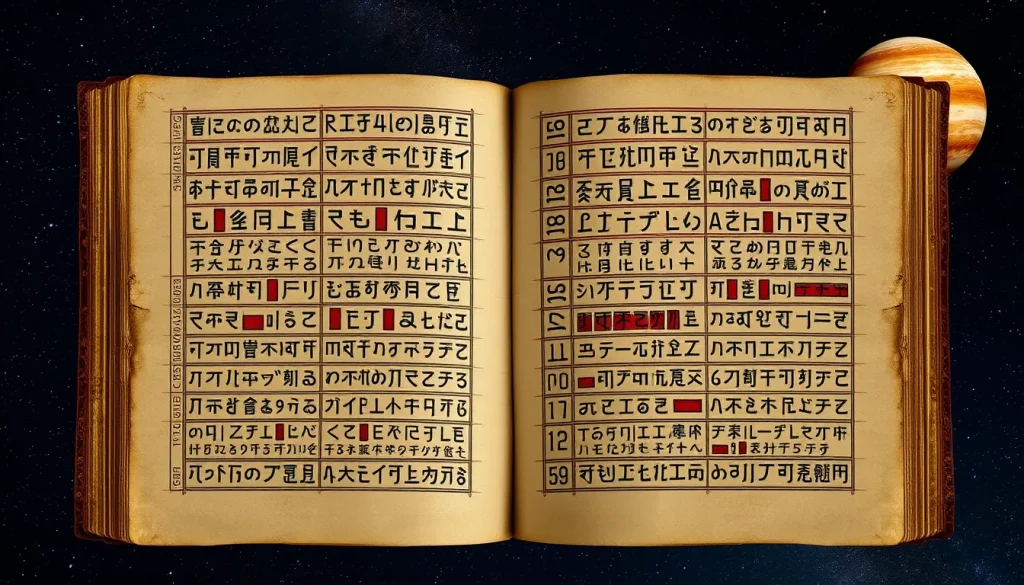
For over a century, the Dresden Codex has stood as the paramount testament to the sophistication of Maya astronomy, primarily due to its intricate Venus Table. However, contemporary archaeological and archaeoastronomical research has shifted focus toward other celestial bodies recorded within this ancient manuscript. Recent studies confirm that the Maya meticulously tracked Mars and potentially Jupiter, embedding their movements within complex calendrical structures that rival the Venus Table in complexity. This article examines the evidence for Mars and Jupiter tables in the Dresden Codex, specifically analyzing Pages 58 and 59, and integrates findings from recent publications between 2023 and 2026 that highlight newly identified records of astronomical phenomena.
Main Explanation
The Dresden Codex, one of only four surviving pre-Columbian Maya books, is fundamentally an almanac designed for ritual and astronomical prediction. While the Venus Table (Pages 46-50) has dominated scholarly discourse since the late 19th century, the codex contains additional sections dedicated to other planetary bodies. The identification of Mars and Jupiter records represents a significant expansion of our understanding of Maya celestial observation. Unlike Venus, which held a primary role in warfare ideology due to its brightness and cyclical behavior, Mars and Jupiter offered different rhythmic patterns that the Maya scribes integrated into their sacred timekeeping systems.
The planetary tables beyond Venus are not merely lists of dates but are sophisticated computational devices. They utilize the Maya Long Count and Calendar Round systems to predict future positions of planets based on past observations. The Mars Table, specifically, has been the subject of dedicated analysis in journals such as Latin American Antiquity. These tables function by correcting for the irregularities in planetary motion, known to modern astronomers as retrograde motion, using base numbers and multipliers that align synodic periods with the sacred 260-day Tzolk´in calendar. The inclusion of Jupiter, often associated with larger cyclical conjunctions, suggests the Maya were observing the night sky as a complex system of interacting bodies rather than isolated phenomena.
Recent scholarship indicates that these tables were likely used to determine auspicious dates for rituals, agriculture, and potentially warfare, although the martial association is strongest with Venus and Mars. The mathematical precision required to maintain these tables over centuries implies a class of specialist astronomers who updated the codices based on empirical observation. The discovery of these records challenges the earlier 20th-century consensus that Maya astronomy was predominantly Venus-centric, revealing a holistic cosmological model where multiple planets influenced the terrestrial realm.
Evidence & Sources
The primary evidence for these planetary tables resides within the glyphic text and numerical bars and dots of the Dresden Codex itself. However, modern interpretation relies heavily on computational archaeoastronomy and recent peer-reviewed research. A pivotal study published in the Serbian Astronomical Journal in 2023 by J. Vondrák, V. Böhm, and B. Böhm titled “Newly found Mayan records of astronomical phenomena in Dresden Codex” provides critical validation. This research utilized modern astronomical software to backtrack planetary positions to the Classic and Postclassic periods, matching them against the dates recorded in the codex. The authors confirmed that specific sequences in the manuscript correspond to observable astronomical phenomena beyond Venus.
Further reinforcing this data, a 2024 follow-up paper by the same team, “Maya records of planetary conjunctions in Dresden Codex,” explicitly discusses the recording of planetary conjunctions. This work highlights that the Maya were not just tracking individual planets but were interested in the relational geometry of the solar system, such as when Mars and Jupiter appeared close together in the night sky. Additionally, research presented on academic platforms regarding Pages 58 and 59 describes these sections as an “(In)complete Planetary Table.” These pages contain numerical sequences that do not align with the Venus synodic period but fit the orbital characteristics of outer planets.
Archaeological context is provided by comparative analysis with other sites. While the Dresden Codex is the textual source, architectural alignments at sites like Chichén Itzá and Uxmal often correlate with planetary extremes. The cross-referencing of codical data with architectural archaeology strengthens the claim that these tables were functional tools used by elite priest-astronomers. The Cambridge Core publication “More on the Mars Table in the Dresden Codex” further cements the academic consensus that a distinct section of the codex is dedicated to Mars, utilizing correction tables similar to those found in the Venus section but adjusted for the Martian synodic period of approximately 780 days.
Deep Dive Analysis
Celestial Object
The primary celestial objects under examination are Mars (Chak Ek´ or similar war-associated glyphs) and Jupiter (often associated with large bright stars or specific deities). Mars, with its reddish hue, was culturally linked to conflict and heat, while Jupiter´s slower movement made it a marker of longer-term cycles.
Observational Cycle
The Maya tracked the synodic period of Mars, which is approximately 779.9 days. Their tables approximated this to 780 days, a number highly divisible within their mathematical system. For Jupiter, the cycle is roughly 399 days. The codex tables use base numbers to accumulate these days over multiple cycles to find a common resonance with the 260-day Tzolk´in and the 365-day Haab´.
How Maya Observed It
Observation was conducted with the naked eye from elevated structures such as temple pyramids or specialized observatories like El Caracol. Astronomers recorded data using bark-paper codices, noting heliacal risings and settings. The precision of the Dresden Codex suggests generations of recorded data were aggregated to refine these tables.
Archaeological/Textual Evidence
The textual evidence is concentrated in Pages 58 and 59 of the Dresden Codex. These pages feature columns of numbers and glyphs distinct from the Venus Table. The 2023 and 2024 studies by Vondrák et al. provide computational verification that these numbers align with historical planetary positions. The “(In)complete Planetary Table” designation suggests that some data may have been lost or that the table was designed for specific conjunction events rather than continuous tracking.
Calendar Connection
The planetary tables are inextricably linked to the Calendar Round. The goal of the calculations was often to determine when a planetary event would coincide with a specific day sign in the Tzolk´in, such as a day associated with a particular god or ritual outcome. This synchronization allowed the Maya to predict “quality of time” for future dates.
Architecture Connection
While the codex is portable, the knowledge within it was likely enacted in stone. Architectural features at Maya sites often align with planetary standstills. The existence of these tables supports the interpretation of certain shrine orientations as markers for Mars or Jupiter risings, complementing the more widely known Venus alignments.
Cultural Meaning
In Maya cosmology, planets were not inert rocks but deities or manifestations of divine will. Mars was often associated with war and drought. Jupiter´s movement might have been linked to royal succession or agricultural cycles due to its longer visibility. The recording of conjunctions implies a belief that interactions between these celestial deities influenced earthly events.
Uncertainty/Debate
Despite recent advancements, debate persists regarding the specific identification of Jupiter glyphs versus other stellar phenomena. Some scholars argue that certain tables may represent comets or irregular events rather than strict planetary cycles. Additionally, the term “Incomplete” in relation to Pages 58-59 suggests that the full algorithmic logic may not be entirely recoverable due to damage or scribal abbreviations. Ongoing digital heritage projects aim to use multispectral imaging to recover faded glyphs that might resolve these uncertainties.
FAQ
Is the Venus Table the only planetary table in the Dresden Codex?
No. Recent research confirms the existence of tables for Mars and potentially Jupiter, specifically located on Pages 58 and 59.
How did the Maya track Mars without telescopes?
The Maya used naked-eye observation from elevated temple structures, recording data over generations to identify cycles like the 780-day synodic period.
What is the significance of Pages 58 and 59?
These pages contain an “(In)complete Planetary Table” that records planetary conjunctions and movements distinct from the Venus cycles.




Leave a Reply