
Short Answer
El Osario, often overshadowed by the iconic Temple of Kukulkán (El Castillo) at Chichén Itzá, represents a critical structure for understanding Maya archaeoastronomy and cosmology. While frequently dismissed by casual observers as a smaller replica of the main pyramid, recent archaeological investigations have proven that El Osario served a distinct and highly specialized function within the sacred landscape of the ancient city. The structure is now confirmed to be an archaeoastronomical observatory designed to track the zenith passage of the sun, a celestial event of paramount importance to Mesoamerican agricultural cycles and ritual calendars. This educational reference explores the specific astronomical alignments of El Osario, the archaeological evidence supporting these claims, and the broader cosmological implications of its design.
Main Explanation
The primary astronomical alignment of El Osario is oriented toward the zenith passage of the sun. Unlike equinox alignments which are common across many Mesoamerican sites, the zenith passage occurs when the sun is directly overhead at noon. At the latitude of Chichén Itzá, this phenomenon happens twice a year. According to research conducted by specialists from the Instituto Nacional de Antropología e Historia (INAH), the structure is oriented with a deviation of 17 degrees with respect to the north. This specific orientation allows observers to witness the sun’s light entering the temple through its upper entrance on two specific dates: May 23 and June 19. These dates mark the zenith passage in the northern hemisphere for this specific latitude.
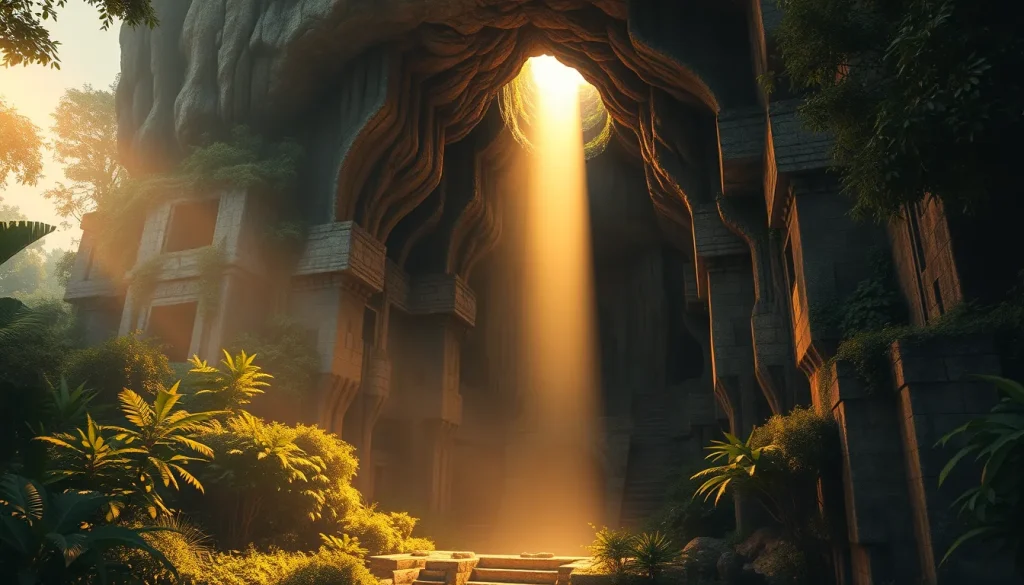
The significance of these dates extends beyond simple observation. In the context of the Maya ritual agricultural calendar, the zenith passage signaled critical periods for planting and harvesting cycles in the Yucatán Peninsula. The light entering the structure was not merely illumination but a sacred signal, recreating cosmic order within the temple space. The building, also known as the Tumba del Gran Sacerdote (Tomb of the High Priest), was designed to register this solar event physically. When the sun reaches its zenith, light projects down into the interior shaft, illuminating the depths of the structure and symbolically connecting the celestial realm with the underworld below. This alignment distinguishes El Osario from El Castillo, which is primarily aligned to the equinoxes and solstices, indicating that the two structures served complementary but distinct ritual purposes within the city’s ceremonial core.
Furthermore, the alignment is not isolated to the surface structure. The architectural design facilitates a vertical connection between the sky, the temple, and the subterranean cave systems beneath. The light phenomenon validates the structure’s role as a conduit between the kaan (sky) and the xibalba (underworld), reinforcing the Maya belief in a layered cosmos. The precision of the 17-degree deviation demonstrates a sophisticated understanding of solar mechanics and local geography by the Maya architects who constructed the temple over 11 centuries ago.
Evidence & Sources
The confirmation of El Osario as an archaeoastronomical observatory is grounded in rigorous fieldwork and technological analysis conducted in the 21st century. In May 2023, INAH specialists led by Marco Antonio Santos Ramírez, the director of the Chichén Itzá archaeological site, executed a detailed study to verify the solar alignment. During the experiment, photographer Filiberto Bello Colín entered the prehispatic building to position photographic equipment capable of capturing the ingress of solar light through the upper entrance. Over a period of approximately four hours, more than three thousand images were captured, documenting the precise moment the sunlight penetrated the interior shaft. This photographic evidence provided empirical data confirming the theoretical alignments proposed by earlier researchers.
Historical context for these findings is supported by comparative archaeoastronomy. The design of El Osario shares functional similarities with zenith observatories found at other major Mesoamerican sites, including Xochicalco, Teotihuacan, and Monte Albán. These sites also feature structures specifically oriented to capture zenith sunlight, suggesting a pan-Mesoamerican tradition of solar observation tied to agricultural management and royal legitimacy. The research builds upon foundational work in the field, such as the 1975 study by Anthony Aveni, Sharon Gibbs, and Horst Hartung, who published measurements of astronomical alignments at Chichén Itzá, though their primary focus was the Caracol tower. The recent focus on El Osario expands this understanding to include the southwestern sector of the site.
Additionally, ongoing research utilizing modern technology has corroborated that El Osario was purposefully built above a cave system. While earlier excavations identified a shaft within the temple, recent technological assistance has confirmed the connection to natural caverns below. This geological context is vital, as caves were considered sacred portals to the underworld in Maya cosmology. The combination of astronomical alignment above and cave access below creates a vertical axis mundi within the structure. The convergence of photographic evidence, architectural measurement, and geological surveying provides a robust multidisciplinary foundation for classifying El Osario as a primary observatory within the Chichén Itzá complex.
Deep Dive Analysis
Location and Spatial Context
El Osario is located to the southwest of the Castillo de Kukulkán, positioning it within the central core of Chichén Itzá yet distinct from the main plaza. This placement is strategic, allowing it to function without obstructing the larger temple while remaining accessible to priest-astronomers. The structure’s orientation, deviating 17 degrees from true north, is intentional rather than a result of urban planning errors. This deviation aligns the building’s axis with the azimuth of the sun during the zenith passage dates, integrating the structure into the broader celestial landscape of the site.
Construction and History
Constructed during the Late Classic to Early Postclassic period, El Osario exhibits Toltec and Teotihuacano-inspired architectural styles, specifically the tablero-talud design. This style indicates cultural exchange and influence from central Mexico. The structure is believed to be over 11 centuries old. Archaeological evidence suggests the internal shaft was constructed in two phases, with the lower part being wider than the upper section. This phased construction may reflect evolving ritual requirements or adjustments to optimize the astronomical observation capabilities over time.
Architecture and Internal Structure
The defining architectural feature of El Osario is its internal vertical shaft, which measures 10.51 meters in depth. The shaft varies in width, with the lower section measuring 5.5 meters and the upper section 4.5 meters. At the bottom of this shaft, there is a stone floor opening that leads to a small chamber, which subsequently opens into a natural cave. This verticality is crucial for the astronomical function, as it allows sunlight to penetrate deep into the earth during the zenith event. The upper entrance is positioned to capture the high-angle sun rays specifically during the May and June zenith dates.
Astronomical Interpretation
The astronomical function of El Osario is centered on the zenith passage of the sun. This event occurs when the sun reaches its highest point in the sky, casting no shadow at noon. For the Maya, this was a moment of cosmic balance. The alignment allows the sun’s rays to illuminate the interior shaft, marking the dates of May 23 and June 19. These dates were likely used to regulate the agricultural calendar, signaling the onset of rains and the optimal times for planting maize. The structure thus served as a practical tool for societal survival as well as a ritual monument.
Archaeological Evidence
The primary evidence for the astronomical alignment comes from the 2023 INAH study involving time-lapse photography and light measurement. The capture of over 3,000 images documented the light path with precision. Furthermore, excavations have revealed the structural integrity of the shaft and its connection to the cave system below. The use of technology to corroborate the cave systems beneath the temple adds a layer of digital heritage verification to the traditional archaeological findings. This evidence confirms that the shaft was not merely a tomb but a functional instrument for observation.
Alternative Interpretations
Historically, El Osario was often interpreted primarily as a tomb, hence the name Tumba del Gran Sacerdote. While burials may have occurred within the structure, the exclusive focus on its funerary function overlooked its astronomical utility. Some earlier interpretations suggested it was simply a smaller version of the Temple of Kukulkán without unique purpose. However, the specific orientation and internal shaft design contradict the idea that it is merely a replica. The presence of the cave connection also suggests a cosmological function that transcends simple interment.
Scholar Consensus
Current scholarly consensus, led by INAH specialists and archaeoastronomers, recognizes El Osario as a dedicated observatory for zenith passage. The work of Marco Antonio Santos Ramírez has been pivotal in shifting the narrative from a purely funerary monument to a complex scientific and ritual instrument. This consensus aligns with broader understandings of Maya architecture, where buildings often served dual purposes as temples and observational devices. The corroboration of cave systems beneath the structure further solidifies its role in Maya cosmology.
Visitor Misconception
A common misconception among tourists is that El Osario is insignificant compared to El Castillo. Visitors often overlook the structure due to its smaller size and less prominent location. However, understanding its function as a zenith observatory reveals its critical importance to the Maya inhabitants. It was not a secondary temple but a specialized instrument for tracking time and connecting with the underworld. Recognizing El Osario’s true purpose enhances the appreciation of Chichén Itzá as a center of scientific and astronomical knowledge.
FAQ
What is the main astronomical function of El Osario?
El Osario functions as a zenith passage observatory, designed to capture sunlight directly overhead on May 23 and June 19.
Is El Osario connected to any caves?
Yes, recent research confirms that the internal shaft of El Osario leads to a small chamber that opens into a natural cave system beneath the structure.
How does El Osario differ from El Castillo?
While El Castillo is aligned to equinoxes and solstices, El Osario is oriented specifically for the zenith passage of the sun and features an internal shaft connecting to the underworld.
Who confirmed the astronomical alignment of El Osario?
Specialists from the Instituto Nacional de Antropología e Historia (INAH), led by site director Marco Antonio Santos Ramírez, confirmed the alignment in 2023.
Leave a Reply