
Short Answer
The preservation of Maya calendar traditions by modern Aj K’ij keepers represents one of the most significant examples of cultural continuity in the Americas. The Aj K’ij, often translated as daykeepers or spiritual guides, serve as the living custodians of the Chol Q’ij, the 260-day sacred calendar. Despite centuries of colonization, religious persecution, and the devastating civil war in Guatemala during the late 20th century, these practitioners have maintained a complex system of timekeeping, ritual, and cosmology. Their work is not merely a historical relic but a vibrant, evolving practice that anchors Indigenous communities to their land, agricultural cycles, and ancestral history. Contemporary ethnographic research highlights how these traditions are transmitted orally and enacted through specific ceremonies that petition for rain, give thanks for harvests, and mark the passage of sacred time.
Main Explanation
The role of the Aj K’ij is central to the spiritual and social cohesion of many Maya communities, particularly among the K’iche’ in the highlands of Guatemala. These keepers are responsible for interpreting the days of the Chol Q’ij, determining auspicious times for planting, marriage, and community ceremonies, and conducting rituals that maintain balance between the human and spiritual worlds. The preservation of this knowledge relies heavily on oral transmission, where apprentices learn through observation and participation over many years. This method ensures that the nuances of ritual practice remain adaptable to local contexts while retaining core structural elements inherited from pre-Columbian ancestors.
Historical disruptions, such as the Spanish conquest and the Guatemalan civil war, forced many practices underground. During the civil war in the early 1980s, Indigenous spirituality was often targeted, leading to the deaths of many spiritual leaders and the displacement of communities. However, as noted in recent accounts, survivors like Calixta Gabriel Xiquín found ways to rejuvenate these practices upon returning home. Xiquín, who became an ajq’ij after exile, illustrates the resilience of the tradition, noting that her spiritual healing was intertwined with reconnecting to her heritage. Today, there is a growing movement of Indigenous Maya reclaiming these roles, viewing them not only as religious duties but as acts of cultural resistance and identity affirmation against ongoing racism and marginalization.
The rituals performed by Aj K’ij are deeply tied to the agricultural cycle, specifically the cultivation of corn. Ceremonies such as Wajxaqib’ B’atz’ (8th of Monkey), Sac Ha’ (White Water), and Pa Puul (Breaking Pots) demonstrate the enduring link between timekeeping and subsistence. These practices are not static; they reflect a reciprocal relationship between the Maya and their land. For instance, the K’iche’ Maya conduct New Year ceremonies at the beginning of the Tzolk’in or Chol Q’ij, marking a renewal of time and community commitment. The persistence of these rituals underscores the calendar’s function as a living system rather than a mere archaeological artifact.
Evidence & Sources
Academic and institutional sources provide robust evidence for the continuity and adaptation of Maya calendar traditions. The Smithsonian National Museum of the American Indian’s Living Maya Time project documents specific rituals like the Pa Puul ceremony, celebrated by Yucatec Maya in Mexico to petition for rain, and the Sac Ha’ ceremony performed during key corn growth stages. These records confirm that while regional variations exist, the underlying cosmological framework remains consistent across Maya territories. Video archives and transcripts from the museum highlight the work of calendar keepers who have actively maintained the Chol Q’ij since ancient times, bridging the gap between epigraphic evidence and contemporary practice.
Furthermore, scholarly dissertations such as P. van den Akker’s Time, History and Ritual in a K’iche’ Community (2018) offer detailed ethnographic analysis of contemporary Maya calendar knowledge in the highlands of Guatemala. This research validates the oral histories provided by practitioners like Xiquín, showing how community rituals serve as petitions for rain or gratitude for bountiful harvests. The convergence of archaeological data, historical records of persecution, and modern ethnographic observation creates a multidimensional understanding of how these traditions survive. It is crucial to distinguish between verified ethnographic data and New Age interpretations; the practices described here are rooted in specific community lineages and agricultural necessities rather than generalized spiritualism.
Deep Dive Analysis
Module D: Calendar Systems
Units
The core unit of preservation is the Chol Q’ij, also known as the Tzolk’in. This sacred calendar consists of 260 days, formed by the interlocking cycle of 13 numbers and 20 day names. Each day carries a specific spiritual weight and association with natural forces, deities, and ancestors. The Aj K’ij must memorize the sequence and the associated divinations for each combination.
Calculation
Calculation is performed mentally and through the use of physical aids such as corn kernels or seeds in some traditions, though modern keepers often rely on memorized sequences. The cycle does not align with the solar year (Haab’) but runs continuously. Keepers track the days to determine the quality of time for specific activities, ensuring rituals align with the correct day signs.
Diagram Description
Conceptually, the calendar is visualized as two gears turning together: one gear with 13 teeth (numbers) and another with 20 teeth (day names). When a day is named, such as 1 Imix, the next day is 2 Ik, continuing until the 13 numbers are exhausted, then resetting to 1 while the 20 names continue. This mechanical analogy helps explain the perpetual nature of the count.
Example Date
A significant example is the New Year ceremony conducted by the K’iche’ Maya at the beginning of the Chol Q’ij. This date shifts relative to the Gregorian calendar but marks a critical renewal point. Another example is the day 8 B’atz’, celebrated during the Wajxaqib’ B’atz’ ceremony, which honors artisans and the continuity of cultural threads.
Relationship to Other Calendars
The Chol Q’ij operates alongside the Haab’ (365-day solar calendar) and the Long Count in historical contexts. In modern practice, the focus is primarily on the 260-day cycle for ritual purposes, though some communities integrate Catholic feast days into the traditional cycle, creating a syncretic temporal framework.
Historical Use
Historically, this calendar governed all aspects of life, from warfare to agriculture. Codices and inscriptions from the Classic period show the same day signs used today, proving a lineage of knowledge spanning over a millennium. The survival of these signs through the Postclassic period and into the present is a testament to the resilience of the keeper tradition.
Current Traditions
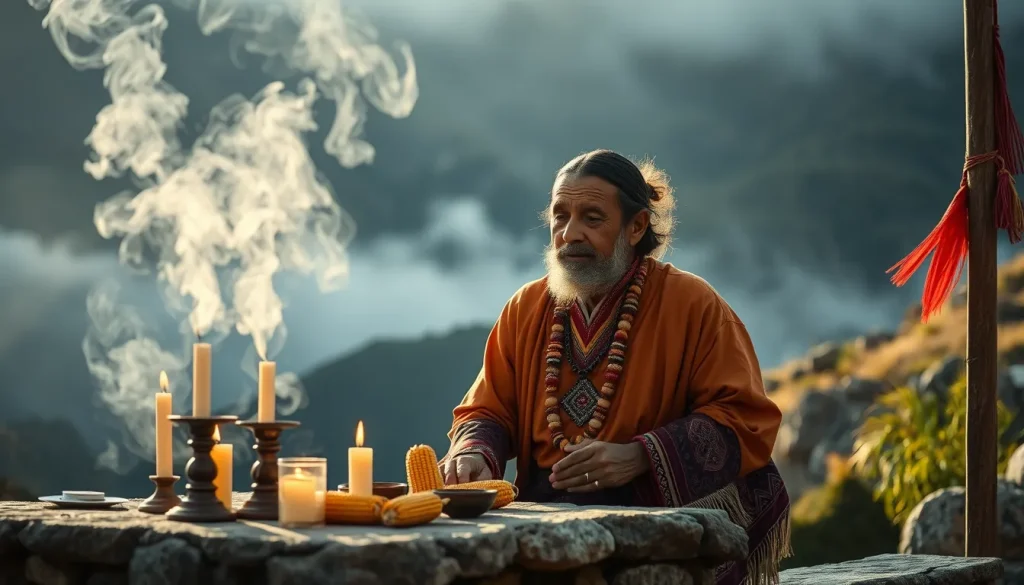
Today, traditions include the Wajxaqib’ B’atz’, Sac Ha’, and Pa Puul ceremonies. These are petitions for rain or gratitude for harvests, reflecting deep connections to Maya lands. The Aj K’ij lead these ceremonies, often at outdoor altars, using candles, copal incense, and offerings of corn liquor or food. The Smithsonian notes that these rituals have endured for millennia, adapting to modern contexts while retaining their core intent.
Misconceptions
A common misconception is that the Maya calendar ended in 2012. In reality, the Long Count completed a cycle, but the Chol Q’ij continues uninterrupted. Another misconception is that these practices are purely religious; they are equally sociopolitical, serving to maintain Indigenous identity in the face of assimilation pressures. Finally, it is incorrect to assume all Maya groups practice identically; K’iche’ traditions differ from Yucatec practices, though they share foundational principles.
FAQ
What is the primary role of an Aj K'ij?
An Aj K'ij is a daykeeper responsible for interpreting the 260-day sacred calendar, conducting rituals, and guiding community decisions based on auspicious days.
Did the Maya calendar end in 2012?
No, only one cycle of the Long Count calendar completed. The 260-day Chol Q'ij continues uninterrupted and is still used by modern keepers.
How were these traditions preserved during the civil war?
Many practices went underground or were maintained in exile. Survivors like Calixta Gabriel Xiquín later returned to rejuvenate the spirituality despite persecution.
What is the connection between the calendar and corn?
Rituals are timed to the corn growth cycle, with ceremonies petitioning for rain or giving thanks for harvests, reflecting a reciprocal relationship with the land.
Leave a Reply