
Short Answer
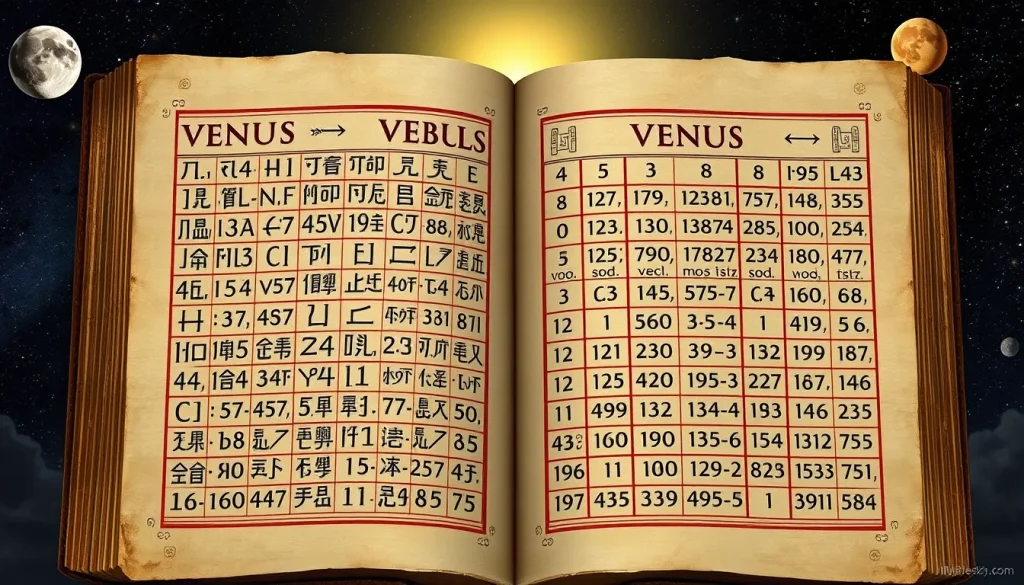
The Dresden Codex stands as one of the most significant surviving artifacts of Precolumbian Maya civilization, offering an unparalleled window into the sophisticated astronomical knowledge of the ancient world. Held in the collections of the Saxon State and University Library (SLUB) in Dresden, this manuscript is the oldest and best preserved of only four existing Mayan manuscripts worldwide. The codex is not merely a religious text but a complex scientific document that records precise astronomical data, including calculations of planetary orbits and eclipses. These records were essential for the Maya priests, who used them to prophesy fate for individual days, determining favorable conditions for sowing, harvesting, trade, hunting, warfare, and marriage. The integration of absolute time indications according to the Long Count, which began in 3114 BC, alongside the 260-day ritual calendar known as the Tzolk’in, demonstrates a highly complex calendar system attuned to the movements of the Sun, Moon, stars, and planets.
Main Explanation
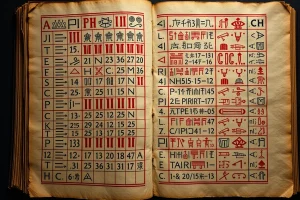
The astronomical data recorded in the Dresden Codex is primarily organized into almanacs and astronomical tables. The almanacs function as divination calendars based on the 260-day ritual calendar, where days were ruled alternately by 20 deities. Through these almanacs, priests could prophesy whether a specific day would be favorable or unfavorable for various human activities. However, the codex is most renowned for its astronomical tables, which contain absolute time indications. These tables record the calculations of planetary orbits and eclipses, which were eventually used for astrological purposes, similar to many other ancient cultures. The manuscript consists of 39 leaves, inscribed on both sides, and measures approximately 358 centimeters in length. Originally folded in an accordion-like manner, the writing material is amatl, a paper-like substance produced from fig-tree fiber by means of soaking and beating. The content is divided into 13 different chapters, often extending over several pages, with most pages divided into sections by red-brown lines. Apart from short hieroglyphic texts and columns of numbers, the manuscript contains detailed figures and numerals that encode celestial cycles. The skies served as a kind of farmer’s almanac for when to plant and when to harvest, confirming that agriculture provided the foundation for their civilization and that their rituals and daily tasks were performed according to a timetable established by celestial bodies.
Evidence & Sources
The physical and historical evidence supporting the astronomical nature of the Dresden Codex is robust. The manuscript was purchased for the Dresden court library in 1739 in Vienna, originally cataloged as a “Mexican book.” It was not until 1853 that it was correctly identified as a Mayan manuscript. Modern digital heritage initiatives, such as those by the Library of Congress, have made high-resolution images available in various formats, including JPEG and PDF, allowing for detailed scrutiny without handling the fragile original. The chalk-coated writing material has preserved the hieroglyphs and numerals remarkably well. Scholarly work, such as that by Harvey Bricker and Victoria Bricker, offers invaluable insight into the complex world of the Precolumbian Maya and the amazing achievements of Maya astronomy as revealed in the codices. Their research confirms that the Maya achieved these astronomical understandings independent of Old World influences. Additionally, contemporary analyses by scholars like Victor Talakh continue to examine the astronomical specifics of the Dresden Codex, ensuring that the data remains a subject of active academic inquiry. The codex’s division into chapters and sections allows researchers to isolate specific astronomical tables, such as those dedicated to Venus or eclipses, and cross-reference them with archaeological evidence from Maya sites.
Deep Dive Analysis
Celestial Object
The primary celestial objects tracked in the Dresden Codex are the Sun, the Moon, and the planet Venus. While the Sun and Moon are fundamental to any calendar system, the inclusion of Venus is particularly notable due to its complexity and cultural significance. The codex depicts hieroglyphs and numerals specifically associated with these bodies, encoding their movements over long periods.

Observational Cycle
The observational cycles recorded are highly precise. The codex contains calculations of the phases of Venus, which follows a synodic period of approximately 584 days. It also includes tables for eclipses of the sun and moon. These cycles were not merely observed but calculated using absolute time indications according to the Long Count. The astronomical tables allow for the prediction of these events far into the future, serving as a long-term timetable for the Maya priesthood.
How Maya Observed It
The Maya observed these celestial bodies with the naked eye, relying on generations of accumulated data. Their observations were recorded using a vigesimal (base-20) number system and hieroglyphic writing. The precision of their calculations, such as the Venus table, suggests a level of observational consistency that spanned centuries. The data was not just raw observation but was processed into usable tables for ritual and agricultural planning.
Archaeological/Textual Evidence
The primary textual evidence is the codex itself, with its 39 leaves of amatl paper. The hieroglyphic texts and columns of numbers provide the direct data. Archaeological evidence supports the textual data through inscriptions found on monuments at sites like Chichén Itzá, which often correlate with the cycles found in the codices. The physical preservation of the codex in the Saxon State and University Library allows for direct analysis of the ink and paper, confirming its pre-Conquest origin.
Calendar Connection
The astronomical data is inextricably linked to the Maya calendar systems. The almanacs are based on the 260-day ritual calendar (Tzolk’in), while the astronomical tables use absolute time indications according to the Long Count. The interplay between these systems allowed the Maya to synchronize ritual time with celestial time. For example, the position of Venus would be correlated with specific days in the Tzolk’in to determine the auspiciousness of warfare or marriage.
Architecture Connection
While the codex is a manuscript, the astronomical data it contains correlates with Maya architecture. Structures such as El Caracol at Chichén Itzá are believed to be observatories aligned with Venus and solar positions. The data in the Dresden Codex likely informed the construction and use of such architectural features, creating a landscape that reflected the celestial order recorded in the books.
Cultural Meaning
The cultural meaning of this data was profound. The calculations were used for astrological purposes to prophesy fate. Depending on the astronomical indications, gods were called upon, rites were performed, and sacrifices were offered. The skies served as a farmer’s almanac, dictating when to plant and harvest. This underscores that astronomy was not an abstract science but a practical tool for survival and statecraft, governing warfare, trade, and health.
Uncertainty/Debate
Despite the clarity of the tables, there remains some debate regarding the specific correlation between the Maya Long Count and the Gregorian calendar, though 3114 BC is the widely accepted start date. Additionally, while the Brickers’ study confirms independent achievement, scholars continue to analyze the extent of regional variations in astronomical knowledge. Some sections of the codex are damaged, leading to uncertainties in reconstructing certain numerical sequences, though digital enhancements have helped mitigate these issues.
FAQ
What is the primary purpose of the astronomical tables in the Dresden Codex?
The astronomical tables were used for astrological purposes to prophesy fate, determining favorable days for activities like sowing, harvesting, warfare, and marriage based on celestial cycles.
How many Mayan manuscripts still exist worldwide?
Only four Mayan manuscripts still exist worldwide, with the Dresden Codex being the oldest and best preserved among them.
When was the Dresden Codex identified as a Mayan manuscript?
Although purchased in 1739 as a 'Mexican book,' the manuscript was officially identified as a Mayan manuscript in 1853.
What calendar system is used for the divination almanacs in the codex?
The divination almanacs are based on the 260-day ritual calendar known as the Tzolk'in, where days are ruled by 20 deities.


Leave a Reply