
Short Answer
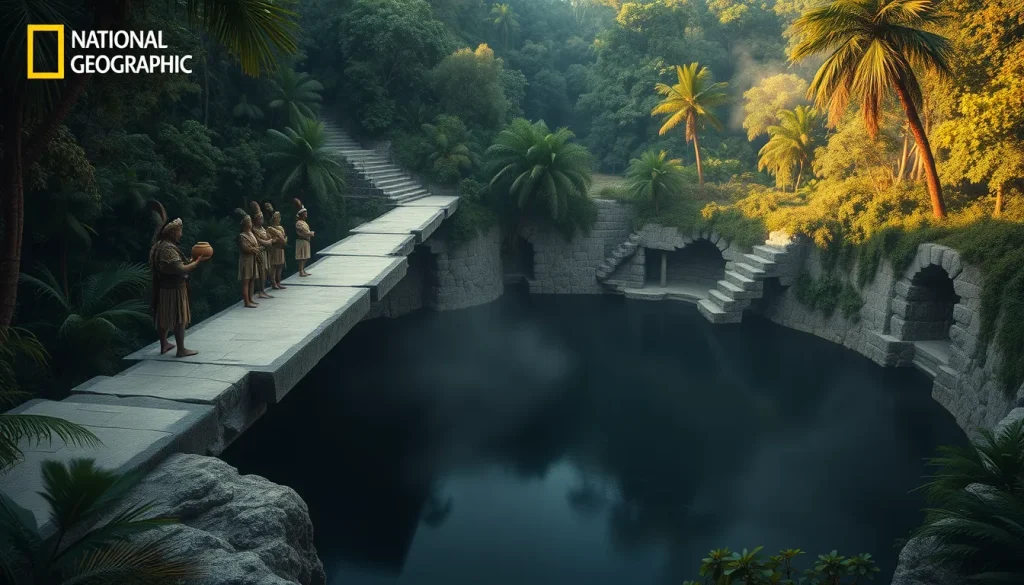
The Sacred Cenote, known in Spanish as the Cenote Sagrado and alternatively as the Well of Sacrifice, stands as one of the most significant archaeological and cosmological features at the pre-Columbian Maya site of Chichén Itzá. Located in the northern Yucatán Peninsula, this water-filled sinkhole in limestone served as a primary repository for ritual offerings for centuries. Unlike typical water sources used for daily sustenance, the Sacred Cenote was reserved for high-status religious activities, specifically sacrifices intended to petition the rain god Chaac. Its significance extends beyond local mythology, representing a critical intersection of geological necessity, architectural planning, and spiritual belief in the ancient Americas.
Main Explanation
The northwestern Yucatán Peninsula is characterized as a limestone plain devoid of natural rivers, streams, lakes, or ponds. In this environment, the region is pockmarked with natural sinkholes called cenotes, which expose the water table to the surface. The Sacred Cenote is distinct among these due to its size, location, and the volume of artifacts recovered from its depths. Formed from a collapsed cave in the limestone bedrock, the sinkhole became one of the greatest repositories of offerings in the ancient Americas. The extraordinary assemblage found within provides a wealth of information about indigenous concepts of value among the Maya, the foreign presence or influence at Chichén Itzá, and an unparalleled look into rituals of sacrifice.
According to both Maya and Spanish post-Conquest sources, pre-Columbian Maya deposited valuables and human bodies into the cenote as a form of sacrifice to the rain god Chaac. This practice underscores the centrality of water management and rainfall in Maya cosmology, where cenotes were viewed as portals to the underworld, or Xibalba. The site was named a UNESCO World Heritage Site in 1988, and Chichén Itzá remains one of the most visited destinations in Mexico. The city, with its iconic pyramids and temples covered in elaborate sculptural programs, has been a popular destination since at least the first millennium A.D. Over the course of centuries, Maya peoples utilized this natural feature not merely as a water source but as a sacred conduit between the human realm and the divine.
Evidence & Sources
The archaeological understanding of the Sacred Cenote is built upon a century of excavation and reassessment. The most famous early investigation was conducted by Edward Herbert Thompson, who dredged the Cenote Sagrado from 1904 to 1910. Thompson recovered artifacts of gold, jade, pottery, and incense, as well as human remains. His work provided the first material confirmation of the historical records describing the site as a well of sacrifice. However, modern scientists question whether we can regard these assumptions and conclusions about the cenote as entirely correct without reassessing old excavations with new techniques.
Beginning in the 1950s, several Mexican-driven projects were conducted in the cenote, including a 1961 project that used an airlift dredge. These efforts aimed to recover additional materials and refine the context of Thompson’s findings. Further academic scrutiny occurred during the 1967–68 excavations, which focused on plans and preparations for understanding the site’s layout. More recently, dissertations and studies such as those published by Leiden University in 2013 have sought to reassess old excavations with new techniques. These modern analyses ask critical questions about the function of the site and the validity of early 20th-century conclusions. The Metropolitan Museum of Art has also highlighted the site’s importance, noting that the immersive gallery containing works of art found at the Sacred Cenote offers visitors an unparalleled look into rituals of sacrifice and indigenous concepts of value.
Deep Dive Analysis
Location and Geological Context
The Sacred Cenote is located to the north of Chichén Itza’s civic precinct. It is connected to the main architectural complex by a 300-metre (980 ft) sacbe, or raised pathway. This deliberate architectural connection highlights the ritual importance of the journey from the city center to the water source. The northwestern Yucatán Peninsula is a limestone plain with no surface rivers, making cenotes vital for survival and spiritual practice. The sinkhole exposes the water table, creating a permanent body of water in an otherwise dry landscape.
Construction and History
As a natural formation, the cenote was not constructed in the traditional sense but was modified and integrated into the sacred landscape. The sinkhole, formed from a collapsed cave in the limestone bedrock, became one of the greatest repositories of offerings in the ancient Americas. Usage of the site spans centuries, with evidence suggesting it was a popular destination since at least the first millennium A.D. The historical timeline of its excavation includes Thompson’s dredging from 1904 to 1910, followed by Mexican projects in the 1950s and a specific 1961 project using an airlift dredge.
Architecture and Spatial Relationship
The primary architectural feature associated with the cenote is the sacbe connecting it to the civic precinct. This 300-metre raised pathway facilitated processions and the transport of offerings. While the cenote itself is natural, the surrounding area was likely curated for ritual use. The spatial relationship between the civic precinct and the cenote emphasizes the integration of political power and religious authority, as the rulers of Chichén Itzá controlled access to this sacred portal.
Astronomical Interpretation
While specific astronomical alignments for the cenote are less documented than for structures like El Caracol, its function is tied to the cycles of rain and agriculture. The offerings were made to Chaac, the rain god, linking the site to the seasonal cycles critical for maize cultivation. The cenote served as a cosmological axis, connecting the surface world with the underworld waters, reflecting the Maya understanding of the universe’s layered structure.
Archaeological Evidence
Excavations have recovered a vast array of artifacts. Thompson’s dredging recovered artifacts of gold, jade, pottery, and incense, as well as human remains. The Metropolitan Museum of Art describes this as an extraordinary assemblage containing a wealth of information about indigenous concepts of value. The presence of foreign goods indicates trade networks and outside influence at Chichén Itzá. Human remains confirm the practice of sacrificial rites, aligning with post-Conquest sources.
Alternative Interpretations and Scholar Consensus
While the consensus confirms the site as a place of sacrifice, modern researchers like Charlotte de Hoogd question early assumptions. Her 2013 dissertation focuses on reassessing old excavations with new techniques, asking if scientists can just regard Thompson’s assumptions and conclusions as correct. There is ongoing debate regarding the specific demographics of the sacrificed individuals and the precise chronology of the offerings. However, the scholar consensus remains that the cenote was a primary ritual site dedicated to Chaac.
Visitor Misconceptions
A common misconception is that the cenote was used for daily water collection. In reality, it was reserved for high-status rituals. Another misconception involves the nature of the sacrifices; while human sacrifice occurred, the deposition of valuables like gold and jade was equally significant. Visitors should understand that the site represents a complex intersection of geology, architecture, and belief, rather than a simple pit of death.
FAQ
What was the Sacred Cenote used for?
It was used as a site for ritual sacrifices and offerings to the rain god Chaac, including valuables like gold and jade as well as human bodies.
Who excavated the Sacred Cenote?
Edward Herbert Thompson conducted the first major dredging from 1904 to 1910, followed by Mexican projects in the 1950s and 1960s.
Is the Sacred Cenote natural or man-made?
It is a natural sinkhole formed from a collapsed cave in the limestone bedrock, though it was connected to the city by a man-made sacbe.
What artifacts were found in the cenote?
Excavations recovered gold, jade, pottery, incense, and human remains, indicating high-status ritual activity.
Leave a Reply