
Short Answer
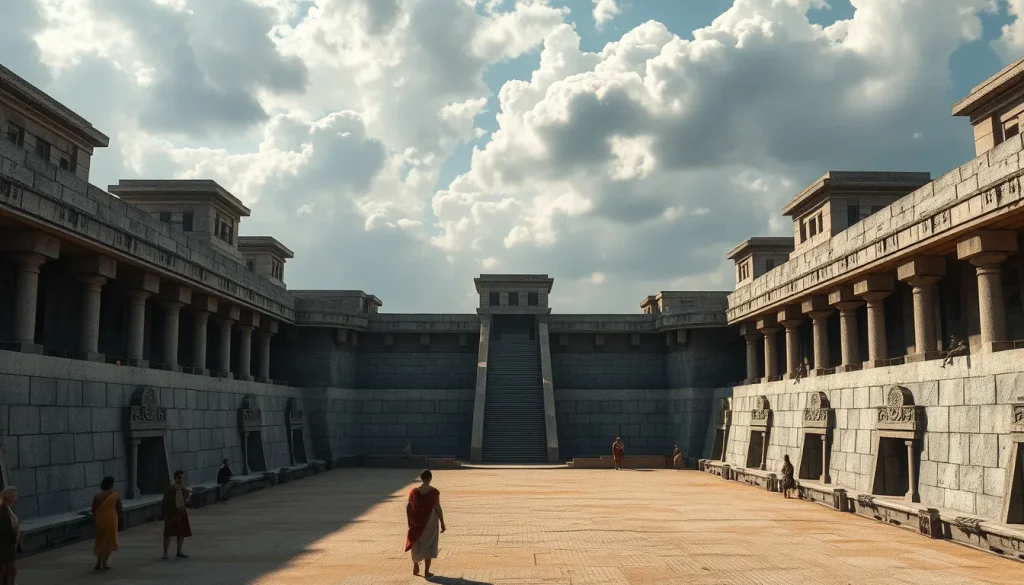
The Great Ball Court, known locally as the Gran Juego de Pelota, stands as the most imposing structure of its kind within the ancient ruins of Chichén Itzá. Located on the Yucatán Peninsula, this monumental arena is not merely a sporting facility but a profound expression of Maya cosmovision, sociopolitical authority, and ritual practice. As the largest ball court discovered in Mesoamerica, its sheer scale suggests it was designed for events of paramount importance, transcending simple athletic competition to encompass ceremonies of inauguration, trials, and large-scale celebrations that reinforced the power of the city’s rulers.
Understanding the purpose of the Great Ball Court requires an interdisciplinary approach that merges archaeological evidence with mythological texts. The court functioned as a focal point for the city, symbolizing wealth and power while physically manifesting the Maya creation myth. Through the lens of modern archaeology and digital heritage analysis, researchers continue to decode the acoustic properties and architectural alignments that defined how this space was experienced by ancient visitors. The court was a stage where the conflict between the forces of darkness and light was enacted, grounding the abstract beliefs of the Maya civilization in a tangible, stone reality.
Main Explanation
The primary purpose of the Great Ball Court at Chichén Itzá was multifaceted, serving ritual, political, and cosmological functions simultaneously. Archaeological consensus indicates that the ballgame was deeply embedded in the religious life of the Maya and Toltec peoples who inhabited the region. The court symbolized the underworld, known as Xibalba, and the game played within its bounds was a reenactment of the creation myth described in the Popol Vuh, or Book of Council. In this narrative, the twin brothers Hun Hunaphu and Xbalanque used their time on earth to play ball, arousing the anger of Vucub Came, the master of the underworld. The resulting conflict and subsequent game formed the mythological foundation for the physical contests held at sites like Chichén Itzá.
Beyond mythology, the court was an instrument of sociopolitical power. Chichén Itzá contained a total of 17 ball courts, indicating that the game was ubiquitous in daily life. However, the Great Ball Court was distinct, receiving visitors from around the capital city for significant events. These gatherings likely included trials and inaugurations, where the outcome of the game or the rituals performed therein legitimized political authority. The architecture itself communicated hierarchy; friezes on the walls depict characters representing teams, with the left wall showing men in identical costumes, possibly the home team, and the right wall depicting men in various costumes, perhaps visitors. This visual distinction underscores the court’s role in managing relationships between the central power and external groups.
The ritual aspect of the court is perhaps the most debated yet significant element. Evidence suggests that during the Toltec period, the stakes of the game could be life and death. Carvings along the walls include scenes of decapitations of players, leading to theories that the losing captain, or potentially the winning captain, was sacrificed to the gods. This sacrifice was not viewed as a punishment in the modern sense but as a sacred duty to maintain cosmic order. The court thus operated as a threshold between the human world and the divine, where bloodletting and ballplay ensured the continuity of the sun and the stability of the cosmos.
Evidence & Sources
Archaeological and textual evidence provides the foundation for our understanding of the Great Ball Court’s purpose. Physical dimensions recorded by historical surveys indicate the court measures 460 feet in length and 150 feet in width, including two 8-foot wide tilted walls that rise to a height of 25 feet. These massive proportions support the claim that it is the largest court yet discovered in Mesoamerica. The presence of large stone rings cemented high on the walls further corroborates the mechanics of the game, where players aimed to pass a hard rubber ball through these hoops using their hips, elbows, or knees, as hands were forbidden.
Textual evidence from the Popol Vuh complements the archaeological record by providing the mythological context. The text describes the ballgame as a conflict between forces of darkness and light, mirroring the physical layout of the court which often aligns with celestial events. While the Popol Vuh originates from the Kʼicheʼ people, its themes are consistent with the iconography found at Chichén Itzá, suggesting a shared Mesoamerican cultural framework. The noise of the game, described in myth as arousing the lords of the underworld, finds a physical parallel in the court’s acoustics. Modern measurements show that a conversation at one end of the court can be heard 135 meters away at the other, and a single clap produces multiple loud echoes. This acoustic phenomenon would have amplified the ritual significance of the space, making the voices of priests and players resonate as if amplified by supernatural forces.
Iconographic evidence on the court’s walls offers direct insight into the human cost of the game. Stone reliefs depict players with padding on their elbows and knees, confirming the use of protective gear during play. More critically, specific carvings show scenes of decapitation, with blood portrayed as wriggling snakes, a symbol of fertility and renewal. Some carvings also show players wielding bats, suggesting that the rules of the game may have changed over the years or that different variations were played on this massive court. Experts remain unsure if a full game was actually played on this specific massive court due to its size, or if it served primarily as a ceremonial monument where the ritual outweighed the sport. Nevertheless, the convergence of architectural scale, acoustic engineering, and violent iconography confirms the court’s role as a central institution of Maya and Toltec society.
Deep Dive Analysis
Module B: Building/Site Analysis
Location: The Great Ball Court is situated within the monumental core of Chichén Itzá, located in the Yucatán Peninsula of Mexico. It lies to the left of the visitors center, flanked by temples at either end, positioning it centrally within the sacred geography of the city.
Construction and History: The structure dates to the late-classic period, with significant influences from the Toltec culture. It is one of eight courts in the city, but its size dwarfs the others. The construction involved massive stone blocks arranged to form parallel walls with tilted surfaces designed to rebound the heavy rubber ball. The court’s longevity suggests it remained a vital site through various political shifts within the city’s history.
Architecture: The court is bounded by towering parallel walls measuring 25 feet in height. The playing field is 460 feet long and 150 feet wide. Key architectural features include the stone rings cemented high on the walls, which served as goals. The walls are adorned with friezes depicting seven characters representing the teams, providing a narrative element to the architecture. Temples at either end likely served as waiting areas for players or shrines for priests overseeing the rituals.
Cosmological Interpretation: In the Maya cosmovision, the ball court symbolized the underworld. The game enacted the myth of the Hero Twins, representing the struggle between light and darkness. The movement of the ball across the court may have mirrored the movement of celestial bodies, such as the sun or Venus, through the sky and into the underworld at night. This alignment transformed the court from a sporting venue into a cosmological map.
Archaeological Evidence: Excavations and surveys have revealed the precise dimensions and the presence of acoustic anomalies. The stone reliefs depicting decapitation and protective padding provide physical evidence of the game’s violence and rules. The existence of 17 ball courts in the broader site highlights the game’s ubiquity, while the singular grandeur of the Great Court highlights its specific ceremonial role.
Alternative Interpretations: Some scholars debate whether the court was used for actual play given its massive size, suggesting it may have been primarily ceremonial. There is also debate regarding the sacrifice; while some carvings show decapitation, it is unclear if the losing or winning team was sacrificed. Some theories suggest the honor of sacrifice fell to the winners, while others argue it was a punishment for the losers.
Scholar Consensus: The prevailing academic view is that the court served multiple purposes: sociopolitical gatherings, ritual reenactments of myth, and potentially actual ballgames during major festivals. It was an important site of sociopolitical power where the city’s wealth and authority were displayed to visitors from around the capital.
Visitor Misconception: A common misconception is that the ballgame was purely a sport similar to modern soccer. In reality, it was a ritual obligation with cosmic consequences. Another misconception is that the court was used daily; evidence suggests it was reserved for special occasions, trials, and inaugurations, distinguishing it from the smaller courts used for regular play.
FAQ
Was the Great Ball Court used for actual games?
Experts are not sure if a game was actually played on this massive court due to its size. It likely served for trials, inaugurations, and celebrations, while smaller courts were used for regular play.
What happened to the players after the game?
Evidence suggests that during the Toltec period, the losing captain and perhaps teammates were sacrificed. Carvings show scenes of decapitation, indicating the ritual stakes were high.
How many ball courts are at Chichén Itzá?
There are a total of 17 ball courts at Chichén Itzá, indicating the importance of the game, though the Great Ball Court is the largest and most impressive.
Leave a Reply