
Short Answer
The ancient Maya civilization produced a sophisticated written tradition, recorded primarily on bark-paper books known as codices. Of the thousands likely created, only four major codices—the Dresden, Madrid, Paris, and Grolier—survived the humid Mesoamerican climate and colonial destruction. These documents are invaluable repositories of Maya astronomy, calendars, mathematics, and cosmology. However, their physical fragility poses significant challenges for study and preservation. Virtual restoration of Maya codices represents a critical intersection of archaeology and digital heritage, utilizing non-invasive technologies to document, analyze, and decipher these ancient texts without risking further damage to the original artifacts.
Main Explanation
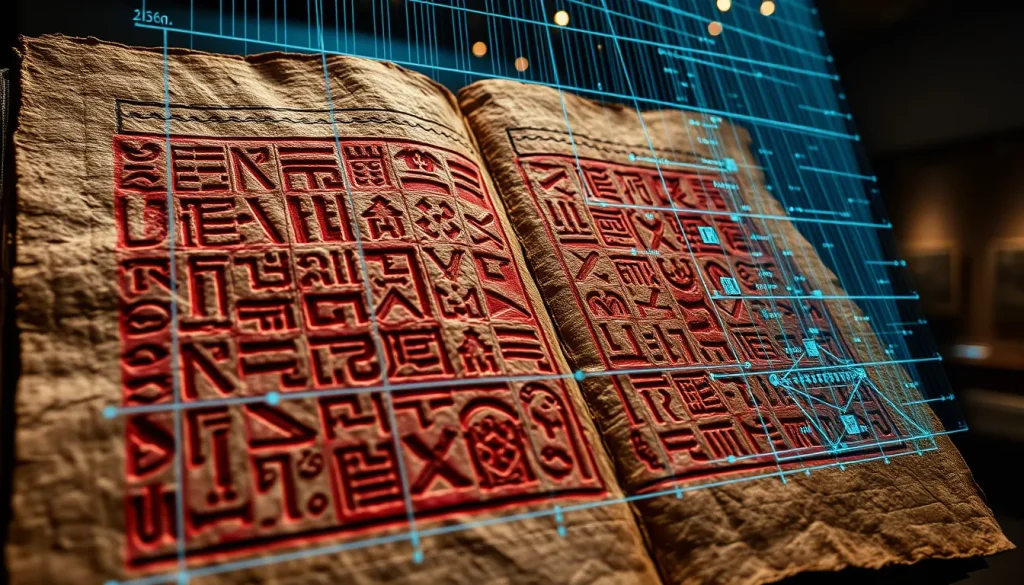
Virtual restoration refers to the use of digital tools to reconstruct, enhance, and analyze cultural heritage objects in a virtual environment. In the context of Maya codices, this process does not involve physical repair but rather the creation of high-fidelity digital representations that allow researchers to visualize details invisible to the naked eye. Techniques include multispectral imaging, which captures data across various wavelengths of light to reveal faded ink, and three-dimensional surveying to record the texture and topography of the bark paper.
Beyond imaging, virtual restoration encompasses computational analysis. Advanced computer vision and machine learning methods are applied to segment glyph strokes, classify individual signs, and retrieve similar symbols across different pages or codices. This digital approach facilitates the management of large datasets of epigraphic resources, enabling scholars to test hypotheses about glyph variation and scribal hands. The goal is to create an integrated framework for multimedia access and analysis, ensuring that the information contained within these deteriorating manuscripts is preserved for future generations even if the physical objects continue to degrade.
Evidence & Sources
The development of digital heritage methods for Maya epigraphy is grounded in interdisciplinary collaborations between archaeologists, epigraphers, and computer scientists. A primary example is the MAAYA Project (Multimedia Analysis and Access for Documentation and Decipherment of Maya Epigraphy). Research published by the Idiap Research Institute and Ecole Polytechnique Fédérale de Lausanne (EPFL) outlines the technical aspects of methods developed for segmentation, classification, indexing, and retrieval of Maya glyphs in ancient codices. These methods are based on computer vision and machine learning, designed to be generic enough for application to other visual data in the digital humanities.

Further evidence of these techniques in action includes the multispectral imaging of an Early Classic Maya codex fragment from Uaxactun, Guatemala. Published in Antiquity, this study demonstrates how imaging technology can recover text from fragments that appear blank or heavily damaged under standard lighting. Additionally, frameworks developed by researchers such as Rui Hu and Daniel Gatica-Perez have contributed novel Maya hieroglyph datasets used for shape analysis. These projects emphasize the definition of consistent conventions to generate high-quality representations of Maya hieroglyphs from the three most valuable ancient codices, currently residing in European museums and institutions. The integration of statistical Maya language models with shape representation within hieroglyph retrieval systems has further validated the efficacy of digital analysis in supporting traditional epigraphic decipherment.
Deep Dive Analysis
The application of digital archaeology to Maya codices follows a structured workflow designed to maximize data recovery while ensuring cultural heritage considerations are met. The following analysis details the technological pipeline used in virtual restoration projects.
Technology Description
The core technologies involved include multispectral imaging systems, 3D surveying tools, and machine learning algorithms. Multispectral imaging captures images at specific frequencies across the electromagnetic spectrum, including ultraviolet and infrared. This allows for the differentiation between ink and substrate based on chemical composition rather than just visual contrast. Machine learning models, particularly those involving convolutional neural networks, are trained to recognize glyph shapes and structures.
How It Works
The process begins with high-resolution image acquisition under controlled lighting conditions. These images are then pre-processed to correct for distortion and lighting inconsistencies. Segmentation algorithms isolate individual glyphs from the background noise of the aged paper. Once segmented, feature extraction techniques convert the visual data into numerical representations. These representations are fed into classification models that identify the glyph based on training data derived from established epigraphic catalogs. Finally, retrieval systems allow users to search for specific glyphs across the entire digital corpus.
Field Workflow
While much of the analysis occurs in laboratory settings, the initial documentation often requires close collaboration with museum curators. The workflow involves an interdisciplinary effort involving epigraphers and computer scientists. Epigraphers provide the ground truth data necessary to train algorithms, ensuring that the digital classifications align with established linguistic understanding. Computer scientists develop the infrastructure for the digital repository system for glyph annotation and management. This collaboration ensures that the technical output remains relevant to archaeological inquiry.
Output/Data
The primary outputs include high-resolution digital facsimiles, segmented glyph databases, and statistical models of glyph variation. A novel Maya hieroglyph dataset is contributed through these efforts, which can be used for shape analysis and further algorithmic training. The data also supports the visualization of glyph collections, allowing researchers to observe patterns in scribal behavior or regional stylistic differences that might be missed during manual inspection.
Example
The MAAYA project serves as a definitive example of this workflow. Researchers developed visual analysis methods for segmentation, classification, indexing, and retrieval of Maya glyphs in ancient codices. The project summarized technical aspects including preparation of source materials, creation of a data repository, and visualization of glyph collections. By studying the combination of statistical Maya language models and shape representation, the project demonstrated the impact of applying language models extracted from different hieroglyphic resources on various data types.
Strengths
Virtual restoration offers non-invasive analysis, preserving the physical integrity of fragile codices. It enables the enhancement of faded text that is illegible to the human eye. Furthermore, digital repositories allow for global access to high-quality data without requiring physical travel to museums, democratizing access to cultural heritage. The methods are generic and could be applicable to other sources of visual data in the digital humanities, extending their utility beyond Maya studies.
Limitations
Despite its advantages, the technology faces limitations. Algorithmic classification is only as accurate as the training data; rare or unique glyphs may be misclassified. Multispectral imaging requires expensive equipment and specialized expertise to interpret the data correctly. Additionally, digital surrogates cannot fully replicate the tactile information of the original artifact, such as the thickness of the paper or the depth of the ink strokes, although 3D surveying attempts to mitigate this.
Accuracy
Accuracy in glyph classification depends on the effect of shape representation choices. Research indicates that combining statistical language models with shape representation improves retrieval systems. However, uncertainty remains regarding glyphs that are heavily damaged or obscured. The impact of applying language models extracted from different hieroglyphic resources on various data types is still a subject of ongoing study to refine accuracy rates.
Cultural Heritage Considerations
Digital heritage methods must respect the provenance and cultural significance of the codices. Projects like MAAYA involve institutions such as the University of Bonn and the University of Geneva, ensuring academic rigor. The creation of digital repositories must adhere to ethical standards regarding data ownership and access. Ultimately, these tools support the documentation and decipherment of Maya epigraphy, aiding in the preservation of indigenous knowledge systems without appropriating or altering the original cultural artifacts.
FAQ
What is the MAAYA Project?
The MAAYA Project is a research initiative integrating epigraphy and computer science to develop visual analysis methods for segmentation, classification, and retrieval of Maya glyphs in ancient codices.
How does multispectral imaging help restore codices?
Multispectral imaging captures data across various wavelengths of light, allowing researchers to distinguish between ink and substrate chemically, revealing text that has faded beyond human visibility.
Are digital restorations accurate?
Accuracy depends on the combination of statistical Maya language models and shape representation. While highly effective, algorithms rely on training data and may struggle with heavily damaged or unique glyphs.
Leave a Reply