
Short Answer
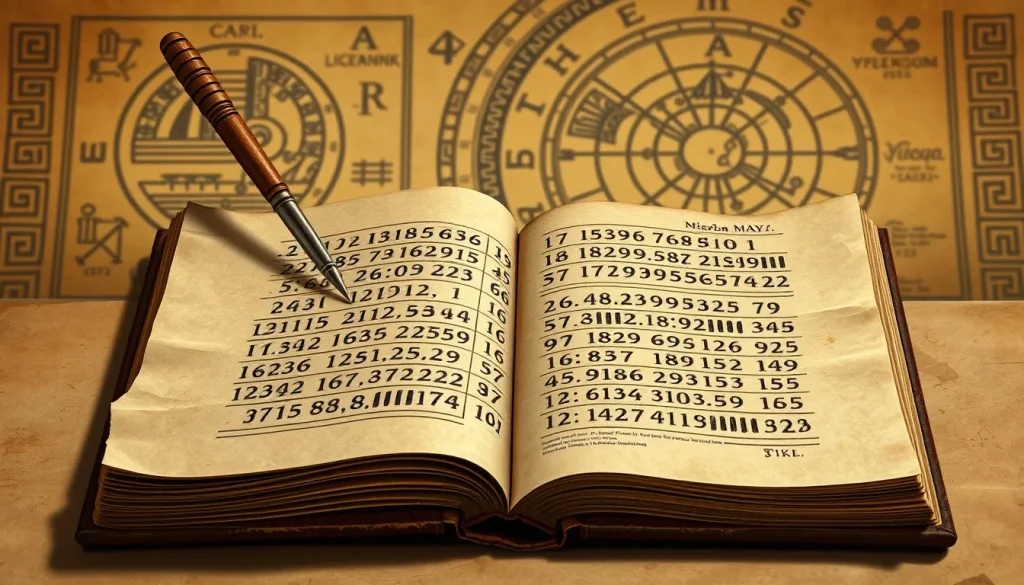
The question of whether the ancient Maya civilization possessed the capability for complex arithmetic operations such as multiplication and division is central to understanding their scientific achievements. Contrary to outdated perceptions of pre-Columbian societies as mathematically primitive, archaeological and epigraphic evidence confirms that the Maya developed sophisticated arithmetical procedures. These techniques were not merely theoretical but were applied practically to manage their intricate calendar systems, predict celestial events, and administer their city-states. The Maya numerical system, characterized by its vigesimal (base-20) structure and the early use of zero, allowed for efficient computation that rivaled contemporary systems in the Old World.
Research into Maya numerals has demonstrated that arithmetical procedures, including addition, subtraction, multiplication, division, and even square root extraction, can be carried out efficiently using their notation. This mathematical sophistication was a cornerstone of the Classic Maya civilization, which flourished in the lowlands of southern Mexico, Guatemala, Belize, and western Honduras from the late third century to the end of the ninth century. The preservation of this knowledge, however, faced significant challenges following the Spanish conquest in the sixteenth century, making the surviving codices and inscriptions critical windows into their computational world.
Main Explanation
The foundation of Maya arithmetic lies in their unique numerical system, which combines properties of both place-value and non-place-value systems. According to W.F. Anderson, writing in American Antiquity, the Maya system is relatively unique in this hybrid characteristic, termed “mixed-place-value.” This structure differs from the purely place-value system used in modern mathematics or the non-place-value system of Roman numerals. In the Maya system, numbers were written vertically, with each position representing a power of twenty, although there was a modification in the third place for calendrical purposes to align with the 360-day tun year.
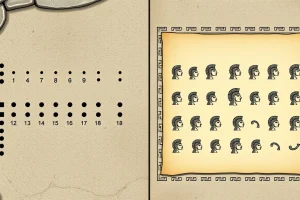
Multiplication and division in the Maya system were not performed using memorized tables in the same way as modern decimal arithmetic. Instead, these operations were likely executed through methods of repeated addition and subtraction, facilitated by the visual clarity of the dot-and-bar notation. A dot represented one unit, a bar represented five units, and a shell symbol represented zero. This visual representation allowed scribes to manipulate quantities physically or graphically. For instance, multiplication could be conceptualized as adding a number to itself a specific number of times, while division involved determining how many times one quantity could be subtracted from another.
The efficiency of these procedures was vital for the Maya priesthood and scribes, who were responsible for maintaining the Long Count calendar and tracking astronomical cycles. The ability to perform division was particularly important for calculating average cycles of celestial bodies, such as Venus, over long periods. The mathematical needs of their society drove the evolutionary development of these numerical systems, ensuring that calculations regarding agriculture, ritual timing, and architecture could be performed with high precision. The hybrid nature of their system allowed for flexibility, accommodating both the abstract needs of astronomy and the practical needs of daily commerce and tribute collection.
Evidence & Sources
The primary evidence for Maya arithmetic techniques comes from the surviving codices, specifically the Dresden, Madrid, and Paris Codices, as well as monumental inscriptions found at sites across the Maya region. Floyd G. Lounsbury, in his analysis of Maya numeration and computation, highlights that these documents contain extensive tables used for calendrical astronomy and eclipse reckoning. The existence of these tables implies a robust underlying computational methodology capable of handling large numbers and complex fractions. The Dresden Codex, for example, contains Venus tables that required precise multiplication and division to correlate the 584-day Venus cycle with the 365-day solar year over centuries.
Historical context provided by MacTutor History of Mathematics notes that the mathematical achievements of the Maya belong to a civilization that was already in decline by about 900 AD, prior to the arrival of Hernán Cortés. Cortés sailed for the coast of Yucatán in 1519 with a force that included 508 soldiers and 16 horses, eventually leading to the fall of the Aztec empire and the disruption of Maya society. This conquest resulted in the destruction of many Maya books, labeled as superstitious by Spanish clergy. Consequently, the surviving evidence of their arithmetic is fragmentary, yet sufficient to demonstrate their capabilities. The work of scholars like Anderson and Lounsbury has reconstructed these procedures by analyzing the remaining numerical notations and their contextual application in astronomical tables.
Furthermore, the archaeological record supports the widespread use of these mathematical concepts. The uniformity of the numerical system across different city-states suggests a standardized educational or scribal tradition. The use of the zero concept, evident in Long Count dates, predates many other civilizations in its explicit symbolic representation. This evidence collectively refutes the notion that the Maya lacked division or multiplication, showing instead that they possessed a specialized arithmetic tailored to their cosmological and administrative requirements. The survival of these concepts through the colonial period, albeit in altered forms, further attests to their deep integration into Maya culture.
Deep Dive Analysis
Definition: Maya Arithmetic refers to the computational methods used by the ancient Maya civilization, characterized by a vigesimal (base-20) system and a mixed-place-value structure. It encompasses operations such as addition, subtraction, multiplication, and division performed using dot, bar, and shell notation.
How it works: The system operates vertically where each level represents a higher power of twenty. Calculation involves manipulating symbols within these positions. Multiplication is often achieved through repeated addition or positional shifting, while division is handled through repeated subtraction or partitioning of units across place values. The presence of a zero symbol allows for empty place values, facilitating complex calculations.
Key components: The three primary symbols are the dot (value 1), the bar (value 5), and the shell (value 0). The vertical position determines the magnitude (1s, 20s, 360s, etc.). The mixed-place-value nature adjusts the third position to 18×20 instead of 20×20 to align with the calendar year.
Example: To multiply a number by 20, a scribe would shift the numerals up one position vertically, filling the bottom position with zeros. For division, if a large number of days needed to be converted into years, the total would be partitioned by 360, utilizing subtraction methods to find the quotient and remainder.
Historical evidence: Evidence is found in the Dresden Codex Venus tables and Long Count inscriptions on stelae. W.F. Anderson demonstrated in 1971 that procedures including square root extraction are possible within this system. Lounsbury’s work on calendrical astronomy confirms the application of these computations in tracking eclipse cycles.
Common misconceptions: A common misconception is that the Maya lacked division because no specific symbol for “divide” exists. However, the operation was procedural rather than symbolic. Another myth is that their math was solely religious; in reality, it served practical administrative and agricultural planning purposes alongside ritual needs.
FAQ
Did the Maya have a symbol for division?
No specific symbol existed for division; it was performed as a procedural operation using repeated subtraction or partitioning within their vigesimal system.
What base did the Maya numerical system use?
The Maya used a vigesimal system, which is base-20, likely derived from counting on both fingers and toes.
How was Maya mathematics preserved?
Knowledge was preserved in codices and stone inscriptions, though many books were destroyed during the Spanish conquest beginning in 1519.
Was Maya math used for astronomy?
Yes, advanced arithmetic was essential for tracking celestial cycles like Venus and predicting eclipses as documented by Floyd G. Lounsbury.

Leave a Reply