
Short Answer
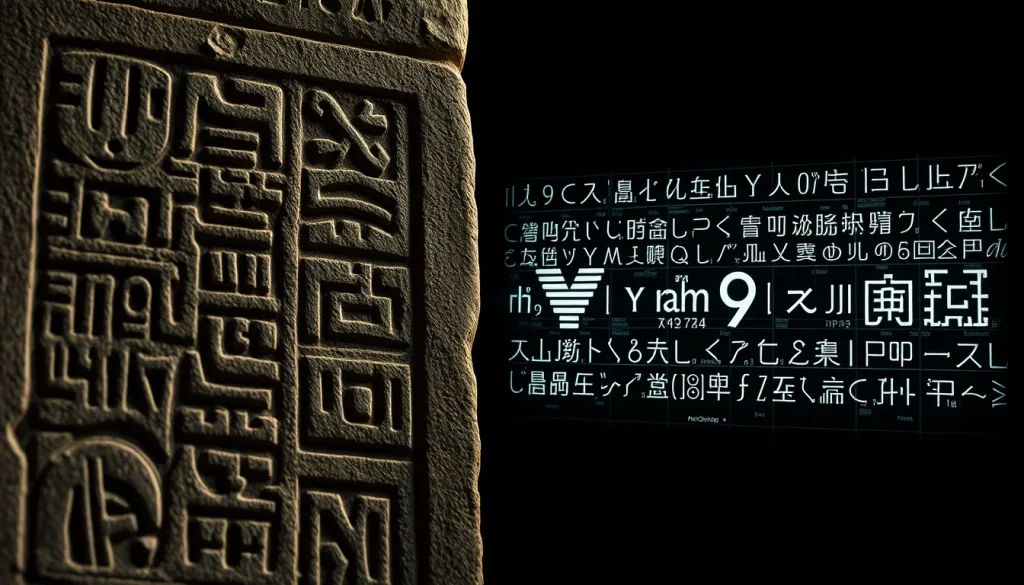
The preservation and dissemination of ancient knowledge rely increasingly on digital accessibility. For the Classic Maya civilization, whose writing system stands as one of the most elaborate and fascinating in the Americas, the transition from stone to screen presents unique obstacles. Creating digital fonts for Maya glyphs is not merely a graphic design task; it is a complex endeavor involving archaeology, linguistics, computer science, and type design. As of 2026, Maya hieroglyphs have not yet been fully integrated into the Unicode Standard, limiting the ability to write and exchange this writing system in computer environments. This article examines the technical and linguistic challenges inherent in adapting an ancient script for contemporary digital use, highlighting ongoing efforts to bridge this gap.
Main Explanation
Maya hieroglyphs from the Classic Period, spanning circa 250 to 900/1000 CE, possess a graphic richness and structural complexity that defies simple digitization. Unlike alphabetic systems where one character corresponds to one sound, Maya script is logosyllabic, combining logograms (words) and syllabic signs. Furthermore, glyphs are often composed of multiple elements arranged in variable configurations. A single glyph block may contain a main sign surrounded by affixes, which can change position based on grammatical context or artistic preference. This variability creates a significant technical challenge for font engineering, as standard digital fonts typically rely on fixed character shapes and linear sequencing.
The process of creating a digital typeface for Maya hieroglyphs requires striking a balance between respecting the semantic value of original sources and optimizing digital representation. Type designers must work closely with epigraphers to ensure that the digital glyphs accurately reflect the historical nature of the script. For instance, the visual distinction between a hand gesture representing a specific verb and a similar gesture representing a deity must be preserved to maintain linguistic accuracy. The goal is to develop a typeface capable of accurately representing and rendering hieroglyphs in digital format, allowing scholars and the public to engage with Maya texts without needing specialized imaging software for every instance.
Current initiatives aim to propose an innovative typographic solution by developing the first Maya typeface capable of accurately representing and rendering hieroglyphs from the Classic Period. This involves exploring both the technical challenges and the cultural considerations inherent in adapting an ancient script. The complexity of composition means that a simple one-to-one mapping of code points to glyphs is insufficient. Instead, the font must support complex substitution rules and ligatures that mimic the spatial arrangement found on stelae, ceramics, and codices. Without such capabilities, the digital text risks losing the nuanced meaning conveyed through the spatial relationship of glyph components.
Evidence & Sources
Recent collaborative projects provide the primary evidence for the current state of Maya digitization efforts. The Script Encoding Initiative at UC Berkeley has been central to this work, drawing on complementary expertise from archaeology, linguistics, computer science, and type design. Key collaborators include Alexandre Bassi, who contributes to type design; Gabrielle Vail, who provides an epigraphic and linguistic perspective; and Andrew Glass, who contributes to font engineering. Their research seeks to propose an innovative typographic solution by developing the first Maya typeface capable of accurately representing and rendering hieroglyphs from the Classic Period.
Presentations at major technical conferences underscore the progress and remaining hurdles. At the Unicode Technical Workshop (UTW) 2026, a session titled “Developing an Encoding for Maya Hieroglyphs” examined the efforts to enable accurate digital representation of Maya Hieroglyphic writing. The presentation highlighted how combined technical and scholarly progress supports the reproducible representation of the script’s distinctive features using fonts and keyboards. This work integrates years of scholarly research with standards development to advance a Unicode-compliant encoding and font for Maya writing. The talk emphasized laying the groundwork for standardized digital access to Maya texts, which is crucial for reproducible research.
Earlier work documented at the Digital Humanities 2018 conference by Carlos Pallan Gayol and Deborah Anderson noted that efforts to get Mayan hieroglyphs into the international standard Unicode began around 2015. They described the challenges that prevented scholars from encoding Mayan in the past and the strategies used to overcome these hurdles. Their paper reported on the implications for future research, noting a rapidly expanding repository of digitally encoded, machine-readable Mayan texts. However, despite this progress, sources from 2026 indicate that the script is not yet included in the Unicode standard, Consequently, it is not yet possible to write and exchange with this writing system in a computer environment without proprietary solutions. This discrepancy highlights the rigorous standards required for universal encoding versus specialized academic tools.
Deep Dive Analysis
To understand the intricacies of this project, we apply a Digital Archaeology framework, analyzing the technology, workflow, and cultural implications of digitizing the Maya script.
Technology Description
The core technology involves Unicode encoding and advanced font engineering. Unicode provides a unique number for every character across languages and scripts, ensuring text can be reliably interchanged on computers and other devices. For Maya glyphs, this requires defining a code space for hundreds of distinct signs and their variations. Font engineering software is then used to create OpenType fonts that support complex glyph substitution. This allows the software to automatically assemble glyph components into coherent blocks based on input sequences, mimicking the scribe’s composition process.
How It Works
The workflow begins with epigraphic analysis. Specialists identify the core inventory of signs used during the Classic Period. These signs are then digitized as vector graphics. Font engineers map these vectors to Unicode code points. Crucially, they program ligature rules. For example, if a user types a specific sequence of syllabic signs, the font engine recognizes this and replaces the linear sequence with a single composed glyph block. This ensures that the visual output matches the archaeological record rather than a disjointed string of characters.
Field Workflow
The collaboration is interdisciplinary. Epigraphers like Gabrielle Vail validate the linguistic accuracy of the signs. Type designers like Alexandre Bassi ensure the aesthetic quality matches the stone carvings. Font engineers like Andrew Glass handle the technical implementation. This triad ensures that the digital output is both scholarly rigorous and technically functional. Regular reviews are conducted to compare digital renderings against photographs of original monuments and ceramics.
Output/Data
The primary output is a digital typeface and a proposed encoding standard. This enables the creation of machine-readable Mayan texts. Scholars can type Maya directly into word processors, search texts digitally, and share documents without requiring image files. This shifts the data from static images to dynamic, searchable text, vastly improving the efficiency of linguistic analysis and cross-referencing.
Example
Consider the representation of a royal name. In a standard image, this is a fixed picture. In the digital font system, the name is constructed from code points representing the phonetic syllables and logograms. The font renders these as a cohesive block. If a new variant of a sign is discovered, the font can be updated without redrawing entire texts, preserving the underlying data integrity.
Strengths
The primary strength is accessibility and reproducibility. Digital text is searchable, editable, and scalable. It allows for the integration of Maya writing into broader digital humanities projects. It also supports preservation; if a monument erodes, the digital record remains intact and accessible globally. Furthermore, it empowers descendant communities to engage with their heritage through modern technology.
Limitations
Limitations include the sheer complexity of the script. Not all glyph variations can be captured in a single font file. There is also the risk of standardization forcing flexibility where none existed historically; Maya scribes often varied signs artistically. A digital font might impose a rigidity that misrepresents the fluidity of ancient scribal practice. Additionally, until Unicode integration is complete, adoption remains limited to specialized software.
Accuracy
Accuracy is maintained through continuous feedback loops between archaeologists and engineers. The project draws on diverse and complementary skills to develop a typeface capable of accurately representing and rendering Maya hieroglyphs. However, the team recognizes the importance of preserving the historical nature of Maya hieroglyphs, acknowledging that digital approximation is still an approximation.
Cultural Heritage Considerations
The initiative directly addresses cultural heritage by pioneering the encoding of Maya hieroglyphs. It aims to develop a typeface that strikes a balance between respecting the semantic value of the original sources and optimizing its digital representation. By giving digital life to Classic Maya hieroglyphs, the project ensures that the writing system survives not just in museums, but in the global digital commons. This aligns with broader goals of decolonizing digital spaces by ensuring non-Latin scripts are fully supported in modern technology.
FAQ
Why are Maya glyphs not yet in Unicode?
Due to their complex structure and composition, Maya hieroglyphs present significant technical challenges for standard encoding. As of 2026, efforts are ongoing to propose an innovative typographic solution that accurately represents the script.
Who is leading the Maya encoding project?
The project involves collaborators from the Script Encoding Initiative at UC Berkeley, including Alexandre Bassi (type design), Gabrielle Vail (epigraphy), and Andrew Glass (font engineering).
What period of Maya writing is being digitized?
The project focuses on developing a digital typeface for Mayan hieroglyphs from the Classic period, which spans from circa 250 to 900/1000 CE.

Leave a Reply