
Short Answer
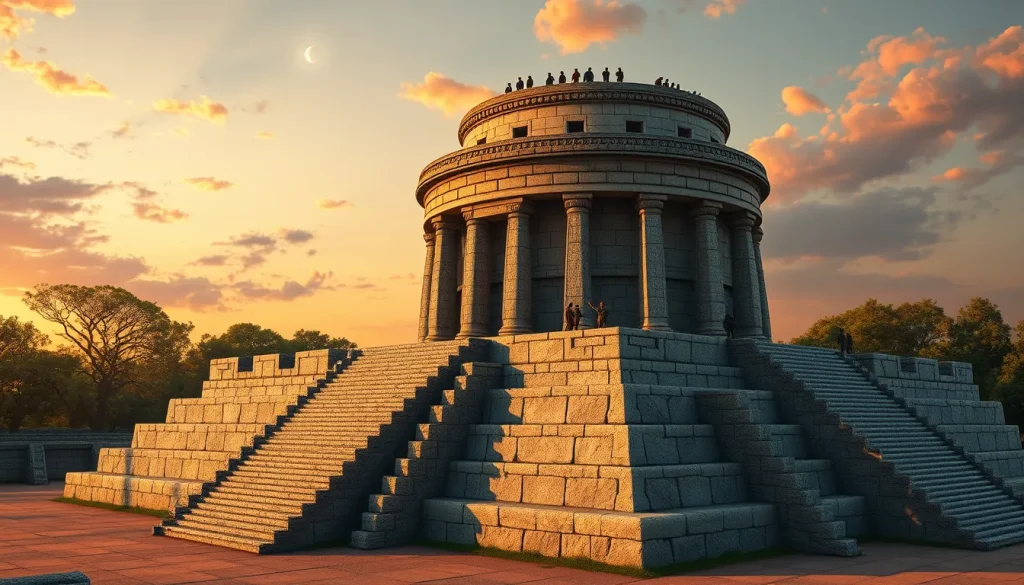
The architectural complex known as El Caracol at Chichén Itzá remains one of the most enigmatic structures in the Maya world. Its unique design, diverging from traditional Maya pyramidal forms, has long fueled debates regarding the nature of cultural contact between the Yucatán Peninsula and Central Mexico during the Terminal Classic period. Specifically, the question of Toltec influence on El Caracol’s design intersects with broader discussions about migration, conquest, and ideological exchange in Mesoamerica. While late 20th-century studies often favored hypotheses of elite emulation or an “international style,” emerging chronological data and architectural analyses are prompting a reconsideration of the traditional Toltec invasion hypothesis.
Main Explanation
El Caracol, often referred to as the Observatory, is situated within the Great North Platform of Chichén Itzá. Traditionally, archaeologists divided the site’s history into distinct “Maya” and “Toltec” periods, suggesting a sequence where pure Maya styles were superseded by foreign influences. However, the Overlap Model challenged this view, positing that “Maya” and “Toltec” buildings and ceramics coexisted or overlapped chronologically into the Terminal Classic period. This shift in understanding is critical for interpreting El Caracol. If the structure belongs to a period of significant overlap, its design elements—such as the spiral staircase and specific astronomical alignments—may reflect a synthesis of traditions rather than a simple replacement. Recent scholarship indicates that the latest chronology produced at Chichén Itzá no longer supports the elite emulation hypothesis as strongly as previously thought, instead corresponding closely to earlier proposals of the Toltec conquest model. This suggests that the relationship between Tula in Central Mexico and Chichén Itzá was not merely stylistic but potentially political and demographic.
Evidence & Sources
Archaeological evidence supporting Toltec influence on El Caracol is multifaceted, drawing from epigraphy, architecture, and astronomy. The Caracol Disk, dated between 929 and 932 CE, provides epigraphic context for this era, anchoring the structure within a specific historical timeframe that aligns with the Terminal Classic period. Research by Bíró and Pérez de Heredia highlights how this artifact fits into the broader sequence of construction periods, challenging the notion of distinct, non-overlapping phases. Furthermore, architectural comparisons extend beyond Chichén Itzá. Excavations at Nohmul in Northern Belize revealed structures with striking similarities to Chichén Itzá, including a “Caracol” counterpart (Structure 9). These findings imply an association between Toltec Chichén Itzá and the Terminal Classic periods to the south, suggesting that the architectural influence was widespread and coeval rather than isolated. Additionally, systematic studies involving careful measurement of the Caracol Tower have tested its astronomical orientation. While early aesthetic critiques dismissed the building’s appearance, interdisciplinary approaches have confirmed its function as an ancient astronomical observatory, practicing positional astronomy widely believed to be prevalent in pre-Conquest Mexico. The convergence of these data points—chronological, architectural, and astronomical—strengthens the argument for a profound Central Mexican impact on the site’s design and function.
Deep Dive Analysis
Location
El Caracol is located in the Osario Group, southwest of the Great North Platform at Chichén Itzá, Yucatan, Mexico. Its placement within the ceremonial center underscores its importance in the site’s cosmological layout.
Construction and History
According to the traditional view, major buildings at Chichén Itzá pertain to two distinct construction periods, generally named “Maya” and “Toltec.” El Caracol is typically associated with the latter phase. However, the Overlap Model posited a total or partial overlap between these styles, moving the “Toltec” phenomena into the Terminal Classic period. The Caracol Disk dates specifically to 929-932 CE, providing a fixed point in this complex history.
Architecture
The structure is unique in the Maya lowlands, featuring a circular tower on a square platform. Architectural similarities exist between structures at Nohmul and Chichén Itzá; specifically, Structure 9 of Nohmul has been put forth as a “Caracol” counterpart. This suggests that the design was not an isolated experiment but part of a broader architectural tradition linked to the Toltec sphere of influence.
Astronomical Interpretation
Interdisciplinary approaches have tested the building for astronomical orientation. Few systematic studies involving careful measurement were made in Mexico prior to modern investigations, despite pre-Conquest documents suggesting positional astronomy was widely practiced. The Caracol’s windows and shafts align with significant celestial events, particularly the movements of Venus, which held immense cultural significance for both Maya and Central Mexican cultures.
Archaeological Evidence
Excavations at Nohmul revealed Terminal Classic-San Jose V material intermixed with Late Classic to Early Postclassic Yucatec material in a single-unit refuse deposit. This stratigraphy supports the idea that the two periods are overlapping, if not coeval. Furthermore, ethnohistoric evidence from the early Colonial period indicates that the Maya of Yucatan recognized that, around 500 years earlier, Central Mexican groups had arrived, supporting the renewed validity of the Toltec conquest model over elite emulation hypotheses.
Alternative Interpretations
Late 20th-century studies almost universally rejected the earlier interpretation of a Toltec conquest in favor of elite emulation hypotheses. This view argued that the similarities in art and architecture between Tula and Chichén Itzá represented an “international style” adopted by many independent elites across Mesoamerica without direct migration or conquest. However, the latest chronology produced at Chichén Itzá no longer supports this hypothesis as robustly.
Scholar Consensus
The current academic landscape is shifting. The change in chronology provides an excellent opportunity to revisit the topic of Toltec influence. Often overlooked ethnohistoric evidence is now being presented to show that the early Colonial period Maya recognized the Central Mexican connection. While debate persists, the weight of evidence is moving back toward acknowledging a close relationship, potentially involving conquest or significant migration, rather than mere stylistic borrowing.
Visitor Misconception
A common misconception among visitors is that El Caracol was built solely for practical astronomy without religious context. In reality, the astronomical observations were deeply embedded in Maya cosmology and ritual practice. Additionally, visitors often assume the structure is purely Maya in origin, overlooking the substantial architectural evidence linking its design to Central Mexican traditions during the Terminal Classic period.
FAQ
Was El Caracol built by the Toltecs or the Maya?
Current evidence suggests a complex interaction. While traditionally labeled “Toltec,” recent chronologies support a period of overlap where Maya and Central Mexican influences coexisted, potentially involving conquest or significant migration rather than simple emulation.
What is the Caracol Disk?
The Caracol Disk is an epigraphic artifact dated between 929 and 932 CE. It provides crucial chronological data that helps anchor the construction periods of Chichén Itzá within the Terminal Classic era.
Why is El Caracol considered an observatory?
Systematic measurements have shown that the building’s windows and shafts align with specific celestial events, particularly the movements of Venus, indicating its use for positional astronomy.


Leave a Reply