
Short Answer
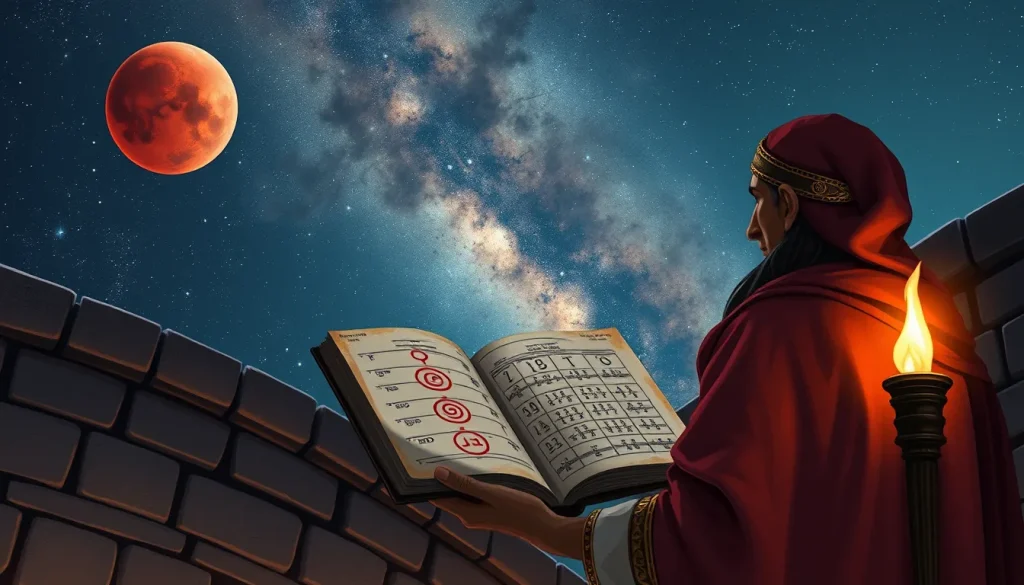
The study of Maya astronomy reveals a sophisticated understanding of celestial mechanics that extended beyond the well-documented cycles of Venus and the Moon. Among the most contentious and fascinating topics in archaeoastronomy is the evidence for the tracking of Mars, the red planet, within pre-Columbian Maya codices. While the Dresden Codex is renowned for its Venus Table and Eclipse Table, specific sections have been identified by researchers as potential records of Martian movements. This evidence suggests that Maya astronomers monitored the synodic cycle of Mars, integrating its erratic movements into their complex calendar systems and cosmological frameworks.
Main Explanation
The identification of Mars in Maya astronomy relies heavily on the analysis of glyphic texts and numerical tables found in the Dresden Codex. Unlike Venus, which appears prominently in Maya mythology as the war god K’uk’ulkan or Chak Ek’, Mars presents a more subtle challenge due to its longer synodic period and variable brightness. The primary evidence centers on specific pages within the codex, notably pages 43b–45b and a complex table on pages 69–74. These sections contain numerical sequences that correlate with the synodic cycle of Mars, which averages approximately 780 days.
Maya astronomers were keen observers of the night sky, noting the looping movements of planets relative to the stars. This retrograde motion presented puzzles to observers across history, from Johannes Kepler in the 17th century to the anonymous scribes of the Maya civilization. The Maya approach was not merely observational but commensurate; they sought to find relationships between celestial cycles and cultural cycles of interest. The proposed Mars tables reveal a concern with aligning the Martian cycle with the 260-day sacred calendar (Tzolk’in) and the 365-day solar year (Haab’).
The interpretation of these tables involves decoding the “Sky Beast” imagery and associated glyphs. Proponents of the Mars theory argue that specific iconography represents the planet’s appearance during retrograde motion. However, this interpretation is not universally accepted. Some scholars argue that these sections relate to weather phenomena, specifically rain and lightning associated with the rain god Chac. This dichotomy highlights the complexity of deciphering ancient texts where astronomical data is often interwoven with mythological narrative.
Evidence & Sources
The academic discourse regarding the Mars Table is grounded in rigorous epigraphic and astronomical analysis. A pivotal study published in the Proceedings of the National Academy of Sciences by Anthony F. Aveni and Victoria R. Bricker in 2001 provided significant support for the Mars hypothesis. Their work reported new findings on pages 69–74 of the Dresden Codex, revealing a concern with commensurate relationships among celestial cycles. They argued that the numerical intervals recorded in these sections align closely with the synodic period of Mars, suggesting intentional tracking rather than coincidental numerology.
Conversely, earlier scholarship by Eric Thompson in the 1920s dismissed the idea of a Mars table, a view supported by later critiques such as those by Bruce Love in 1995. Love reviewed the evidence and concluded that Thompson was essentially correct in interpreting the “Sky Beast” as associated with rain and lightning rather than Mars. According to this counter-argument, the purported Mars table is actually a variant of the Chac almanacs that deal with weather and agriculture. This debate underscores the difficulty in distinguishing between astronomical data and meteorological symbolism in Maya codices.
Despite the skepticism, the rekindling of the debate by Victoria Bricker, Harvey Bricker, and John Justeson introduced new lines of evidence supporting the Mars Table. The cyclic nature of planetary movements allowed Maya astronomers to determine the position of Mars on certain dates over several years. Because Mars travels more slowly in its orbit than Earth, its position in the sky changes in a predictable pattern that can be recorded mathematically. The Dresden Codex reflects this understanding through correction tables designed to maintain accuracy over long periods, similar to the mechanisms used for Venus.
Deep Dive Analysis
Celestial Object and Observational Cycle
The celestial object in question is Mars, known for its reddish hue and erratic path across the ecliptic. The observational cycle of primary interest is the synodic cycle, the time it takes for Mars to return to the same position relative to the Sun as seen from Earth. This cycle averages 779.94 days. The Maya value recorded in the Dresden Codex tables approximates this figure through a combination of integers that fit within their base-20 numerical system. The accuracy of this approximation demonstrates a high level of observational precision maintained over generations.
How Maya Observed It
Maya observation was naked-eye astronomy conducted from fixed architectural locations or observatories like El Caracol at Chichén Itzá. Observers would track the heliacal rising and setting of Mars, noting its stations where the planet appears to stop and reverse direction. These stations were culturally significant, often associated with periods of danger or agricultural transition. The data was recorded using bar-and-dot numeration and glyphic headers that identified the planet or associated deities.
Archaeological and Textual Evidence
The primary textual evidence resides in the Dresden Codex, a screenfold book dating to the 11th or 12th century CE. Pages 43b–45b are traditionally associated with the synodic cycle of Mars. Additionally, the complex table on pages 69–74 has been analyzed for commensurate relationships. Archaeological evidence supports the cultural importance of Mars through iconography on ceramics and murals, where warrior figures are sometimes linked with Martian attributes, though this is less direct than the codical evidence.
Calendar Connection
The integration of Mars into the calendar system involved finding a common multiple between the Martian cycle and the sacred 260-day cycle. The Maya sought commensurability, where celestial events would recur on the same calendar date after a specific number of years. This allowed priests to predict future positions of the planet for ritual purposes. The Mars table functions similarly to the Venus Table, providing correction factors to adjust for the slight discrepancy between the integer values used in the calendar and the true astronomical cycle.
Architecture Connection
While the Dresden Codex provides the textual proof, architectural alignments may support the observational practice. Structures oriented to the extreme rising or setting points of Mars could have served as observational markers. However, unlike Venus, which has clear architectural correlates at sites like Uxmal, Mars alignments are more difficult to isolate definitively due to the planet’s wider range of declination.
Cultural Meaning
In Maya cosmology, planets were often viewed as animate beings or deities influencing earthly events. Mars, with its red color, was frequently associated with war, blood, and fire. Tracking its movements allowed rulers to time military campaigns or rituals to coincide with favorable celestial conditions. The inclusion of Mars in the codex suggests it held a status comparable to Venus, albeit with a different ritual focus potentially tied to agriculture and rain in some interpretations.
Uncertainty and Debate
Significant uncertainty remains regarding the definitive identification of the Mars Table. The critique by Bruce Love emphasizes that the “Sky Beast” imagery is more consistent with rain deities than planetary bodies. Furthermore, the statistical probability of finding numerical correlations in ancient texts always carries a risk of confirmation bias. Current scholarly consensus acknowledges the plausibility of the Mars theory proposed by Aveni and Bricker but maintains that the evidence is not as conclusive as that for Venus. The debate continues to drive research in archaeoastronomy, illustrating the dynamic nature of interpreting ancient scientific records.
FAQ
Did the Maya definitely track Mars in the Dresden Codex?
While strong evidence exists from researchers like Aveni and Bricker, there is scholarly debate. Some experts argue the tables refer to rain and lightning rather than Mars.
What pages in the Dresden Codex contain the Mars Table?
Pages 43b–45b are concerned with the synodic cycle of Mars, and pages 69–74 contain a complex table related to celestial cycles.
Why is the Mars Table controversial?
Early scholar Eric Thompson dismissed the idea, associating the imagery with the rain god Chac. Modern researchers have rekindled the debate with new astronomical evidence.


Leave a Reply