

Short Answer
The astronomical expertise of the Precolumbian Maya civilization extends far beyond the well-documented cycles of Venus and the Sun. Recent scholarly analysis confirms that the Classic Maya also meticulously observed the outer planets, specifically Jupiter and Saturn. These celestial bodies were not merely background stars but were integrated into a complex cosmological framework involving calendar cycles, directional color schemes, and historical record-keeping. While Venus often dominates discussions of Maya astronomy, the tracking of Jupiter and Saturn demonstrates a sophisticated understanding of synodic periods and planetary conjunctions that challenged even later European astronomical calculations.
Main Explanation
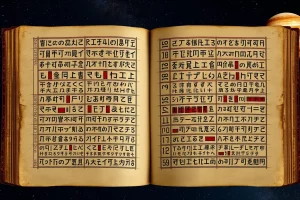
Maya astronomy was fundamentally practical and cosmological, serving to anchor ritual activities and agricultural schedules within the celestial order. The observation of Jupiter and Saturn required long-term data collection, as their movements across the ecliptic are slower than those of inner planets. The Maya utilized their fully developed writing system and positional numeral system to record these movements. Unlike the Venus tables which are prominently featured in the Dresden Codex, records of Jupiter and Saturn are more fragmented but nonetheless significant. They appear in conjunction with specific Long Count dates on stelae and within codical almanacs.
The Maya understanding of these planets was intertwined with their concept of time. The 819-day count, an enigmatic calendar cycle, has been linked by researchers to the synodic periods of planets visible to the naked eye, including Jupiter and Saturn. This count operates in a four-part, color-directional scheme, suggesting that planetary stations were not just temporal markers but also spatial and cosmological ones. Each station in the 819-day cycle progresses in increments that align with planetary returns, indicating that the Maya priest-astronomers recognized patterns in the erratic movements of these outer planets. The integration of these cycles into the broader calendar system allowed the Maya to predict significant celestial events, which were often interpreted as omens or directives for royal action.
Furthermore, the accuracy of these observations was exceptional. The Classic Maya developed some of the most accurate pre-telescope astronomy in the world. Their calculation of the length of the tropical solar year was more accurate than that of the Spanish when the latter first arrived in Mesoamerica. This precision extended to their planetary models, where conjunctions and oppositions were recorded with a degree of exactness that modern astronomical retrocalculations continue to verify. The observation of Jupiter and Saturn was thus not an isolated activity but part of a holistic system where mathematics, writing, and cosmology converged to map the heavens.
Evidence & Sources
Archaeological and textual evidence for Maya Jupiter and Saturn astronomy comes from several key sources, primarily the Dresden Codex and various stone monuments. The Dresden Codex, one of the four preserved Mayan books, contains records of planetary conjunctions. Recent studies published in the Serbian Astronomical Journal (2024) by Vondrák and Böhm highlight specific entries within the codex that correlate to conjunctions involving outer planets. These records demonstrate that the Maya designed complicated calendars to track these phenomena alongside historical events.
Epigraphic evidence on stelae provides concrete Long Count dates associated with planetary positions. For instance, data translated from archaeological surveys indicates specific conjunctions of Jupiter and Saturn recorded in the Maya chronology. One notable record cites a conjunction of Jupiter and Saturn on the date 8.16.4.8.0 4 Ahau 3 Zip, which correlates to September 8, AD 153. Another significant observation notes a Jupiter-Saturn conjunction on 9.17.9.0.13 3 Ben 6 Kayab, corresponding to March 5, AD 572. These dates, often associated with specific correlation constants such as 508392, provide empirical grounding for the claim that the Maya tracked these planets over centuries.
Modern digital heritage initiatives and academic publications continue to analyze these records. A 2023 article in Ancient Mesoamerica by John H. Linden discusses the 819-day count and its relationship with planetary astronomy. This research underscores that while the 819-day count is not completely explained, there is clear evidence of its relationship with the synodic periods of visible planets. Additionally, general overviews of Maya astronomy note that their estimate of the synodic month was more accurate than Ptolemy’s, reinforcing the reliability of their planetary data. The convergence of codical data, stone inscriptions, and modern astronomical retrocalculation forms a robust evidentiary base for understanding Maya outer planet astronomy.
Deep Dive Analysis
Celestial Object: Jupiter and Saturn were recognized as wandering stars, distinct from the fixed stars and the faster-moving inner planets. In Maya cosmology, these bodies were likely associated with specific deities or aspects of the night sun, though their glyphic identification remains less standardized than that of Venus.
Observational Cycle: The synodic period of Jupiter is approximately 399 days, while Saturn’s is approximately 378 days. The Maya tracked these cycles to identify conjunctions (when planets appear close together) and oppositions (when planets are opposite the Sun). Records indicate observations of Jupiter-Sun conjunctions, Jupiter-Saturn conjunctions, and oppositions of Jupiter to the Sun.
How Maya Observed It: Observations were conducted with the naked eye, aided by architectural features. Many temples from Maya architecture have features oriented to celestial events. Priest-astronomers likely used horizon markers to note the rising and setting points of these planets, integrating these observations into their ritual calendar.
Archaeological/Textual Evidence: The primary textual evidence comes from the Dresden Codex, which records planetary conjunctions. Epigraphic evidence includes stelae at sites like Yaxchilan, where dates such as AD 502 and AD 750 are linked to Jupiter and Saturn observations. Specific Long Count dates like 9.12.0.0.0 are associated with conjunctions of Jupiter and Mars, showing a network of planetary tracking.
Calendar Connection: The 819-day count is the most significant calendar connection. This cycle progresses in increments that align with planetary stations. The four-part color-directional scheme of the 819-day count suggests that each planet was associated with a direction and color during specific phases of its cycle, integrating planetary motion into the sacred geography of the Maya world.
Architecture Connection: Architectural orientations often align with celestial events. While Venus alignments are most famous, structures oriented to Jupiter or Saturn risings likely existed. The purpose of these orientations was to discover the pattern that supports the agricultural schedule and ritual timing, ensuring that temple ceremonies coincided with significant planetary configurations.
Cultural Meaning: Planetary events were not merely scientific data points; they were imbued with cultural meaning. Conjunctions of major planets like Jupiter and Saturn were likely seen as powerful omens influencing warfare, agriculture, and royal succession. The recording of these events on stelae served to legitimize rulers by connecting their reigns to cosmic order.
Uncertainty/Debate: Despite the evidence, areas for further research remain. The 819-day count is still considered enigmatic and not completely explained by modern scholars. Additionally, the specific glyphs for Jupiter and Saturn are not as universally agreed upon as those for Venus or the Moon. Ongoing research continues to refine the correlation between Maya dates and modern astronomical retrocalculations.
FAQ
Did the Maya track planets other than Venus?
Yes, archaeological evidence shows the Maya tracked Jupiter and Saturn, recording their conjunctions and movements in codices and on stelae.
What is the 819-day count?
The 819-day count is an enigmatic Maya calendar cycle linked to the synodic periods of visible planets and a four-part color-directional scheme.
How accurate was Maya astronomy?
Classic Maya astronomy was highly accurate, with calculations for the solar year and synodic months surpassing contemporary European standards like Ptolemy's.




Leave a Reply