
Short Answer
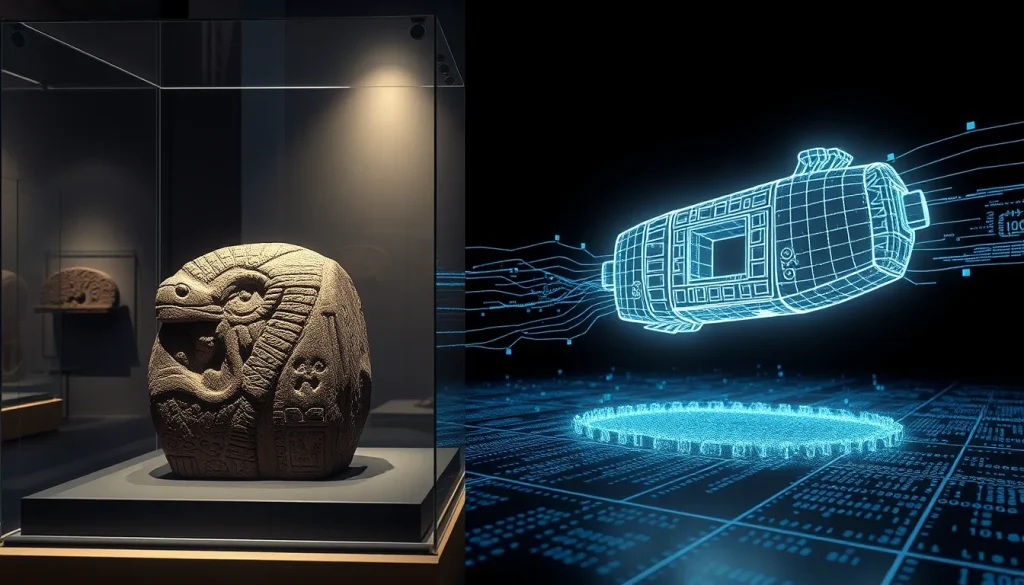
The question of who owns digital replicas of Indigenous cultural heritage has emerged as a critical innovation and ethical challenge in digital humanities and heritage studies over the past decades. As museums and cultural institutions accelerate efforts to digitize collections, the practice of virtual repatriation—returning digital surrogates of objects to communities of origin—has gained prominence. However, this practice raises significant ethical, legal, and social concerns regarding control, access, and the intrinsic value of material culture. While digital replicas may offer a symbolic return of contested cultural property, they often enable collecting institutions to maintain control over original artifacts, thereby reinforcing existing inequalities.
In the context of Mesoamerican archaeology, where artifacts such as Maya stelae, masks, and codices are held in collections worldwide, the digitization of these objects creates “digital shadows” that persist even after physical restitution. The core conflict lies in determining who should hold ownership of digitized cultural property, who determines their access, use, and interpretation, and whether virtual surrogates can replace the material and, at times, sacred significance of the physical objects from which they derive.
Main Explanation
The debate surrounding the ownership of digital replicas centers on the distinction between physical restitution and digital repatriation. Physical restitution involves the return of the actual artifact to its country or community of origin. In contrast, digital repatriation involves returning digital images, research data, and 2D and 3D digital models along with, or instead of, the physical objects. Most museums now digitize their collections to enable greater public accessibility, but repatriation policies often do not consider the digital information associated with them.
When items are returned to source communities or institutions, questions arise regarding whether the holding museum should retain the digital data. Some institutions argue that retaining digital copies ensures global access and preserves a record in case the physical object is damaged. However, critics argue that this practice treats digital data as a separate property right that museums can retain indefinitely, even after acknowledging they should not hold the physical object. This dynamic suggests that digital repatriation does not constitute repatriation at all; it is, at best, yet another form of documentation and at worst, a cynical strategy to avoid legal and moral responsibility.
Furthermore, the concept of ownership extends beyond legal copyright to include cultural authority. Indigenous communities often assert that knowledge and images of sacred objects are governed by traditional laws rather than Western intellectual property frameworks. For example, high-resolution scans of sacred masks or 3D models of looted bronzes presented as meaningful compensation for the continued retention of originals can be deceptive. The promise of shared stewardship often masks the reality that the institution retaining the data retains the power to interpret and monetize the heritage.
Evidence & Sources
Recent scholarship and reporting highlight the accelerating rate of artifact repatriation and the concomitant rise of digital complexities. According to reporting from 2023, museums are stepping up efforts to return physical objects to their original owners, but repatriation policies often fail to address the digital information associated with them. These objects may have been housed in foreign collections for centuries and have likely been added to museums’ digital inventories and detailed on websites for the world to see.
Research published in 2025 by Giulia Picci, a Senior Fellow to the Berkeley Art, Law, and Finance Project, emphasizes that while digital replicas expand access, they raise significant ethical concerns. Picci notes that virtual repatriation often enables collecting institutions to maintain control over original artifacts, thereby reinforcing existing inequalities. This analysis questions whether virtual surrogates can truly replace the material and sacred significance of physical objects.
Additionally, a December 2025 analysis by the Center for Art Law argues against the illusion of digital repatriation in restitution debates. The analysis suggests that presenting digital surrogates as modern forms of restitution is deceptive. It posits that a 3D model of looted bronzes or an online archive of Indigenous songs cannot compensate for the continued retention of originals. This perspective is supported by archaeological practice guidelines published in August 2025, which note that while digital technologies are increasingly integrated into repatriation-related work, early repatriation laws like the Native American Graves Protection and Repatriation Act (NAGPRA) were established in the predigital age. The use of computers and databases has had a significant impact, but legal frameworks have struggled to keep pace with the capabilities of 3D digitization and replication.
Deep Dive Analysis
Module F: Digital Archaeology and Cultural Heritage Considerations
Technology Description
The creation of digital replicas relies on advanced technologies including photogrammetry, structured light scanning, and LiDAR (Light Detection and Ranging). In the context of Indigenous cultural heritage, these tools capture the geometry and surface texture of artifacts with high precision. Photogrammetry involves taking hundreds of overlapping photographs to construct a 3D model, while structured light scanning projects patterns onto an object to measure deformation. These technologies allow for the creation of “digital twins” that can be viewed, measured, and analyzed remotely.
How It Works
The workflow begins with permission and consultation. Ethical digital archaeology requires engaging with source communities before scanning begins. Once approved, technicians capture the data using calibrated cameras or scanners. The data is then processed using specialized software to align images, generate meshes, and apply textures. The final output is a digital file, often in formats like .OBJ, .STL, or .PLY, which can be stored in repositories or displayed on web platforms.
Field Workflow
In field scenarios, such as documenting Maya architecture or artifacts in situ, the workflow must account for environmental conditions and cultural protocols. For repatriation-related work, the workflow includes metadata tagging that records provenance, cultural sensitivity levels, and access restrictions. As noted in 2025 studies, the use of email and file-sharing has had a significant impact on how this data is managed between institutions and communities.
Output/Data
The output consists of geometric meshes, texture maps, and associated metadata. This data constitutes the “digital shadow” of the artifact. Questions persist regarding what happens to this data after an artifact is restituted. If the physical object returns to its country of origin, the digital file often remains in the holding museum’s server, creating a bifurcation of ownership.
Example
A pertinent example involves the digitization of Maya artifacts held in Western museums. A 3D model of a looted Maya vase might be shared online to educate the public. However, if the vase is repatriated to Guatemala, the museum may retain the scan. This scenario illustrates the tension between global access and local sovereignty over cultural imagery.
Strengths
The strengths of digital replication include preservation against loss or damage, expanded access for researchers and communities who cannot travel, and the ability to manipulate objects virtually without risk of physical harm. It facilitates collaboration across borders and allows for the visualization of fragmented pieces reunited digitally.
Limitations
Limitations include the lack of materiality; a digital model cannot convey weight, temperature, smell, or the “aura” of the original object. For Indigenous communities, the spiritual significance of an object is often tied to its physical presence and specific handling protocols which cannot be replicated digitally. As noted in 2025 literature, digital repatriation is often presented as progressive, yet it may be deceptive regarding true restitution.
Accuracy
While geometric accuracy can be sub-millimeter, cultural accuracy depends on the context provided. A 3D model without cultural metadata may lead to misinterpretation. Accuracy also depends on the lighting and color calibration during scanning, which can alter the appearance of pigments or materials.
Cultural Heritage Considerations
The most critical consideration is ownership and control. Who owns the scan? Does the community have the right to delete it? Current frameworks often favor the institution that performed the scan. Ethical practice demands that ownership of digital replicas aligns with the ownership of the physical cultural heritage. Communities must determine access, use, and interpretation of their digitized property. Without this alignment, virtual repatriation risks reinforcing existing inequalities rather than remedying historical injustices.
FAQ
Does digital repatriation count as legal restitution?
No, digital repatriation is generally considered a form of documentation or access sharing, not legal restitution of ownership. Critics argue it is often used to avoid returning physical objects.
Who owns the 3D scan of a repatriated artifact?
Ownership is contested. Typically, the institution that created the scan claims copyright, but ethical frameworks suggest source communities should control access and use.
Can digital models replace sacred objects?
Scholars and Indigenous communities argue that digital surrogates cannot replace the material and sacred significance of physical objects, which often require specific physical handling.

Leave a Reply