
Short Answer
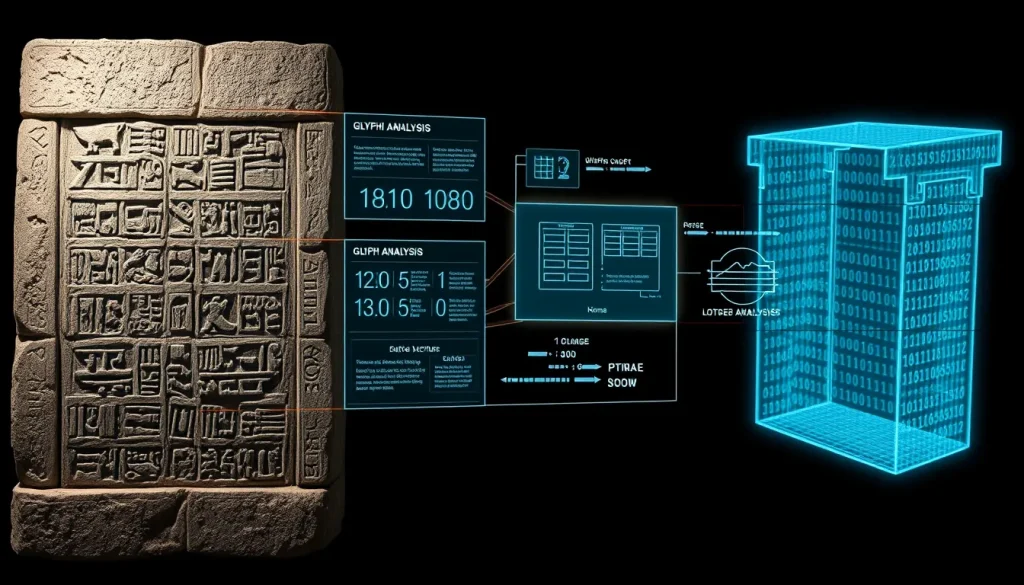
Digital epigraphy represents a transformative frontier in Mesoamerican archaeology, merging traditional philological methods with advanced computational technologies to decipher Maya hieroglyphic texts. The Classic Maya script, flourishing between 300 BCE and 1500 CE, is the only fully deciphered writing system from pre-Hispanic America, yet it remains notoriously complex due to its logosyllabic nature and two-dimensional arrangement. Modern software tools now assist epigraphers in managing vast corpora of inscriptions, identifying linguistic patterns, and decoding intricate calendar records that define Maya cosmology and history. This interdisciplinary approach accelerates the interpretation of ancient knowledge while preserving fragile cultural heritage for future generations.
Main Explanation
The application of software in Maya epigraphy addresses the unique challenges posed by the hieroglyphic script. Unlike linear alphabets, Maya glyphs are organized into blocks that can be read in various sequences, often featuring phenomena such as infixation, where one character is inserted into another, and conflation, where two characters merge into a single visual unit. Traditional manual analysis is time-consuming and prone to subjective variation. Digital epigraphy introduces standardized conventions for generating high-quality representations of glyphs from codices and stone monuments. By creating digital repository systems for glyph annotation and management, researchers can collaborate across institutions, sharing data that was previously siloed in physical archives or private notebooks.
Computational tools facilitate automatic glyph retrieval and classification, utilizing statistical Maya language models combined with shape representation algorithms. These systems allow scholars to search for specific grammatical structures or calendar dates across thousands of inscriptions simultaneously. For instance, projects like GlyPat goes Maya focus on computer-assisted pattern analysis to identify structural patterns across the corpus. This technological integration does not replace the epigrapher but rather augments their capabilities, allowing them to test hypotheses against large datasets that would be impossible to analyze manually. The synergy between computer scientists and archaeologists ensures that the tools developed are robust enough to handle the nuances of ancient languages while remaining accessible to domain experts.
Furthermore, digital encoding standards, such as those proposed by the Text Encoding Initiative (TEI), provide a framework for marking up Maya hieroglyphic writing in machine-readable formats. This encoding captures not just the transliteration but also the spatial relationships and uncertainties inherent in damaged texts. By digitizing the Code of Maya Kings and Queens, scholars create a persistent record of decipherment progress. This is crucial for calendar texts, where a single misidentified glyph can alter the calculated date by decades or centuries. Software helps visualize these temporal data, linking inscriptions to the Long Count, Tzolk’in, and Haab’ systems with greater precision than ever before.
Evidence & Sources
The efficacy of digital epigraphy is supported by several major interdisciplinary projects funded by academic institutions across Europe and the Americas. The GlyPat goes Maya project, led by Principal Investigators Prof. Dr. Nikolai Grube and Dr. Christian Prager at the University of Bonn, exemplifies this approach. Their work focuses on the computer-assisted pattern analysis of Classic Maya inscriptions, leveraging the Text Database and Dictionary of Classic Maya available at classicmayan.org. This database serves as a central hub for verified transliterations and translations, grounding digital tools in established philological research.
Additional evidence comes from the Multimedia Analysis and Access for Documentation and Decipherment of Maya Epigraphy (MAAYA) project. This bi-disciplinary effort tightly integrates the work of Maya epigraphists and computer scientists to design computational tools that support expert analysis. Published research in IEEE Signal Processing Magazine highlights the development of integrated frameworks for multimedia access, including digital repositories for glyph annotation. These systems utilize automatic glyph retrieval methods that study the combination of statistical language models and shape representation. The impact of applying language models extracted from different hieroglyphic resources has been shown to improve classification accuracy across various data types, from stone stelae to painted codices.
Scholarly validation is further provided by publications in the Journal of the Text Encoding Initiative, which detail the encoding and markup of Maya hieroglyphic writing. Authors such as Martin de la Iglesia and Sven Gronemeyer have documented how Natural Language Processing techniques can be adapted for semi-deciphered scripts. These sources confirm that while the script is largely deciphered, significant proportions of the corpus remain open for interpretation. Digital tools accelerate this process by organizing visual and multimedia collections, allowing researchers to visualize connections between disparate artifacts. The collaboration between institutions like the Herzog August Library and Freie Universität Berlin underscores the global consensus on the necessity of digital methods in modern epigraphy.
Deep Dive Analysis
Technology Description
Digital epigraphy in Maya studies utilizes a suite of technologies including optical character recognition (OCR) adapted for logograms, 3D scanning, and natural language processing (NLP). Unlike standard OCR, which reads linear text, Maya software must recognize two-dimensional glyph blocks. These tools often employ machine learning algorithms trained on annotated datasets of known glyphs to propose readings for unknown signs.
How It Works
The workflow begins with high-resolution imaging of artifacts, followed by vectorization of glyph shapes. Software then segments these shapes into components, analyzing strokes and contours. Statistical models compare these segments against a database of known signs. When a match is found with high confidence, the software suggests a transliteration. Epigraphers then review these suggestions, correcting errors based on contextual knowledge of grammar and calendar mechanics.
Field Workflow
In the field, researchers use portable 3D scanners to capture inscriptions on monuments that cannot be moved. This data is uploaded to cloud-based repositories where it can be accessed by specialists worldwide. The MAAYA project emphasizes this joint design process, ensuring that field data collection meets the requirements of subsequent computational analysis. This reduces the need for physical travel to fragile sites, aiding in conservation efforts.
Output and Data
The primary output is a structured digital corpus containing images, transcriptions, translations, and metadata. This data is often encoded using XML standards compatible with the Text Encoding Initiative. The output allows for complex queries, such as finding all instances of a specific calendar date associated with a particular royal lineage. This structured data forms the backbone of online dictionaries and text databases like those maintained by the University of Bonn.
Example
A concrete example is the analysis of infixation phenomena. Software can isolate the main sign and the infix separately, analyzing their frequency co-occurrence. In the GlyPat goes Maya project, this method helped clarify reading orders in complex glyph blocks where traditional visual inspection was ambiguous. This clarified historical records regarding king lists and accession dates.
Strengths
The primary strength is scalability. Software can process thousands of glyphs in minutes, a task that would take humans years. It also offers objectivity in shape classification, reducing bias from individual epigraphic hands. Furthermore, digital archives ensure preservation; if a monument erodes, the digital record remains. This is vital for cultural heritage management in regions threatened by climate change or looting.
Limitations
Despite advancements, software cannot fully replicate human intuition regarding context. Maya writing often employs poetic devices, metaphors, and obscure references that algorithms may miss. The incomplete state of decipherment means training data is limited for certain signs. Additionally, high-quality digitization requires expensive equipment and technical expertise, which may not be available in all source countries.
Accuracy
Accuracy varies by data type. Shape representation choices significantly impact glyph classification success rates. While statistical models improve retrieval, they rely on the quality of the initial annotation. Human validation remains the gold standard. The combination of expert knowledge and computational power yields the highest accuracy, as noted in IEEE studies on multimedia analysis.
Cultural Heritage Considerations
Digital epigraphy raises important questions about data ownership and access. Projects strive to make data open access while respecting the cultural sovereignty of descendant Maya communities. Tools are designed to support, not replace, local scholars. By democratizing access to high-quality images and transcriptions, digital epigraphy empowers a broader range of researchers to engage with Maya history, ensuring the legacy of Maya kings and queens is understood globally.
FAQ
Can software fully decipher Maya texts without human experts?
No, software assists experts but cannot replace them. Human intuition is required for context, metaphors, and validating algorithmic suggestions.
What is the GlyPat goes Maya project?
It is a research project at the University of Bonn focusing on computer-assisted pattern analysis in Classic Maya inscriptions to identify linguistic and structural patterns.
Why is Maya script difficult for computers to read?
The script is two-dimensional with complex arrangements like infixation and conflation, unlike linear alphabets standard OCR systems are designed for.
Leave a Reply