
Short Answer
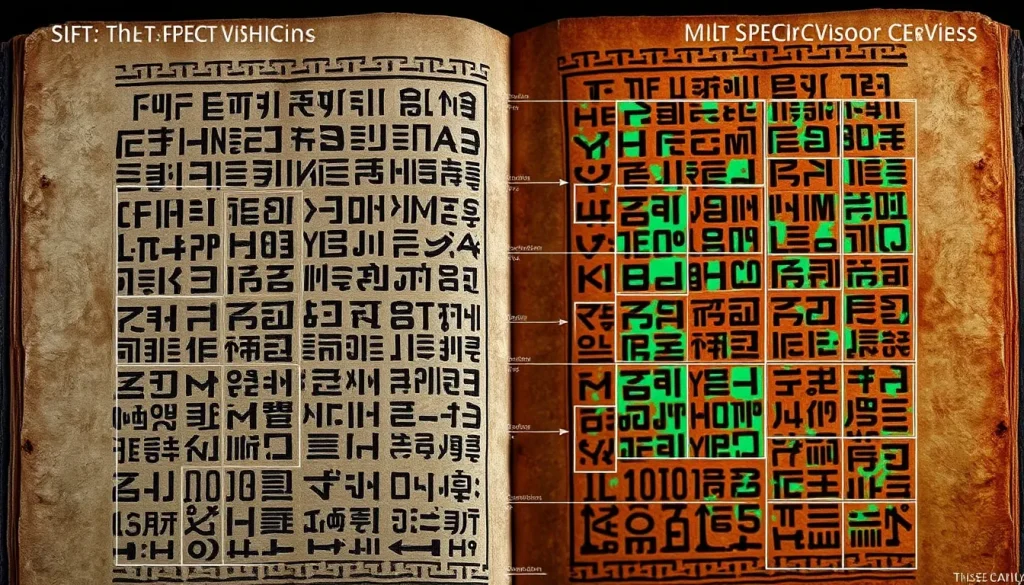
The preservation and study of ancient Maya codices represent one of the most critical challenges in Mesoamerican archaeology. With only a handful of pre-Columbian manuscripts surviving the ravages of time and climate, these documents are invaluable repositories of Maya astronomy, calendars, mathematics, and cosmology. However, their fragility limits physical handling, and centuries of degradation often obscure the very information researchers seek to understand. In recent years, the intersection of archaeology and digital heritage has provided groundbreaking solutions through digital imaging and multispectral analysis. These technologies allow scholars to visualize hidden text, segment complex glyphs, and analyze organic paints without making physical contact with the artifacts.
This technological shift moves beyond traditional photography, utilizing specific wavelengths of light to penetrate surface layers such as gypsum and chalk gesso. By integrating computer vision and machine learning, projects like MAAYA (Multimedia Analysis and Access for Documentation and Decipherment of Maya Epigraphy) have developed methods for the segmentation, classification, and retrieval of Maya glyphs. This article examines the methodologies, evidence, and implications of applying digital archaeology to the preservation of Maya written heritage.
Main Explanation
Multispectral and hyperspectral imaging are non-invasive techniques that capture image data within specific wavelengths of the electromagnetic spectrum. Unlike standard photography, which records visible light, these methods capture information from ultraviolet to infrared ranges. This capability is crucial for Maya codices because the organic nature of the paints used by ancient scribes often reacts differently to various wavelengths than the surrounding substrate or later overpainting.
The primary challenge in codex analysis is the degradation of materials. Many codices were covered in layers of gypsum or chalk gesso, either during their original creation or as later conservation attempts that unfortunately obscured the text. Traditional imaging fails to distinguish between the hidden ink and the covering layer. Hyperspectral imaging, however, can reveal an abundance of never-before-seen pictographic scenes hidden underneath these layers. Because the paints are organic, they absorb and reflect light differently than the mineral-based gesso, allowing digital sensors to isolate the text.
Furthermore, digital heritage initiatives are not limited to imaging alone. They encompass the entire workflow of documentation and decipherment. Advanced image and video retrieval techniques are employed to create data repositories where glyph strokes can be segmented and classified. This process transforms visual data into searchable information, enabling researchers to index glyph collections and identify patterns across different manuscripts. The integration of epigraphy and computer science ensures that the decipherment of hieroglyphic writings is supported by robust quantitative analysis rather than solely subjective interpretation.
Evidence & Sources
The application of these technologies is supported by significant archaeological and technical research. A pivotal study published in the Journal of Archaeological Science Reports demonstrated the efficacy of hyperspectral imaging on a Mixtec codex. While this specific artifact was not Maya, the technical results are directly transferable to Maya materials. The study revealed unique genealogic information covered by gypsum and chalk gesso, proving that organic paints could be detected non-invasively where other techniques failed. This success indicates that similar covered texts in Maya codices may contain invaluable information for the interpretation of archaeological remains from southern Mexico.
Specific to the Maya civilization, the MAAYA Project has been instrumental in developing multimedia methods to support epigraphic analysis. Established through collaboration between institutions such as the Ecole Polytechnique Fédérale de Lausanne (EPFL), the University of Geneva, and the University of Bonn, this project focuses on the documentation and decipherment of Maya epigraphy. Research outputs from 2014 and 2017 detail the development of visual analysis methods for segmentation and classification of Maya glyphs in ancient codices. The project created a data repository and utilized computer vision to segment glyph strokes, allowing for the classification of single glyphs and the visualization of glyph collections.
Additionally, multispectral imaging has been applied directly to Early Classic Maya codex fragments, such as those from Uaxactun, Guatemala. Published in Antiquity, this research confirms the viability of multispectral imaging for Maya materials specifically. These combined efforts provide a robust evidentiary base, showing that digital methods can recover data from fragments that were previously considered illegible. The developed methods are generic and could be applicable to other sources of visual data in the digital humanities, ensuring the longevity and accessibility of this cultural heritage.
Deep Dive Analysis
Module F: Digital Archaeology
Technology Description
The core technology involves multispectral and hyperspectral cameras coupled with machine learning algorithms. These systems capture data cubes where each pixel contains a spectrum of light reflection, rather than just three color channels (RGB). This spectral signature allows for the differentiation of materials based on chemical composition rather than visual appearance.
How It Works
The process begins with capturing high-resolution images across multiple spectral bands. Software then processes these bands to enhance contrast between the ink and the background. In the MAAYA Project workflow, this image data is fed into computer vision algorithms designed to identify edges and strokes. Machine learning models are trained on known glyphs to classify new segments automatically. This reduces the human error associated with manual transcription and allows for the indexing of vast collections.
Field Workflow
Field workflow requires careful coordination between conservators and imaging specialists. Artifacts are placed in controlled lighting environments to prevent damage from heat or UV exposure. Imaging is conducted in situ or in laboratory settings depending on the fragility of the codex. Data is immediately backed up to secure repositories. For the MAAYA Project, this involved preparing source materials and creating a structured data repository to house the digital surrogates.
Output/Data
The output consists of enhanced digital images revealing hidden text and a structured database of classified glyphs. Researchers can retrieve specific glyph variants or visualize collections based on semantic meaning. The data supports the segmentation of glyph strokes, enabling detailed analysis of scribal hands and stylistic evolution over time.
Example
A prime example is the application of hyperspectral imaging to reveal hidden pictographic scenes under layers of gesso. In the context of the MAAYA Project, the system successfully segmented and classified Maya glyphs from codex images, facilitating decipherment. Similarly, multispectral imaging of the Uaxactun fragment allowed researchers to analyze an Early Classic Maya codex fragment that was otherwise difficult to read.
Strengths
The primary strength is the non-invasive nature of the analysis. Organic paints can be revealed without chemical testing or physical sampling. Additionally, the digital repository ensures that the information is preserved even if the physical artifact degrades further. The methods are generic enough to be applied to other visual data in the digital humanities.
Limitations
Limitations include the high cost of equipment and the need for specialized expertise in both archaeology and computer science. Organic paints that have completely degraded may not retain a spectral signature distinct enough from the background. Furthermore, the complexity of Maya glyphs, which often combine logographic and syllabic elements, challenges automated classification accuracy.
Accuracy
Accuracy depends on the quality of the training data and the resolution of the imaging. While segmentation of glyph strokes has been successfully developed, classification of single glyphs still benefits from expert epigrapher verification. The results indicate that covered text contains unique information, but full decipherment requires human oversight.
Cultural Heritage Considerations
Digital archaeology must balance access with preservation. Creating high-resolution digital surrogates allows global access without handling the original codices. However, data ownership and collaboration with descendant communities remain critical ethical considerations. The MAAYA Project exemplifies international collaboration, integrating epigraphy and computer science to support the documentation of ancient writings.
FAQ
Why is multispectral imaging better than standard photography for codices?
Standard photography only captures visible light. Multispectral imaging captures data from ultraviolet to infrared wavelengths, allowing it to distinguish between organic paints and mineral gesso layers that look identical to the human eye.
What is the MAAYA Project?
The MAAYA Project is a research initiative integrating epigraphy and computer science to develop visual analysis methods for segmentation, classification, and retrieval of Maya glyphs in ancient codices.
Can this technology damage the codices?
No, these techniques are non-invasive. They use light to analyze the surface without physical contact or chemical sampling, ensuring the preservation of the fragile artifact.
What kind of information has been revealed using these methods?
Studies have revealed hidden pictographic scenes and unique genealogic information underneath layers of gypsum and chalk gesso that were previously invisible.

Leave a Reply