
Short Answer
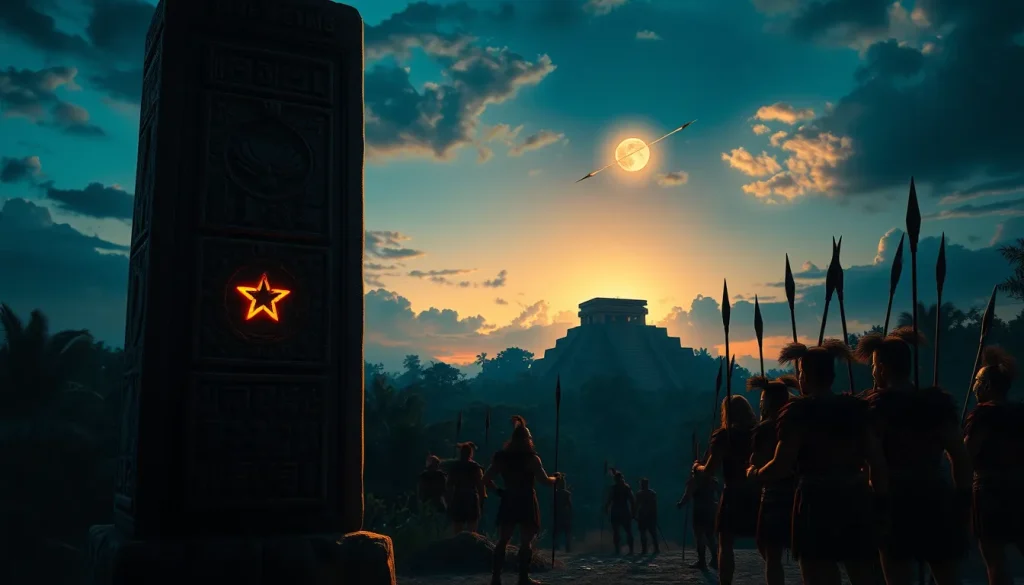
The concept of the “Star War” period stands as one of the most compelling intersections of astronomy, politics, and warfare in Classic Maya civilization. For decades, epigraphers and archaeologists have analyzed inscriptions that correlate specific celestial events, particularly the movements of the planet Venus, with large-scale military conflicts between Maya city-states. This phenomenon is not merely superstition but reflects a sophisticated cosmological framework where celestial agency was believed to influence terrestrial outcomes. The term “Star War” derives from a specific hieroglyphic phrase, often depicted as a star raining down upon the earth or a shell-over-star symbol, which marks moments of heightened conflict believed to be auspicious under specific astronomical conditions.
Understanding this period requires navigating the complex relationship between empirical observation and ritual action. The Maya were meticulous observers of the sky, tracking the irregular movements of Venus with precision. When Venus reached certain stations, particularly its first appearance as the Morning Star, it was often associated with dryness, warfare, and sacrifice. The “Star War” events were not random skirmishes but calculated campaigns launched during these astrologically potent windows. This article examines the historical reassessment of these events, the archaeological evidence from key polities like Tikal and Naranjo, and the astronomical mechanics that underpinned this martial tradition.
Main Explanation
The “Star War” phenomenon is defined by the alignment of military aggression with the heliacal rising of Venus. In Maya cosmology, Venus was not a passive object but an active agent capable of influencing human affairs. The planet’s dual nature as both the Morning Star and Evening Star carried different attributes; the Morning Star was frequently linked to warfare and drought, while the Evening Star was often associated with rain and maize. This duality is central to understanding why specific dates were chosen for conflict. The glyph itself, sometimes referred to as the “shell-over-star” hieroglyph, serves as a marker in the historical record, signaling that a particular battle was undertaken with celestial sanction.
Historically, the identification of the Star War glyph revolutionized the understanding of Maya political history. Prior to its decipherment, conflicts between cities were often viewed as isolated incidents. The recognition of the glyph revealed a pattern of “total war” or hegemonic struggles that occurred at regular intervals synchronized with the Venus cycle. The cycle of Venus is approximately 584 days, but the Maya understood the synodic period with great accuracy, allowing them to predict auspicious dates years in advance. This planning capability suggests that warfare was not merely reactive but part of a state-level strategy integrated with religious calendar systems. The campaigns were often aimed at capturing rival kings, dismantling dynasties, or asserting hegemony over trade routes, all timed to maximize cosmic support.

Recent historical reassessments have begun to nuance this view. While the correlation between Venus and warfare is strong, scholars now emphasize human agency alongside astrological determinism. Leaders may have used the Venus cycle to justify pre-existing political ambitions, leveraging the cosmic timing to legitimize aggression. Thus, the Star War period represents a fusion of political strategy and cosmological belief, where the sky provided the calendar, but human actors drove the sword.
Evidence & Sources
The primary evidence for the Star War period comes from epigraphic records carved on stelae and monuments across the Maya lowlands. One of the most definitive cases involves the conflict between Tikal and Naranjo. In 744 AD, a pivotal “star war” action was directed against a central Naranjo location, resulting in the capture of the Naranjo king. This event is recorded on monuments at Tikal, providing contemporary documentation of the engagement. The inscriptional record at Naranjo corroborates these events, allowing historians to chart the fluctuating fortunes of these individual Maya states. These documents serve as unequivocal data for reconstructing the political history of the Classic Period, defining independent political units and the geographic limits of their authority.
Academic analysis of these glyphs has evolved significantly. A historical reassessment published in Ancient Mesoamerica highlights the need to balance astrological interpretation with human agency. The study suggests that while the “star war” glyph indicates a specific type of warfare linked to astrology, it does not imply that the Maya were helpless puppets of the stars. Instead, the glyph marks a specific ritualized form of conflict that leaders chose to engage in to align their actions with cosmic order. Further examination of the Venus “shell-over-star” hieroglyph confirms its specific association with warfare rather than general celestial events. This symbol is distinct from other astronomical markers and appears consistently in contexts involving military conquest and the capture of nobles.
Broader contextual data from Mesoamerican studies supports the significance of Venus. During the last three millennia before the Spanish Conquest, peoples in central and southern Mexico and Central America evolved sophisticated astronomical concepts. For the Aztecs, the Maya, and many other societies, Venus was one of the most important celestial bodies. They acquired accurate knowledge about the regularities of the planet’s apparent motion, aware that the brightest “star” in the pre-dawn sky was identical to the one visible after sunset. This knowledge inspired beliefs where morning and evening manifestations had different attributes, relevant information for which is provided by archaeological data and codicial records. The convergence of textual evidence from Tikal, Naranjo, and broader Mesoamerican astronomical traditions creates a robust framework for understanding the Star War period.
Deep Dive Analysis
Celestial Object: Venus
Venus is the primary celestial driver of the Star War phenomenon. As the brightest object in the night sky after the Moon, its movements were tracked with obsessive precision. The Maya recognized its dual identity as the Morning Star (“Chak Ek'”) and the Evening Star. The Morning Star phase was particularly ominous, associated with the dry season and military prowess. The planet’s brightness and variability made it a potent symbol of power and danger.
Observational Cycle
The synodic cycle of Venus averages 583.92 days, often rounded to 584 days in Maya calculations. This cycle includes periods of visibility as the Evening Star, inferior conjunction (when it passes between Earth and the Sun and is invisible), visibility as the Morning Star, and superior conjunction. The most critical phase for warfare was the heliacal rising, when Venus first becomes visible in the east before sunrise after its period of invisibility. This moment was seen as a “weapon” being unleashed upon the earth.
How Maya Observed It
Maya astronomers, often members of the royal court or priestly class, observed Venus from specialized structures and through naked-eye observation. They recorded these movements in codices, such as the Dresden Codex, which contains tables dedicated to predicting Venus’s positions. These tables allowed them to anticipate the heliacal rising dates far into the future, facilitating the planning of military campaigns. The observations were not just scientific but ritualistic, requiring ceremonies to “feed” or appease the star.
Archaeological/Textual Evidence
The evidence is embedded in the stone monuments of Classic Maya cities. Stelae at Tikal, for example, record dates using the Long Count calendar that correlate with Venus positions. The “star war” glyph itself is an archaeological artifact, carved into limestone and preserved through centuries. The specific case of the 744 AD attack on Naranjo provides a concrete data point where the textual record matches the astronomical reconstruction. Additionally, the “shell-over-star” hieroglyph appears in various contexts, reinforcing the link between the symbol and martial action.
Calendar Connection
The Venus cycle was integrated into the broader Maya calendar system, including the Tzolk’in (260 days) and Haab’ (365 days). The Maya sought to harmonize these cycles, noting that 5 Venus cycles (5 x 584 = 2920 days) roughly equal 8 solar years (8 x 365 = 2920 days). This 8-year eclipse or Venus cycle was significant for scheduling recurring events. Star Wars were often timed to fit within these harmonic periods, ensuring that the warfare aligned with both the solar year and the Venusian rhythm.
Architecture Connection
While not every temple was an observatory, certain structures align with Venus extremes. The “Caracol” at Chichén Itzá is the most famous example, with window alignments tracking Venus’s northern and southern extremes. While the Star War period is primarily Classic, the architectural legacy of Venus observation persists into the Postclassic. These structures served as the physical interface between the rulers and the sky, legitimizing the decisions made within the palace.
Cultural Meaning
In Maya culture, warfare was not secular but sacred. Capturing prisoners for sacrifice was a key objective, and Venus was closely linked to sacrifice. The planet’s “rays” were perceived as darts or spears. Launching a campaign under the sign of Venus was believed to ensure victory and please the gods. This cultural meaning transformed warfare from a political necessity into a cosmological duty, where kings acted as intermediaries between the celestial and terrestrial realms.
Uncertainty/Debate
Modern scholarship continues to debate the extent of astrological determinism. Some earlier interpretations suggested the Maya fought only when Venus dictated. Current consensus, supported by recent reassessments, argues for a more flexible model where Venus provided an auspicious window, but political expediency drove the conflict. There is also ongoing discussion about the precise identification of the “star war” glyph in all contexts, as some instances may be metaphorical. However, the core link between Venus cycles and major military campaigns remains one of the most robust findings in Maya epigraphy.
FAQ
What is the "Star War" glyph?
It is a specific Maya hieroglyph, often depicting a star over a shell or raining down, that marks military campaigns timed with the appearance of Venus.
Did the Maya only fight during Venus cycles?
No, while major campaigns were often timed with Venus, smaller conflicts occurred regularly. Venus provided auspicious timing for significant hegemonic wars.
How accurate were Maya Venus calculations?
They were highly accurate, tracking the 584-day cycle with enough precision to predict appearances years in advance, as seen in the Dresden Codex.




Leave a Reply