
Short Answer
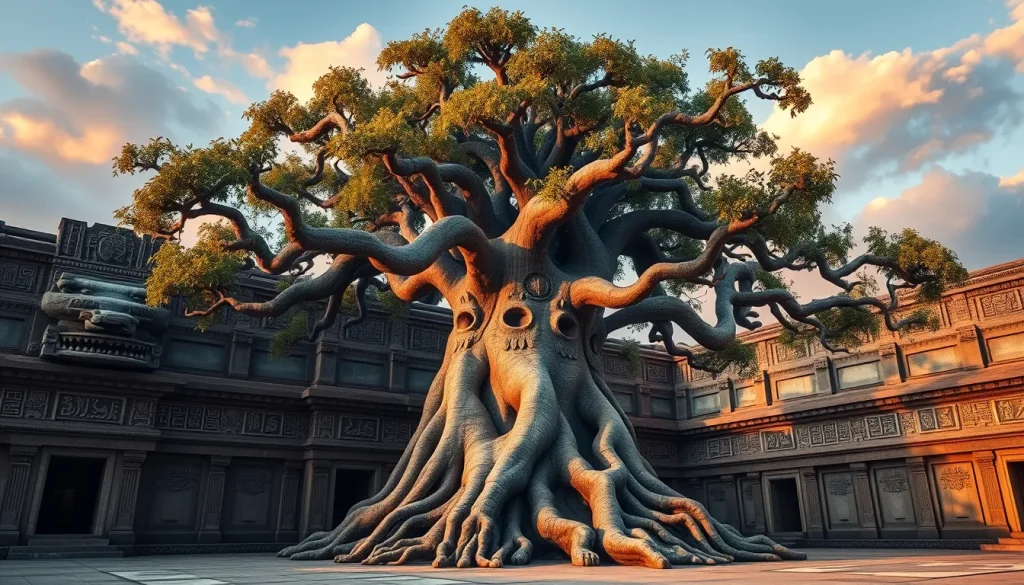
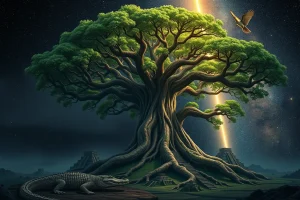
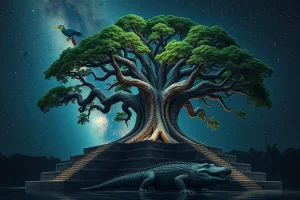
The concept of the Wacah Chan, often translated as the World Tree or Cosmic Tree, stands as one of the most profound and pervasive symbols in ancient Maya cosmology. Representing a vegetative axis mundi, this motif functioned as a metaphysical bridge connecting the three primary realms of existence: the underworld (Xibalba), the terrestrial realm (Earth), and the celestial sphere (Sky). Rooted in the earth and reaching toward the sun, the World Tree was not merely a botanical specimen but a dynamic symbol of cosmogenesis, natural creation, and eternal recurrence. Scholar J. Andrew McDonald notes that this motif represents metaphysical principles including human hopes for everlasting life in the hereafter, paralleling similar concepts found globally such as the Yggdrasil of Norse mythology or the Arbor Vitae of Christian tradition. Understanding the Wacah Chan requires a multidisciplinary approach, blending archaeology, epigraphy, and ethnohistory to decipher how the Maya visualized the structure of the universe.
Main Explanation
In the Mesoamerican context, world trees embodied the four cardinal directions, which also served to represent the fourfold nature of a central world tree. This symbolic axis mundi connects the planes of the Underworld and the sky with that of the terrestrial realm. Among the Maya, the central world tree was frequently conceived as or represented by a ceiba tree, known variously in Mayan languages as wacah chan or yax imix che. The symbolism extends beyond a single species; botanical assessments of morphic and ecological characteristics on ceramic vessels, stucco reliefs, and stone stelae of lowland Maya attribution usually favor determinations as a kapok tree (Ceiba pentandra) or maize plant (Zea mays). This duality highlights the tree’s role as a source of sustenance and life, merging the imagery of the staple crop with the grandeur of the forest giant.
The World Tree was not static; it was a living entity involved in the cycles of time and kingship. Maya rulers often depicted themselves as the human embodiment of the World Tree, legitimizing their authority as the maintainers of cosmic order. The tree’s roots delved into the watery underworld, often depicted with monster mouths or caves, while its branches supported the sky bearers and celestial birds. This vertical connectivity was essential for rituals involving bloodletting and communication with ancestors, as the tree provided the pathway for spirits to traverse the layers of the cosmos. The directional trees were often associated with specific colors and birds, reinforcing the quadripartite structure of the Maya universe. This complex iconography served as a map for the soul’s journey after death and a blueprint for the construction of sacred spaces.
Evidence & Sources
Archaeological and textual evidence for the Wacah Chan spans from the Preclassic period through the Postclassic contact era. One of the most iconic representations is found on the lid of K’inich Janaab’ Pakal’s sarcophagus at Palenque, dating to the king’s death in 683 C.E. This tableau depicts the king at the base of a massive cosmic tree, illustrating the moment of transition between realms. Additionally, the Tree of Life at Izapa Stela 5 provides an earlier Formative period example, showing a multi-layered tree with birds that may represent souls who have not yet descended into the underworld. These stone monuments provide the primary visual data for archaeologists analyzing the evolution of the motif.

Textual evidence becomes more complex during the colonial period. During his visit to Nojpeten in 1696, Fray Andrés de Avendaño reported observing the Itzá Maya worshipping a stone column called yax cheel cab (the first tree of the world). Though claiming to recognize the yax cheel cab from depictions in pre-Hispanic Maya codices, Avendaño notes that the Itzá claimed homage was given because this is the tree of whose fruit our first father Adam ate. This report highlights the hybrid cosmologies that emerged post-contact, where indigenous concepts were syncretized with Christian theology. As no known pre-Hispanic source uses the term yax cheel cab explicitly in the same context, scholars must interpret Avendaño’s report based on iconographic as well as primary textual sources from the Postclassic through the colonial period. Modern digital heritage initiatives now utilize 3D modeling and LiDAR to analyze these stelae and architectural alignments, allowing researchers to visualize the World Tree’s orientation within temple complexes without physical intrusion.
Deep Dive Analysis
Definition
The Wacah Chan is defined academically as a cosmological motif representing the axis mundi within Maya belief systems. It is a symbolic construct that organizes space and time, providing a central point around which the universe revolves. While often associated with the ceiba tree, the definition encompasses any vertical motif that connects the stratified layers of the cosmos.
How it Works
The World Tree functions as a conduit for energy, spirits, and authority. It operates vertically, linking the thirteen layers of the sky above and the nine layers of the underworld below. Rituals performed at the base of physical representations, such as stelae or actual trees planted in plaza centers, were believed to activate this connection. The tree absorbs the essence of the underworld through its roots and channels celestial power down through its branches to the human realm.
Key Components
The motif consists of three primary sections: the roots, the trunk, and the branches. The roots are often depicted as serpentine or emerging from a cave mouth, symbolizing the entrance to Xibalba. The trunk represents the terrestrial plane and is frequently marked with celestial bands or maize imagery. The branches support the sky, often depicted with a Principal Bird Deity or celestial monsters. Directional associations are key components, with each cardinal point having its own specific tree color and species association.
Example
A definitive example is the sarcophagus lid of Pakal the Great at the Temple of the Inscriptions in Palenque. The carving shows Pakal at the base of a cross-shaped tree, which scholars identify as a World Tree variant. The tree’s branches extend into the sky where celestial bands are visible, while the roots descend into the earth monster’s mouth. This imagery asserts Pakal’s role as the axis around which the city-state revolves.
Historical Evidence
Depictions of world trees, both in their directional and central aspects, are found in the art and mythological traditions of cultures such as the Maya, Aztec, Izapan, Mixtec, Olmec, and others, dating to at least the Mid/Late Formative periods of Mesoamerican chronology. The continuity of this motif from Izapa Stela 5 to the colonial accounts of Avendaño demonstrates its resilience and central importance over two millennia. Botanical assessments continue to refine our understanding, analyzing morphic characteristics on ceramic vessels to determine if specific species were intended.
Common Misconceptions
A common misconception is that the World Tree was solely a religious symbol with no political function. In reality, it was deeply tied to kingship and state legitimacy. Another misconception arises from New Age interpretations that detach the symbol from its archaeological context, attributing universal spiritual meanings not supported by epigraphic evidence. Scholars emphasize distinguishing between historical Maya beliefs and modern interpretations. Furthermore, while the ceiba is the most common association, identifying the tree strictly as one botanical species ignores the symbolic fluidity where maize and other plants also served as world trees depending on the context.
FAQ
Is the Wacah Chan a real tree species?
While often associated with the Ceiba pentandra (kapok tree), the Wacah Chan is primarily a cosmological symbol. Archaeological evidence shows it was also represented as maize or a composite mythological plant.
What is the connection between Pakal and the World Tree?
K'inich Janaab' Pakal's sarcophagus lid depicts him at the base of the World Tree, symbolizing his role as the axis mundi who maintains cosmic order and connects the realms of the living and the dead.
Did the World Tree concept survive the Spanish conquest?
Elements of the concept survived through syncretism. Fray Andrés de Avendaño recorded the Itzá Maya worshipping a stone column called yax cheel cab in 1696, though interpreted through a Christian lens.
Leave a Reply