
Short Answer
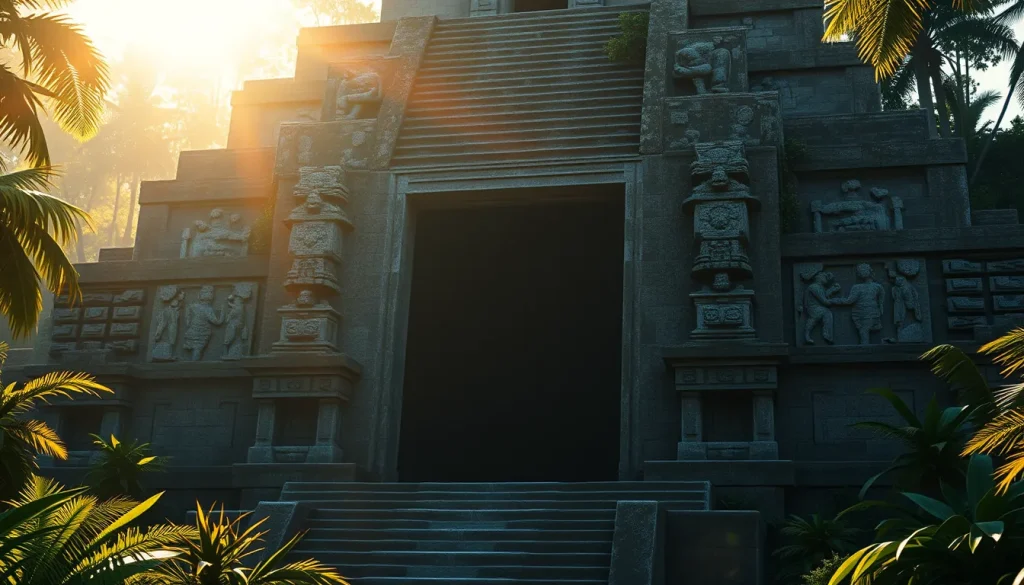
The ancient Maya city of Palenque, nestled in the foothills of the Chiapas highlands, stands as a testament to the sophisticated integration of architecture, cosmology, and astronomy. Among its most significant structures is the Cross Group, a complex of three temples dedicated to the patron deities of Palenque. While the Temple of the Inscriptions is often cited for its alignment with the winter solstice sunset, the Cross Group temples, particularly the Temple of the Sun, exhibit equally profound astronomical orientations. These structures were not merely religious monuments but functioned as precise observational instruments designed to mark critical moments in the solar cycle.
Archaeoastronomical research conducted in the early 21st century has provided empirical evidence supporting the hypothesis that the Cross Group was intentionally aligned to capture specific sunlight patterns. During solstices, equinoxes, and zenith passages, distinctive hierophanies, or manifestations of the sacred through light, occur within the sanctuaries. These phenomena validate the understanding that Maya architecture served as a repository for ancient astronomical knowledge, encoding celestial mechanics into stone and mortar.
Main Explanation
The astronomical alignments at Palenque’s Cross Group are rooted in the Late Classic period, specifically during the reign of K’inich Kan Balam II. Following the death of his father, K’inich Janaab Pakal, Kan Balam II commissioned the Cross Group to legitimize his rule and connect his lineage to the cosmos. The complex consists of the Temple of the Cross, the Temple of the Foliated Cross, and the Temple of the Sun. While all three share stylistic similarities, the Temple of the Sun has yielded the most detailed data regarding solar interactions.
The primary mechanism of these alignments involves the penetration of sunlight into the inner sanctuaries of the temples at specific times of the year. Unlike modern structures that prioritize interior lighting, Maya temples were typically dark, making the intrusion of sunlight a rare and ritually charged event. In the Temple of the Sun, observations recorded over a four-year period revealed distinctive patterns of sunlight during solstices, equinoxes, zenith, and nadir passages. These light patterns were not accidental byproducts of construction but the result of deliberate geometric planning.
The orientation of the temple corresponds with the astronomical events it commemorates. For instance, the winter solstice represents the rebirth of the sun, a theme closely tied to Maya kingship and the concept of resurrection. By aligning the architecture to capture the sun’s rays on this date, the builders enacted a cosmological narrative where the king, as the divine intermediary, facilitated the sun’s journey. This integration of light and structure reinforces the idea that the temple itself was a machine for observing and ritualizing time.
Evidence & Sources
The empirical basis for these claims stems from collaborative fieldwork conducted by archaeoastronomers and architects. A pivotal study published in 2005 by Alonso Mendez, Edwin L. Barnhart, Christopher Powell, and Carol Karasik documented these phenomena in detail. Their work, titled Harvesting the Light: Hierophanies at Palenque, presents new evidence on the astronomical orientation of the Temple of the Sun. The authors utilized direct observation over multiple years to record the precise moments when sunlight interacted with the architectural features.
Furthermore, the study proposes a methodology for the architectural layout and design of the Temple of the Sun. The geometric proportions and angles of the temple appear to correspond directly with the astronomical alignments. This suggests that the architects employed a unified design theory where mathematics, astronomy, and construction were inseparable disciplines. Additional evidence is found in the iconography of the Tablet of the Sun, which contains astronomical references in its text and imagery. The tablet does not merely describe myths but encodes observational data relevant to the temple’s function.
Complementary research by Linda Schele in the 1970s initially proposed alignments at Palenque, such as the winter solstice sunset behind the Temple of the Inscriptions observed from House E. This work has since been re-measured and extended by Alonso Mendez and colleagues at the Maya Exploration Center. The consistency between epigraphic data and physical light patterns strengthens the argument that these alignments were central to Palenque’s dynastic ideology.
Deep Dive Analysis
Module B: Building/Site Analysis
Location and Context
The Cross Group is situated on the eastern side of the Palace at Palenque, in present-day Chiapas, Mexico. The site lies within a tropical environment where visibility can be affected by cloud cover, yet the builders accounted for this by creating multiple alignment opportunities throughout the year, including zenith passages which occur when the sun is directly overhead.
Construction and History
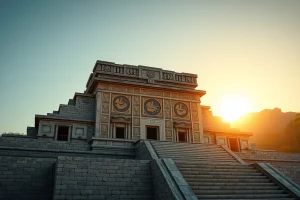
Constructed circa 690 CE during the reign of Kan Balam II, the Cross Group temples were built to commemorate the king’s accession and his connection to the triad of patron gods. The Temple of the Sun, while named by modern explorers, was dedicated to God GIII of the Palenque triad, often associated with the sun and war. The structure features a steep roof comb and a narrow interior sanctuary designed to control light entry.
Architecture and Design
The architectural layout follows a specific methodology where geometric proportions correspond with astronomical alignments. The walls, doorways, and interior pilasters are positioned to filter sunlight at precise angles. The sanctuary is deeply recessed, ensuring that only significant celestial events allow light to reach the rear wall where the tablet was originally housed.
Astronomical Interpretation
Observations indicate that during the solstices and equinoxes, sunlight creates distinctive patterns inside the Temple of the Sun. These hierophanies likely signaled ritual times for priests and the king. The alignment transforms the building into a calendar, marking the year’s greatest darkness (winter solstice) and the balance of light (equinox).
Archaeological Evidence
Physical evidence includes the wear patterns on stone floors where light consistently falls and the alignment of the Tablet of the Sun itself. The text on the tablet references astronomical cycles, corroborating the physical alignments. The 2005 study by Mendez et al. provides recorded phenomena that match the architectural orientation.
Alternative Interpretations
Some earlier interpretations suggested that alignments were coincidental or solely symbolic without observational utility. However, the precision of the light patterns recorded over four years challenges the notion of coincidence. The recurrence of the phenomena suggests intentional design rather than opportunistic orientation.
Scholar Consensus
There is a growing consensus among archaeoastronomers that the Cross Group was intentionally oriented. Scholars like Edwin L. Barnhart and Alonso Mendez argue that the geometric proportions are too specific to be accidental. The alignment is viewed as an architectural enactment of cosmological claims found in dynastic texts.
Visitor Misconception
A common misconception among visitors is that these alignments imply mystical or New Age energy properties unrelated to historical Maya beliefs. While the light phenomena are spiritually significant within the context of Maya cosmology, they are grounded in observational astronomy and political ideology, not abstract metaphysics. The alignments served to validate the king’s divine authority through measurable celestial events.
FAQ
Which temple in the Cross Group has the most documented alignments?
The Temple of the Sun has the most detailed documentation regarding sunlight patterns during solstices and equinoxes.
Who conducted the primary modern research on these alignments?
Alonso Mendez, Edwin L. Barnhart, Christopher Powell, and Carol Karasik conducted key observations published in 2005.
Are the alignments considered intentional by scholars?
Yes, the geometric proportions and recurring light patterns suggest intentional architectural design rather than coincidence.
What cosmological purpose did the alignments serve?
They enacted the claim that the king facilitated the sun's journey, validating his divine authority.


Leave a Reply