
Short Answer
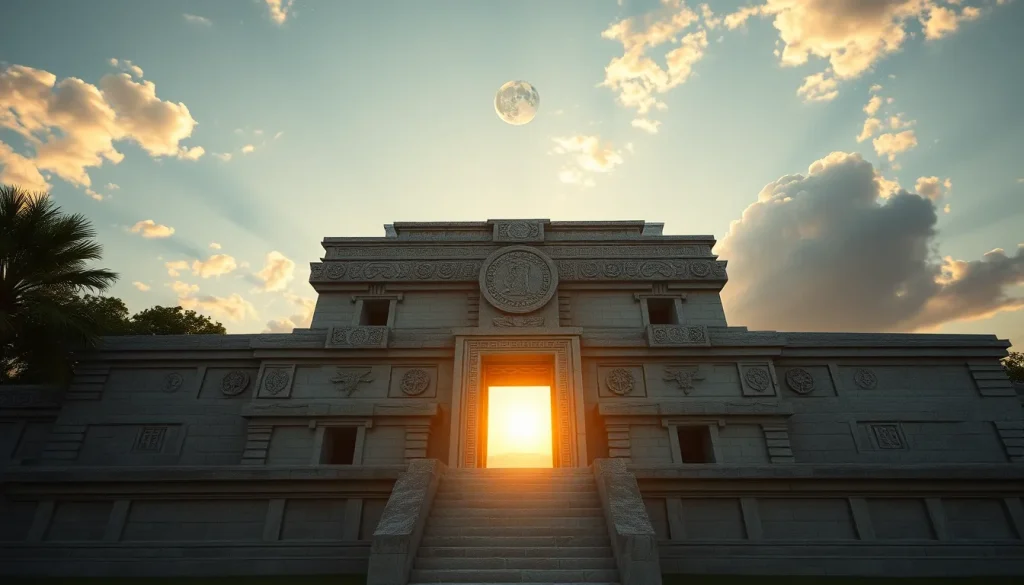
The Governor’s Palace at Uxmal stands as one of the most sophisticated examples of ancient American architecture, embodying the intricate relationship between Maya construction and celestial observation. Located in the Puuc region of the Yucatan Peninsula, this monumental structure is not merely a residential or administrative center but a calibrated instrument designed to track the movements of Venus. The building’s orientation and decorative program provide critical insights into how the Classic Maya integrated astronomy into their political and religious ideology. Recent archaeoastronomical studies confirm that the palace’s alignment is specifically tied to the extreme positions of Venus on the horizon, marking it as a key site for understanding pre-Columbian celestial mechanics.
Main Explanation
The architectural astronomy of the Governor’s Palace is defined by its precise orientation relative to celestial bodies, primarily the planet Venus. Unlike structures aligned solely with solar solstices, the Governor’s Palace demonstrates a specialized focus on the synodic cycle of Venus, which held significant mythological and agricultural importance for the Maya. The building sits atop an immense four-tiered platform that rises more than 50 feet above the ground level, elevating the structure to enhance visibility of the horizon. This elevation was not merely for grandeur but served a functional purpose in observational astronomy, allowing priests and rulers to monitor the first appearances of the morning star or the last settings of the evening star.
The facade of the palace is adorned with iconographic elements that explicitly indicate an association with the planet. The sheer density of these symbols underscores the cultural importance of Venus at Uxmal during the Terminal Classic period. The alignment allows observers standing within or before the palace to witness Venus rising or setting at specific extreme points on the horizon, which occur infrequently over the planet’s eight-year cycle. This architectural feature suggests that the building served as a permanent record of celestial time, anchoring the rule of Lord Chac within a cosmic framework.
Evidence & Sources
Archaeological and epigraphic evidence supports the astronomical function of the Governor’s Palace. A hieroglyphic inscription located above the central doorway, known as the Throne Inscription, relates specifically to the concern with Venus and other celestial phenomena. Research by Harvey M. Bricker and Victoria R. Bricker has shown that part of this inscription depicts zodiacal constellations. The uppermost row of the inscription acts as a sort of map of the constellations at the ‘base of the sky’ at the time of the Venus alignment. This text is now recognized as one of the major sources of information about the pre-Columbian Maya zodiac, providing textual corroboration to the architectural alignment.
Furthermore, the sculptural decoration of the building contains over 350 Venus glyphs on the Palace’s facade. This high concentration of iconography is unparalleled in the region and serves as quantitative evidence of the building’s dedication to the planet. Archaeoastronomical studies carried out by researchers such as Ivan Sprajc indicate that while many Maya orientations referred to sunrises and sunsets for agricultural scheduling, the repeated directions incorporated in monumental architecture of civic and ceremonial urban cores held an important place in religion and worldview. The Governor’s Palace exemplifies this principle, where the alignment cannot be understood in purely utilitarian terms but must be viewed through the lens of cosmology and power.
Deep Dive Analysis
Location and Context
The Governor’s Palace is situated at the ancient Maya city of Uxmal in present-day Mexico. It dominates the site’s main plaza, positioned to command a view of the surrounding landscape. The location was chosen not only for defensive or administrative convenience but for its astronomical potential. The clear horizon lines from the palace’s elevated platform were essential for the precise observation of celestial extremes.
Construction and History
The House of the Governor was built around AD 900 by the Uxmal ruler Lord Chac. This period marks a pivotal moment in the history of Maya architecture, transitioning into the Puuc style characterized by intricate stone mosaics. The construction involved significant labor to create the immense four-tiered platform, which rises 50 feet above ground level. The building itself is a tripartite structure, 328 feet long, composed of three parts connected by soaring transverse vaults. This scale reflects the resources commanded by Lord Chac and the importance of the building’s function.
Architecture and Design
Architecturally, the palace is designed to facilitate observation. The length of 328 feet allows for multiple vantage points along the facade. The symmetrical design, praised by modern architects like Frank Lloyd Wright as the finest example of ancient American architecture, ensures that the central axis aligns with the target celestial event. The four-tiered platform acts as an artificial horizon, reducing interference from local terrain and vegetation.
Astronomical Interpretation
The orientation of the Governor’s Palace can be related to the extremes of the planet Venus on the horizon. The building faces the rising of Venus as morning star according to some interpretations. However, the specific alignment targets the extreme positions rather than average rising points. This indicates a sophisticated understanding of the Venus cycle, which varies over an eight-year period. The architecture freezes a specific moment in this cycle, commemorating the alignment established at the time of construction.
Archaeological Evidence
The primary evidence for this interpretation lies in the iconography and inscriptions. The over 350 Venus glyphs on the Palace’s facade indicate the cultural importance of the planet. Additionally, the Throne Inscription depicts zodiacal constellations, linking the Venus alignment to a broader celestial map. This combination of glyphic data and architectural orientation provides a robust case for the building’s archaeoastronomical function.
Alternative Interpretations
While the association with Venus is undisputed, two opposing interpretations have been forwarded regarding its specific orientation. One interpretation links the palace with the southernmost rising point of the morning star. The other suggests it refers to the northerly extremes of the evening star. Recent analyses lean towards the likelihood that the Governor’s Palace at Uxmal aligns with Venus’s northerly extremes as the evening star, though the morning star connection remains a significant part of the scholarly discourse.
Scholar Consensus
There is a strong consensus that the Governor’s Palace is associated with Venus in terms of both its sculptural decoration and its orientation. The Throne Inscription from Uxmal is recognized as a major source of information about the pre-Columbian Maya zodiac. Scholars agree that the astronomical alignments cannot be understood in purely utilitarian terms but must have had an important place in religion and worldview. The building stands as a symbol of the integration of cosmic order and political authority.
Visitor Misconception
A common misconception among visitors is that the alignment was purely for calendar tracking or agricultural scheduling. While Maya architecture did facilitate observational calendars that facilitated a proper scheduling of agricultural activities, the characteristics of urban layouts reveal that planning was dictated by a complex set of rules involving religion. The Governor’s Palace was not merely a clock but a temple to cosmic power, designed to legitimize the ruler’s connection to the celestial realm through the specific alignment with Venus’s extreme positions.
FAQ
What celestial body is the Governor's Palace aligned with?
The palace is aligned with the planet Venus, specifically targeting its extreme positions on the horizon.
Who built the Governor's Palace at Uxmal?
It was built around AD 900 by the Uxmal ruler known as Lord Chac.
How many Venus glyphs are on the palace facade?
There are over 350 Venus glyphs decorating the facade of the building.
Does the inscription mention constellations?
Yes, the Throne Inscription depicts zodiacal constellations and maps the sky at the time of alignment.
Leave a Reply