
Short Answer
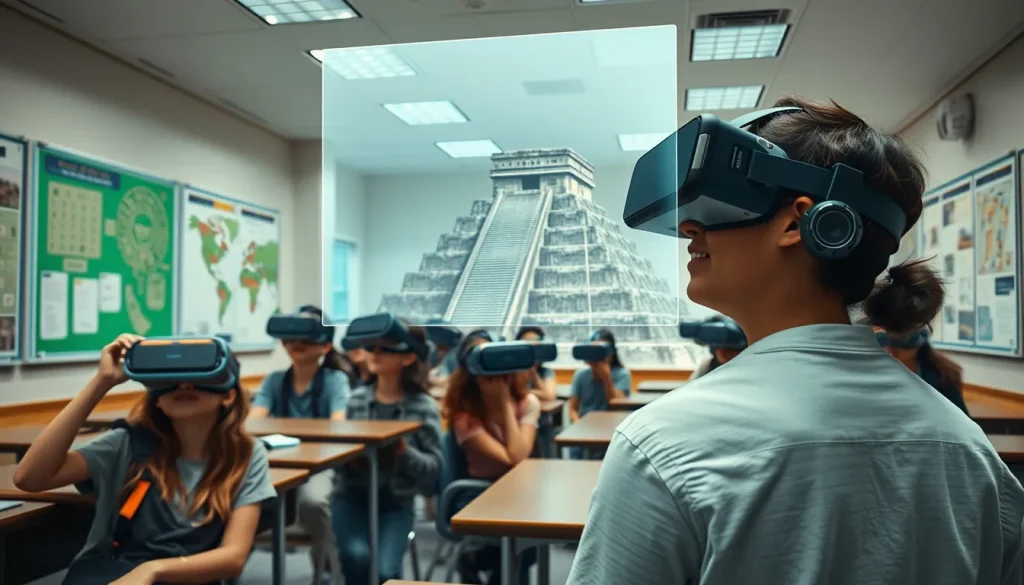
The integration of Virtual Reality (VR) into educational curricula represents a significant paradigm shift in how ancient history, particularly Maya civilization, is taught in modern classrooms. By leveraging immersive digital environments, educators can transport students to archaeological sites that are otherwise inaccessible, allowing for a deeper engagement with the spatial and social dynamics of ancient cultures. This technological intervention moves beyond traditional text-based learning, offering interactive experiences that foster active retention of core anthropological concepts. As hardware advancements allow for broader consumer use of Virtual and Augmented Reality platforms in homes, schools, and museums, the potential for public education expands significantly.
Main Explanation
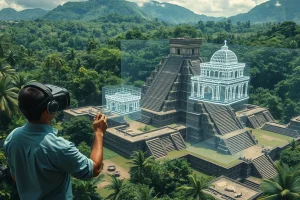
Virtual Reality in the context of Maya history education functions as an interactive and immersive learning space where students can explore reconstructed ancient environments. These digital reconstructions are not merely visual spectacles but are grounded in archaeological data, including original site maps and excavation records. For instance, applications have been developed that require students to explore virtual reality reconstructions of sites like Cerro Maya (formerly known as Cerros) in Belize. Within these environments, learners are tasked with characterizing the social capacities of the architecture in terms of the ritual practices that were important to the rise of social hierarchy. This method encourages students to generate their own ideas and theories regarding the use of social space while actively retaining complex anthropological concepts. The technology facilitates a constructivist learning approach where knowledge is built through experience rather than passive reception.
The pedagogical value of VR lies in its ability to visualize abstract concepts such as social hierarchy, ritual practice, and environmental impact on daily life. By providing an interactive platform, VR applications have been shown to increase student interest, engagement, comprehension, and retention of core concepts. This is particularly relevant when discussing Ancient Maya Metaphysics or the impact of environment on structuring daily duties, as students can visually correlate architectural features with theoretical frameworks. The immersive nature of the medium allows for a more intuitive understanding of how ancient peoples interacted with their built environment, bridging the gap between virtual realities and actual realities.
Evidence & Sources
Empirical evidence supporting the efficacy of VR in Maya education comes from multiple academic and institutional sources. Research conducted by Jeffrey Vadala PhD at the University of Florida (UF) demonstrated the utility of VR in an introductory anthropology class. After creating an interactive application containing a virtual reality reconstruction of the Maya site of Cerro Maya, Vadala required students to explore the site to understand the rise of social hierarchy. Surveys of the class responses indicated that this virtual reality application increased student interest, engagement, comprehension, and retention of core concepts. The architecture was precisely modeled from original site maps and excavation data, ensuring academic rigor. This project was associated with the Florida Museum of Natural History’s exhibit of Cerros Maya City by the Sea: Daily Life and Ritual 2012.
Further evidence is provided by Jessica M. Moss in her 2022 thesis, The Educational Experience of Virtual Reality: An Archaeological Case Study of the Maya Site, Vista Alegre. Published via the Digital Archive @ GSU, this work explores the applications of Virtual and Augmented Reality platforms for archaeological visualization, specifically in the area of public education. Moss created a 3D model and virtual experience of the Maya site of Vista Alegre in Mexico, methodologically explaining the process to relate history, theory, and archaeological visualization. Additionally, commercial educational providers like PrimeVR offer Ancient Maya Virtual Reality School Workshops focusing on Chichén Itzá. These workshops utilize 360° imagery to show key landmarks such as the Temple of Kukulcan, the Temple of the Warriors, and El Caracol to KS2 pupils, demonstrating the scalability of VR tools from higher education to primary schooling.
Deep Dive Analysis
Technology Description
The technology underpinning these educational initiatives involves Virtual and Augmented Reality platforms capable of rendering high-fidelity 3D models and 360° imagery. Hardware advancements have begun to allow for broader consumer use, making these tools viable for schools and museums. The systems range from fully interactive 3D environments, where users can navigate space freely, to guided 360° tours that offer a panoramic view of specific landmarks.
How It Works
VR works by simulating presence within a digital environment. In an educational context, this involves loading a reconstructed site into a headset or display system. Students interact with the space, often guided by specific learning objectives such as identifying ritual spaces or analyzing architectural alignment. The immersive nature isolates the user from external distractions, focusing attention entirely on the historical content.
Field Workflow
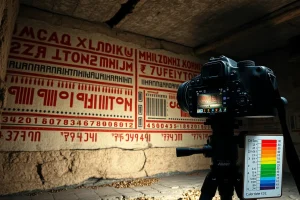
The creation of these educational tools follows a rigorous digital archaeology workflow. Architecture is precisely modeled from original site maps and excavation data. For example, the Cerro Maya reconstruction was based on data from the Florida Museum of Natural History’s exhibit. This ensures that the virtual space reflects the current archaeological understanding of the site rather than speculative fiction. The process involves recording, interpreting, and educating about sites and projects through technological advancements.
Output/Data
The primary output is an interactive application or virtual experience. In the case of Vista Alegre, a 3D model and virtual experience were created to relate history and theory. For Chichén Itzá workshops, the output is a 30-45 minute session using 360° imagery. These outputs serve as digital artifacts that can be archived and reused, contributing to the long-term preservation of cultural heritage data.
Example
A prime example is the Cerro Maya 3d project in Belize, where students characterized the social capacities of architecture regarding ritual practice. Another example is the PrimeVR workshop for Chichén Itzá, a UNESCO world heritage site and one of the Seven New Wonders of the World, which thrived between 600 AD and 1200 AD. These examples showcase the versatility of VR across different sites and educational levels.
Strengths
The strengths of VR in this context are well-documented. Surveys found that virtual reality applications increased student interest, engagement, comprehension, and retention. By providing an interactive and immersive learning space, students were able to generate their own ideas and theories. This active learning style is superior to passive lecture methods for complex topics like social hierarchy and metaphysics.
Limitations
Limitations include hardware requirements and logistical constraints. For instance, PrimeVR days usually require a minimum of four KS2 classes with each year group choosing a workshop. Access to high-end VR hardware may be prohibitive for some institutions. Additionally, the experience is limited by the accuracy of the underlying data; if the excavation data is incomplete, the reconstruction must make interpretive choices.
Accuracy
Accuracy is maintained by modeling architecture from original site maps and excavation data. However, users must distinguish between historical Maya beliefs and modern interpretations. The technology allows for anthropologically critiquing reality, comparing virtual realities with actual realities. It is crucial that educational materials clarify where reconstruction ends and speculation begins.
Cultural Heritage Considerations
Cultural heritage considerations are paramount. Digital reconstructions must respect the significance of the sites, such as Chichén Itzá being an active archaeological site home to Mayan ruins. Educational tools should avoid unsupported spiritual claims unless contextualized as modern belief versus ancient record. The goal is to aid in recording, interpreting, and educating about sites without commodifying sacred spaces. This approach ensures that the intersection of archaeology and digital heritage remains ethically sound and academically rigorous.
FAQ
How does Virtual Reality improve learning outcomes in Maya history?
Surveys indicate VR applications increase student interest, engagement, comprehension, and retention of core concepts by providing an interactive and immersive learning space.
What archaeological data is used to build VR Maya sites?
Architecture is precisely modeled from original site maps and excavation data, such as those from the Florida Museum of Natural History's exhibit.
Which Maya sites are commonly featured in VR education?
Common sites include Cerro Maya (Cerros) in Belize, Vista Alegre in Mexico, and Chichén Itzá, a UNESCO world heritage site.
Leave a Reply